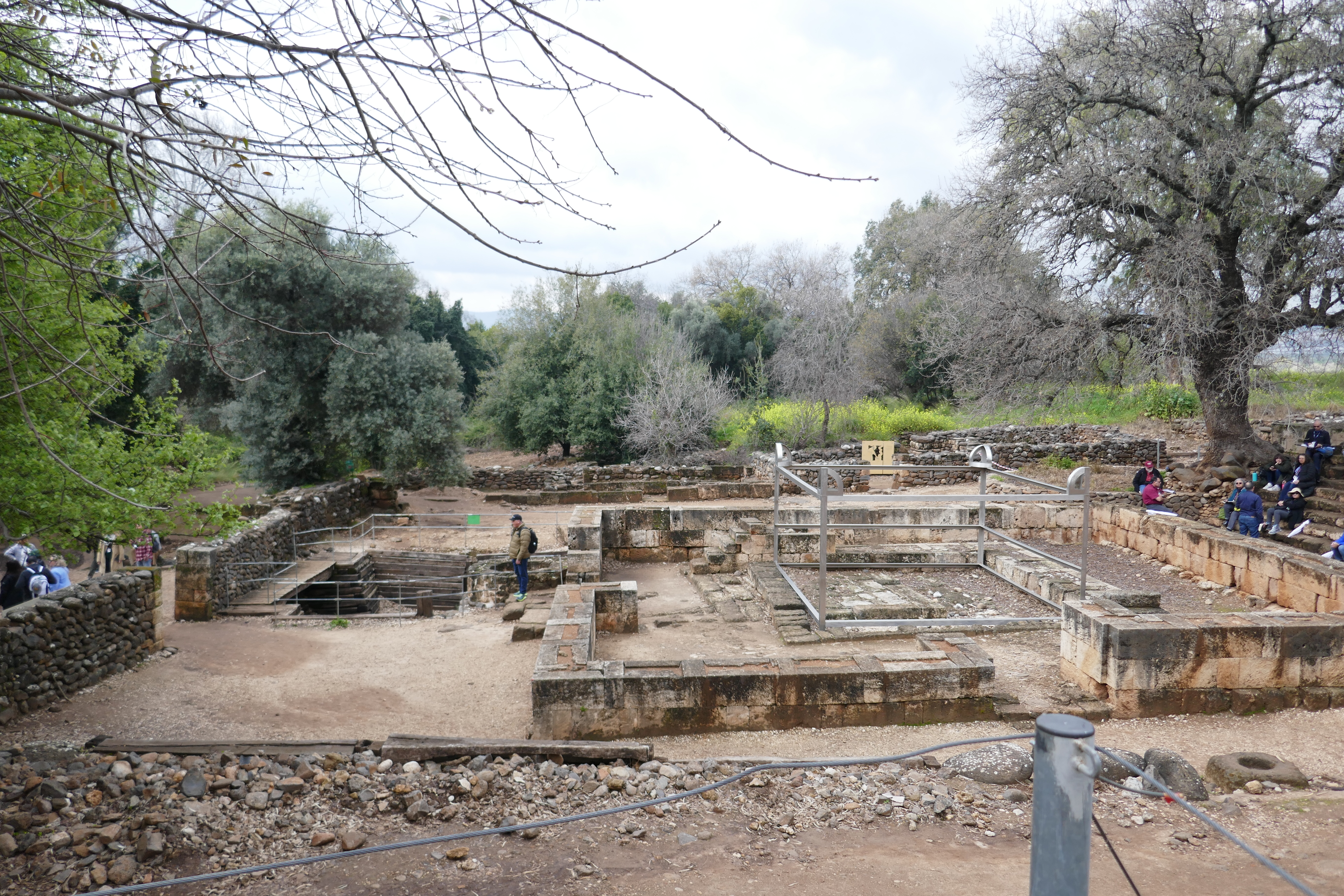
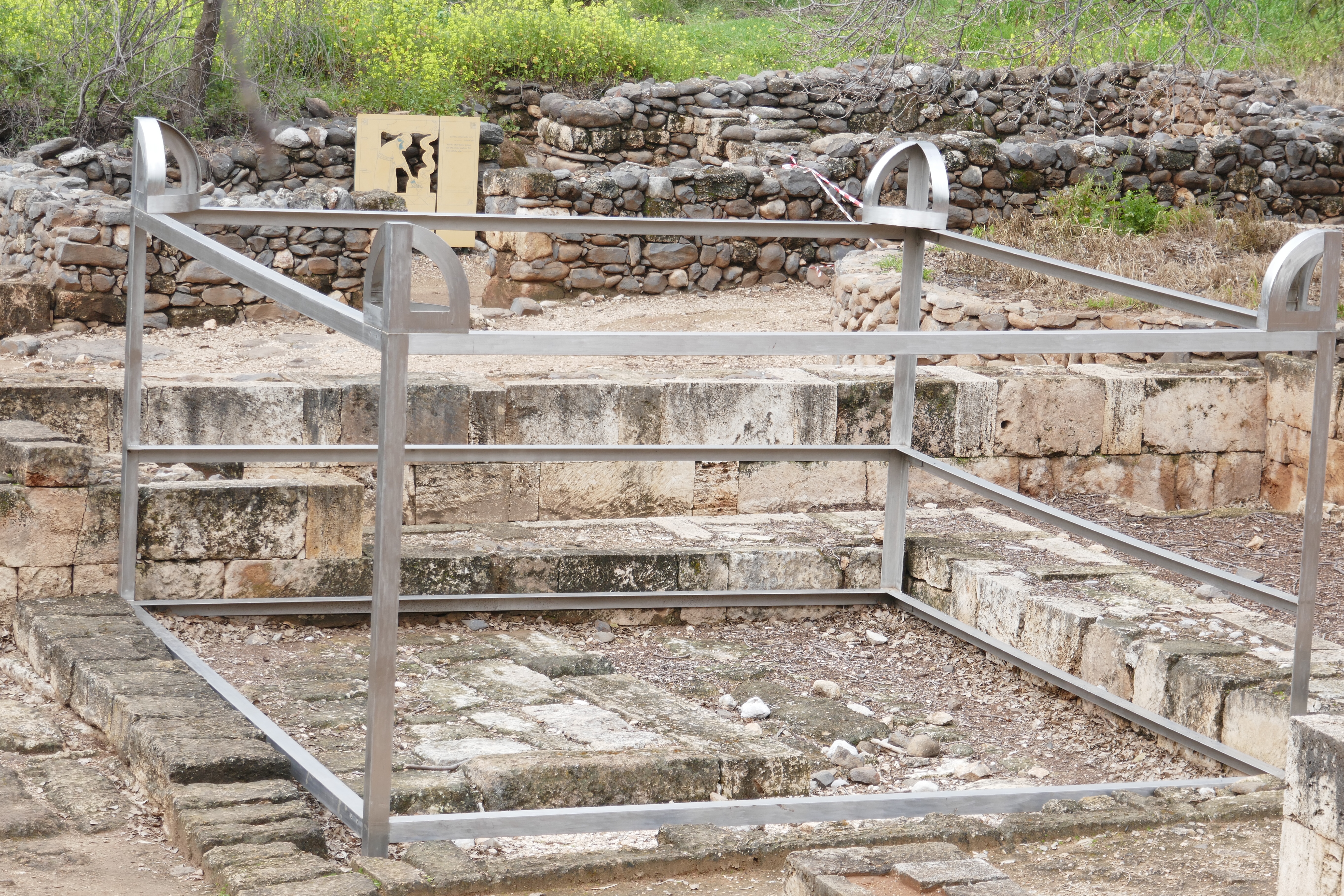
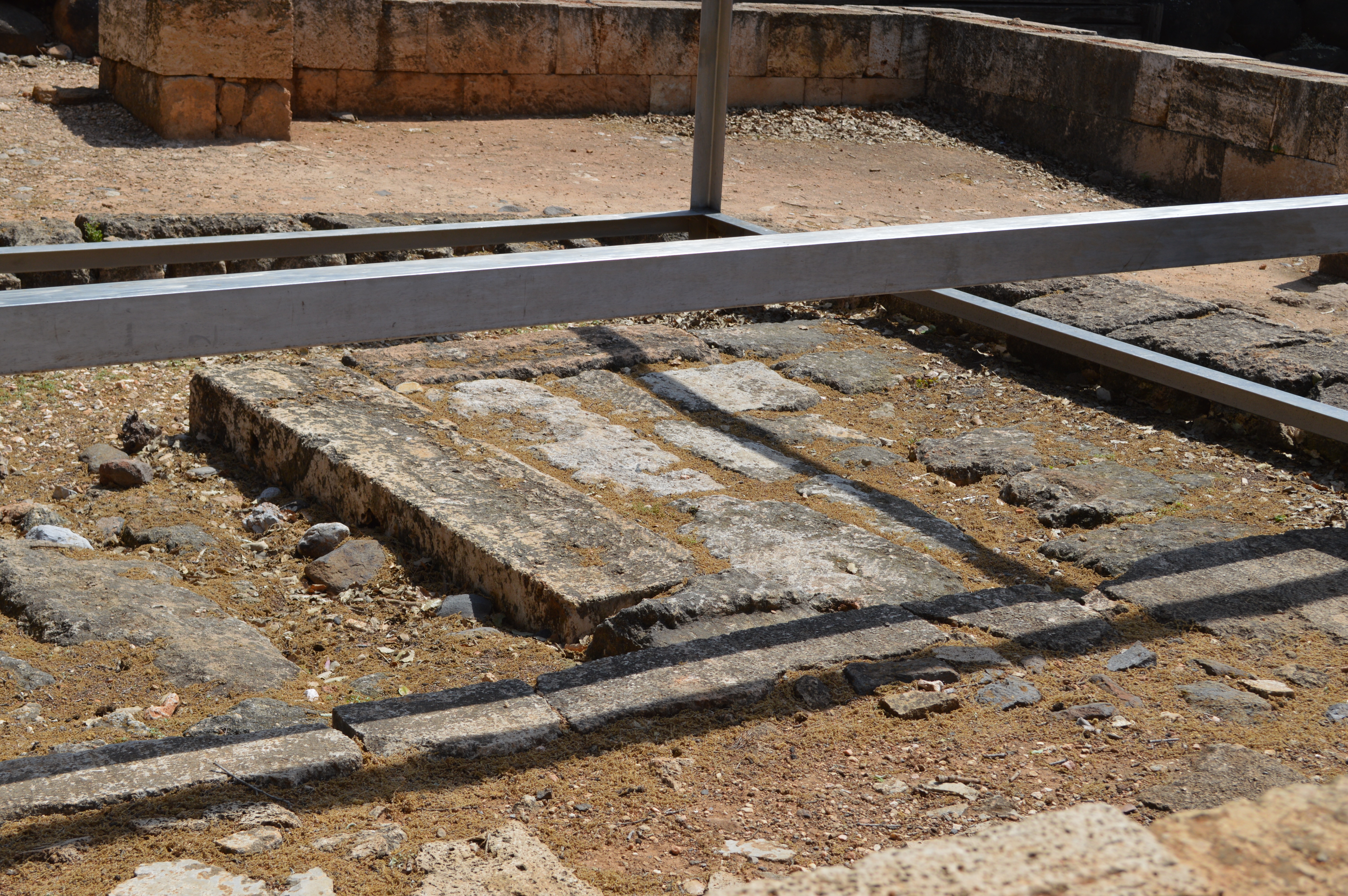
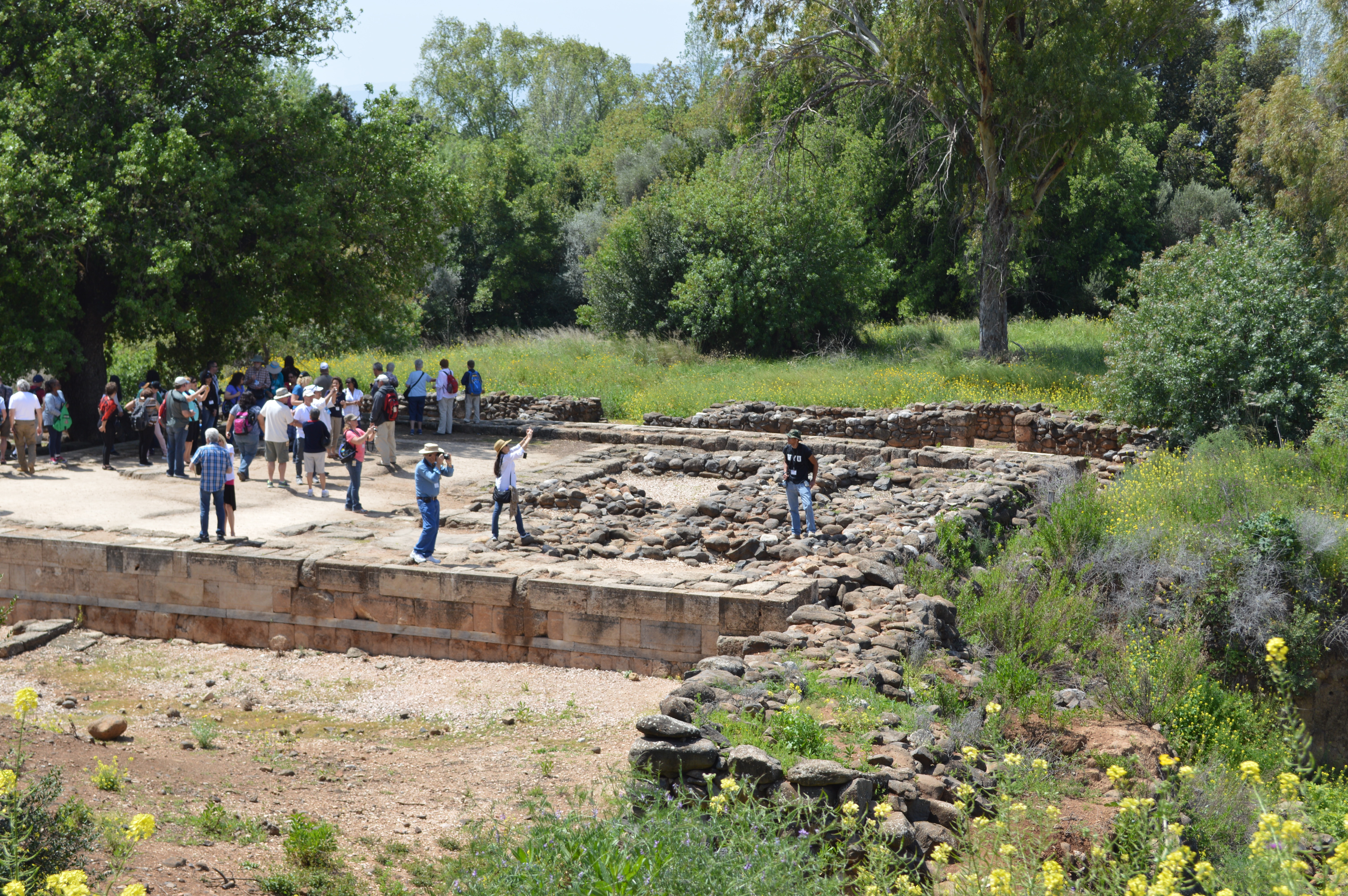
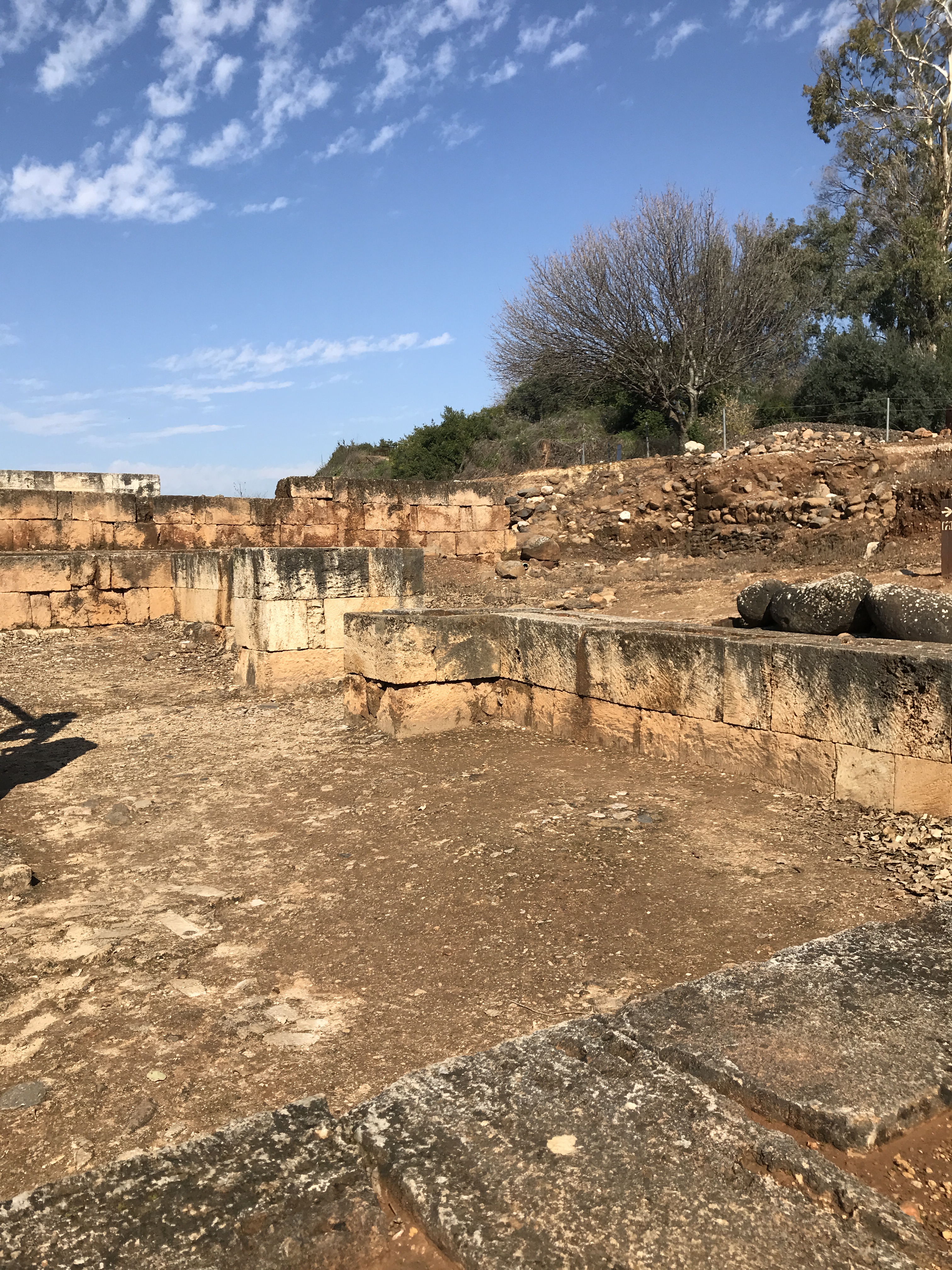
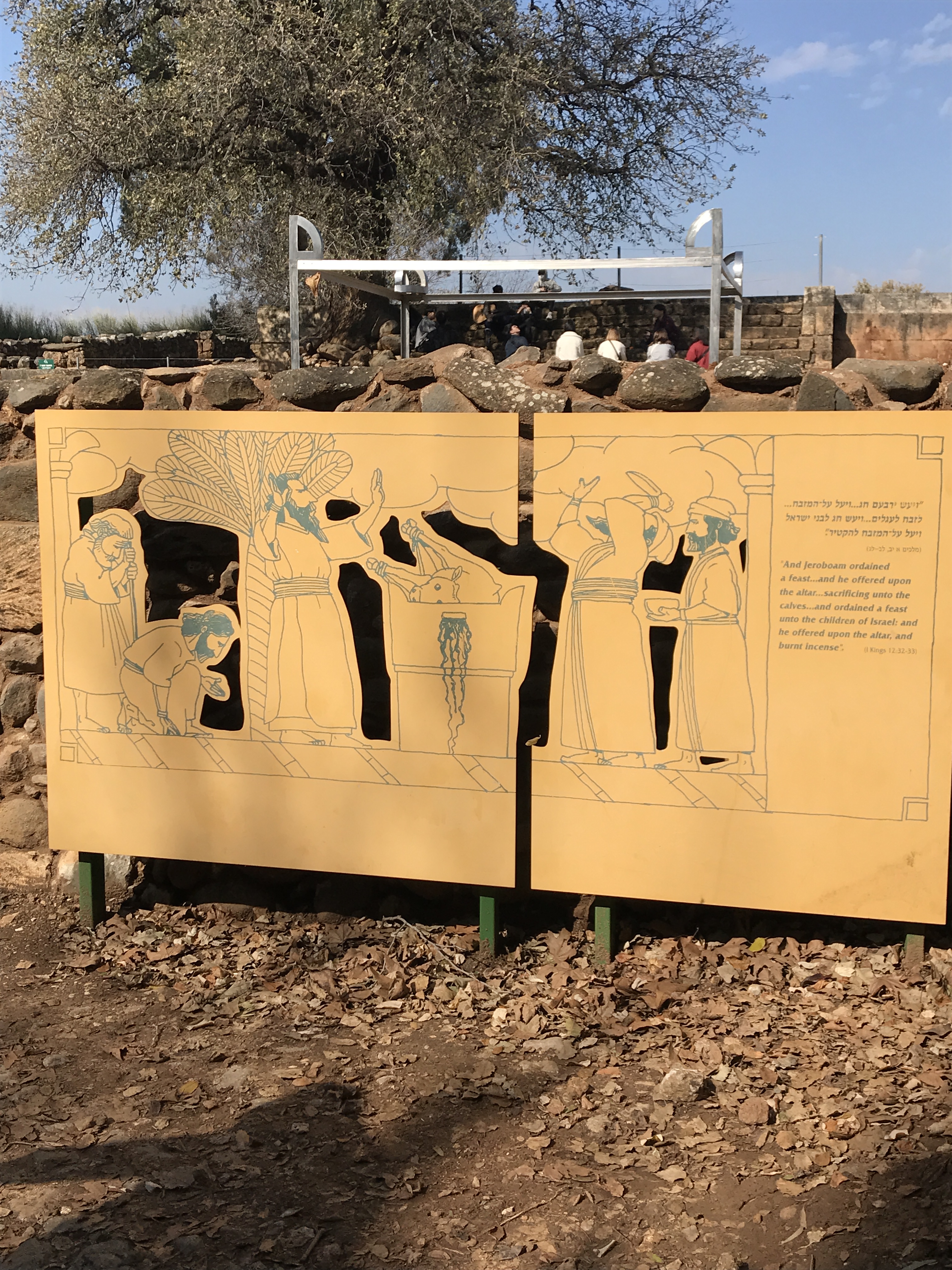
So much can be learned from the cultic site at Tel Dan. The site was not one that the YHWH authorized, but it still offers us insight into the worship practices of the Israelites (in the Northern Kingdom of Israel) during the period of the two kingdoms. This site has been excavated and the park service has done some useful curating of the site to help visitors visualize things. According to recent information, the upper raised platform is slated for excavation in the coming season. This should yield even more useful information which confirms the Biblical text.
The site at Dan is also wonderful because of all the greenery and flowing water. It is a beautiful place to hike and take in the beauty of the northern Israel, the headwaters of the Jordan and the snow melt from the stately Mount Hermon. It is no mystery why the tribe of Dan sought out this land, killing the former residents to take it. It is also no mystery why the northern kingdom was established in this fertile and verdant region.
Indicator of the location of the altar
Going Deeper: Dan and the Golden Calf
Read 1 Kings 12:25-33 1. What did Jeroboam fear would happen if the people returned to Jerusalem to worship God according to 1 Kings 12:27?
2. What did he do to avoid what he feared according to 1 Kings 12:28-29?
3. What was the result according to 1 Kings 12:30?
It is our desire to help you grow in your knowledge of Adonai and His Word. If you are looking for additional information and/or materials, please visit our website at RootedinHisWord.org and our Facebook page.
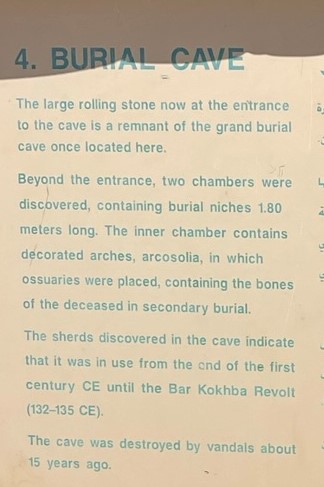
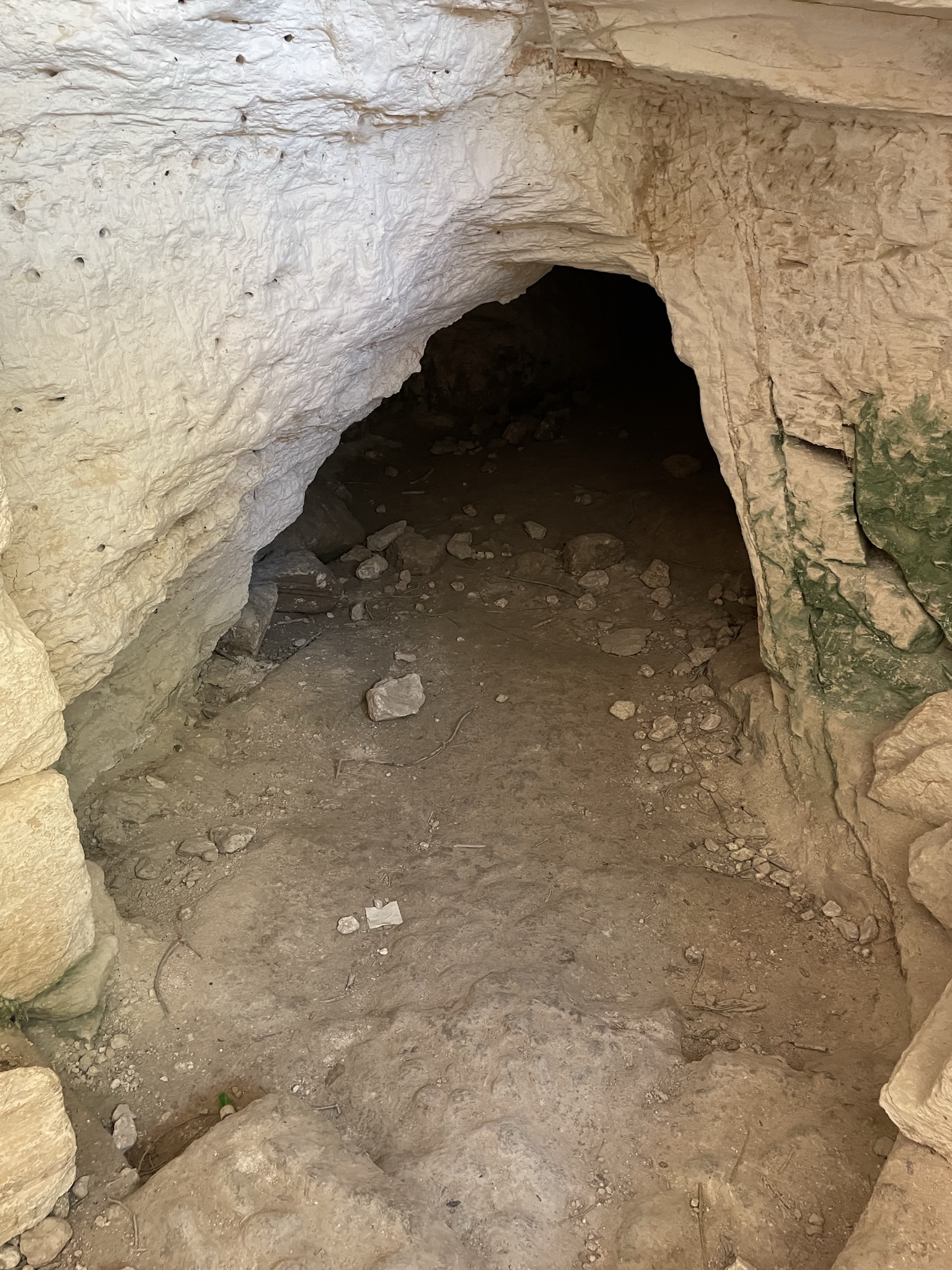
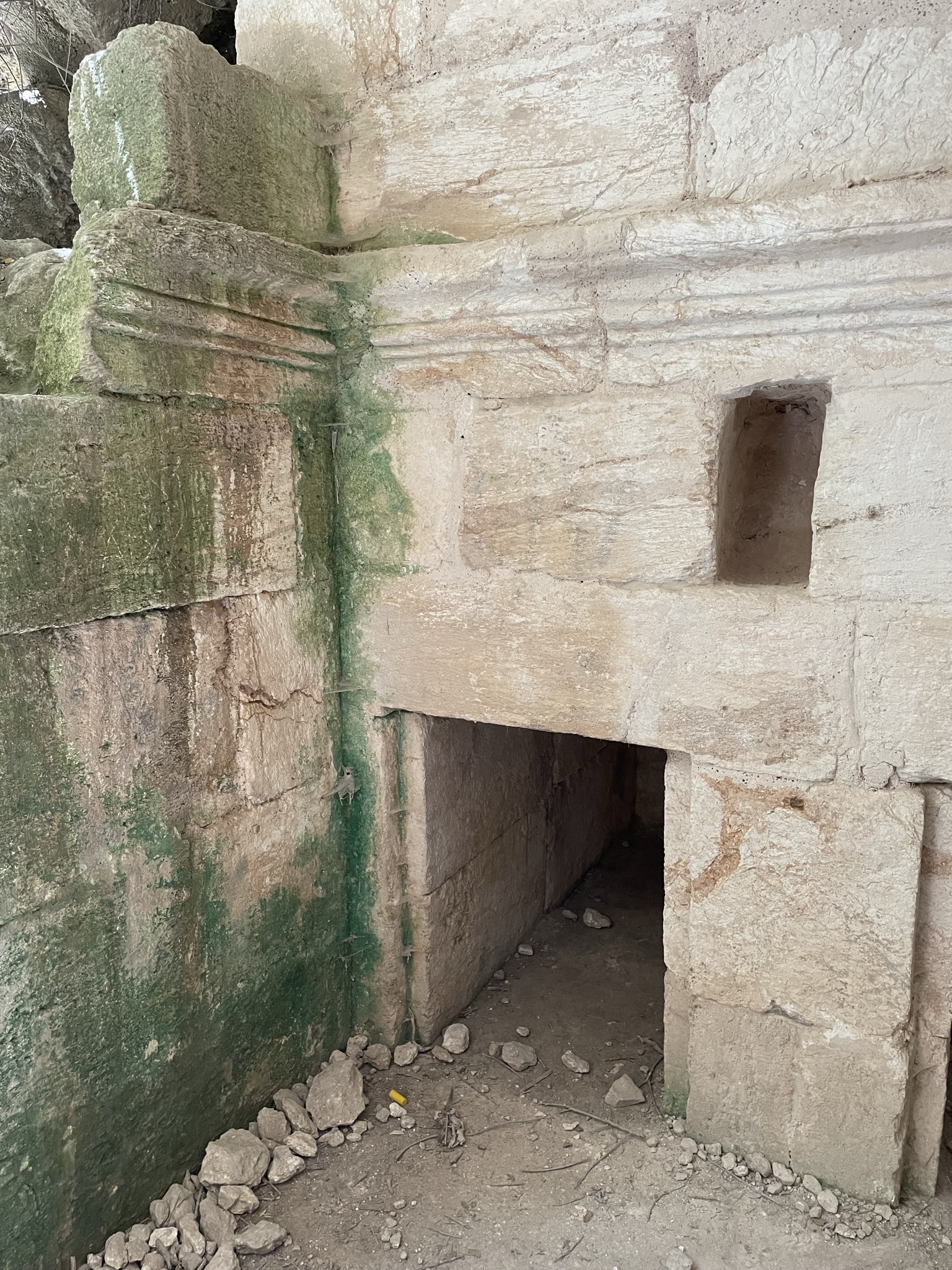
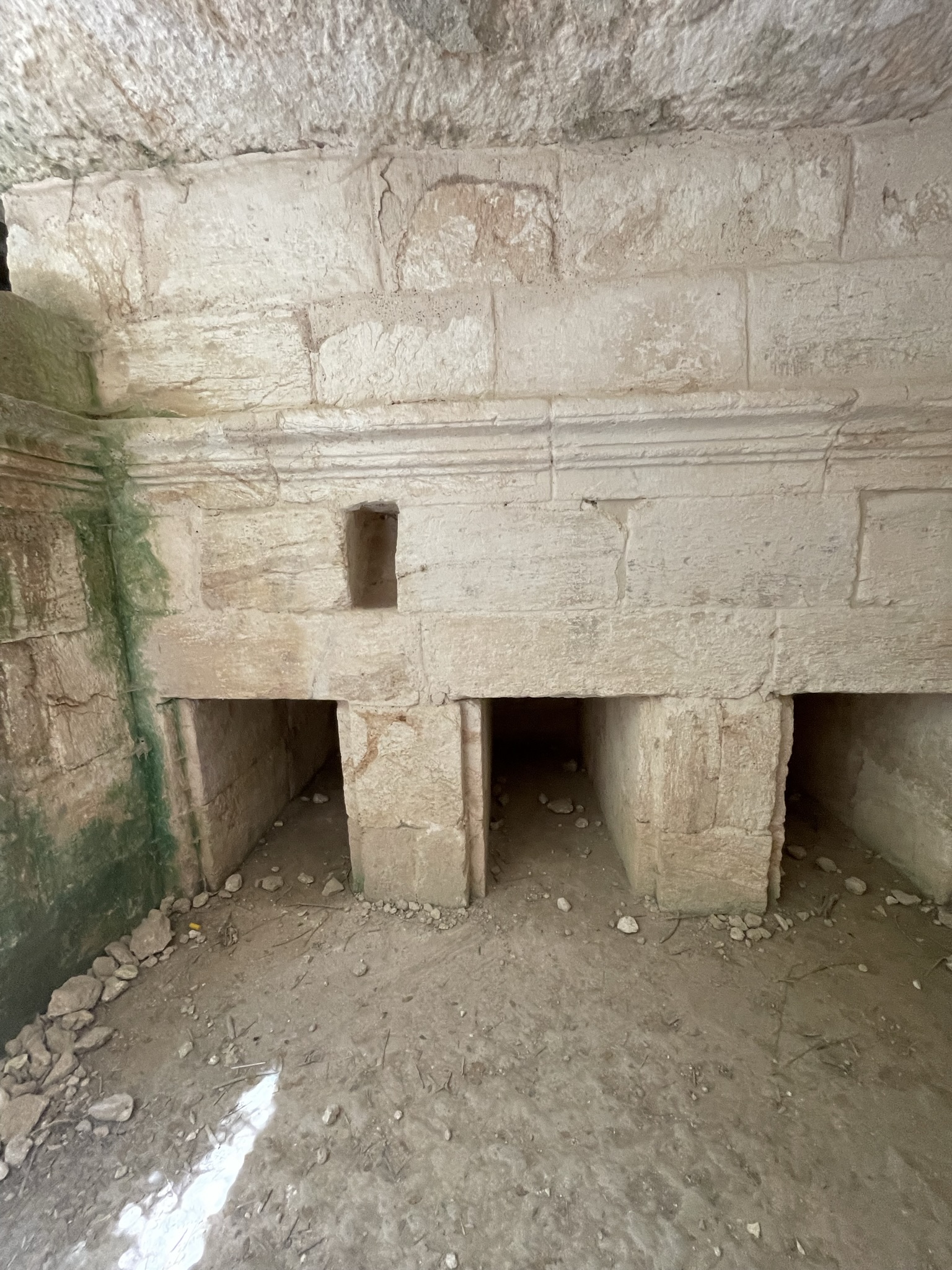
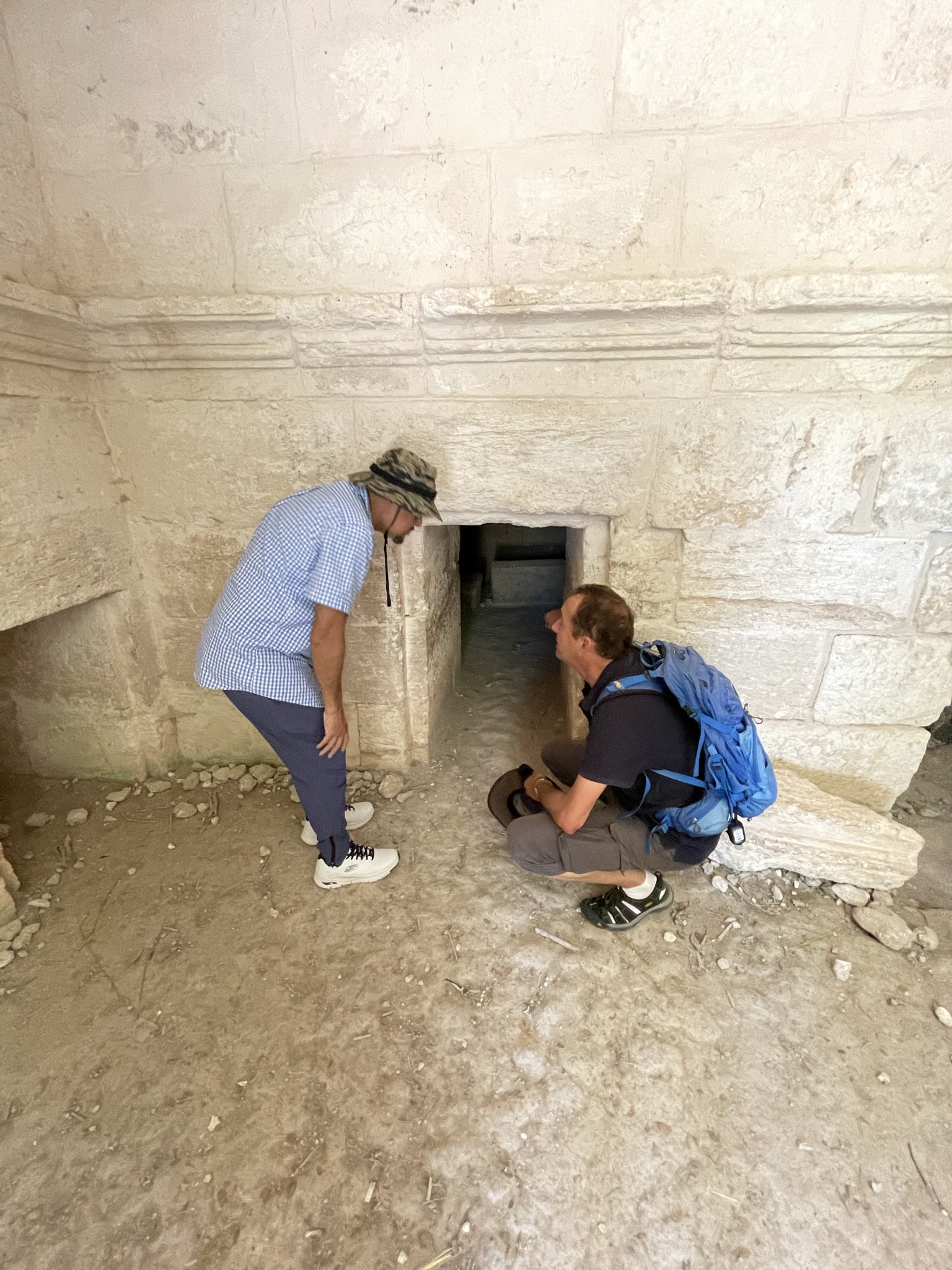
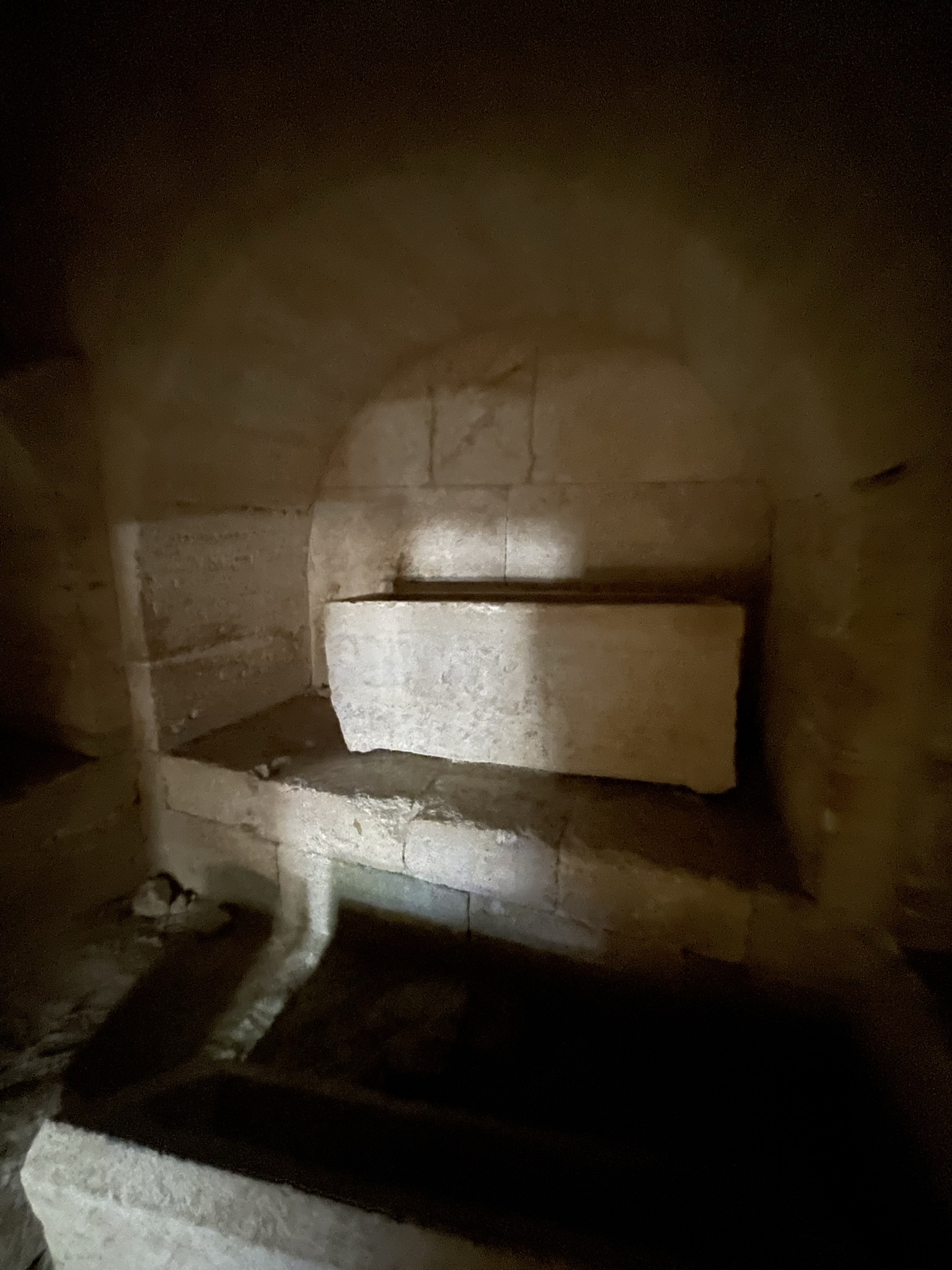
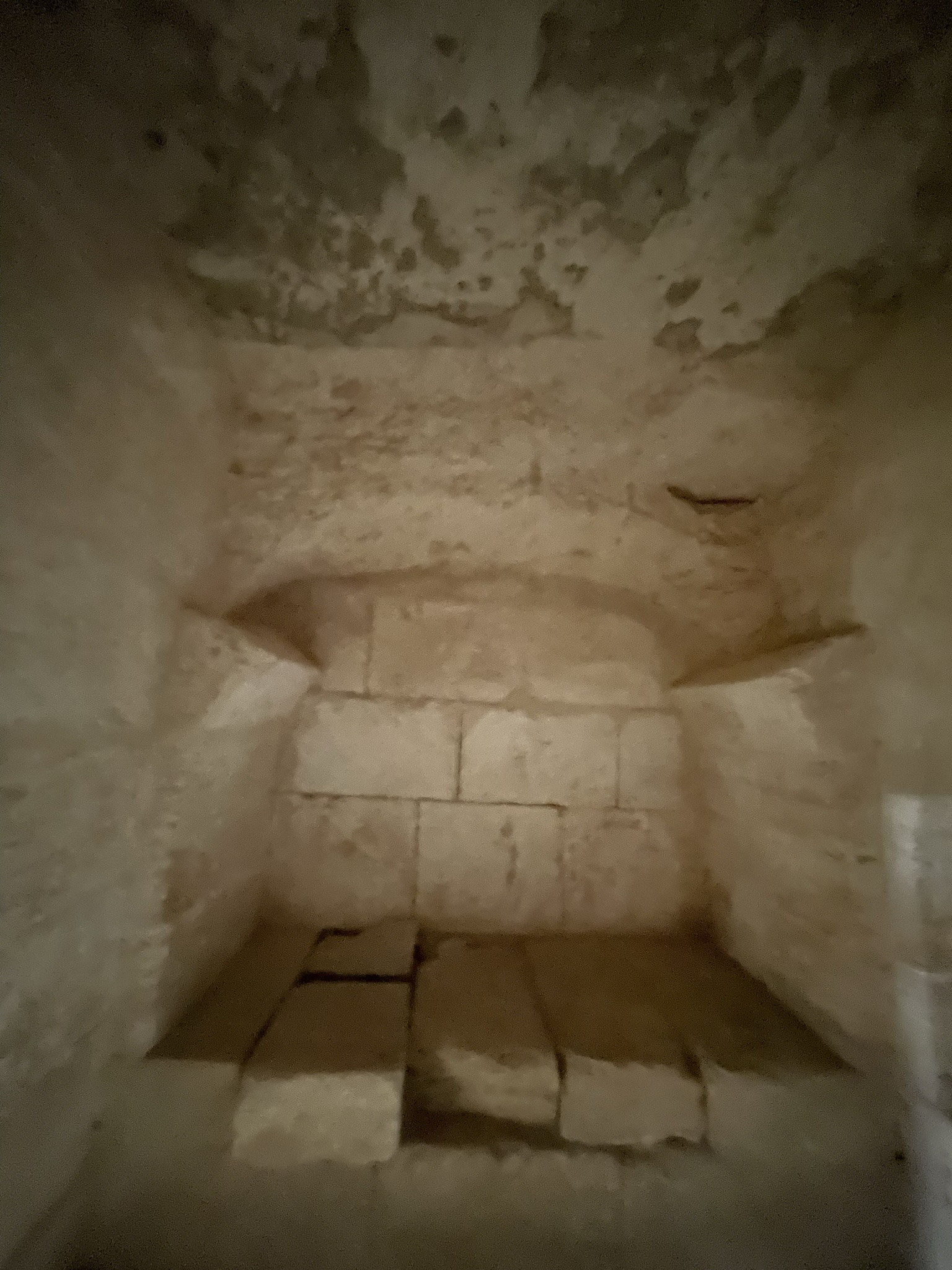
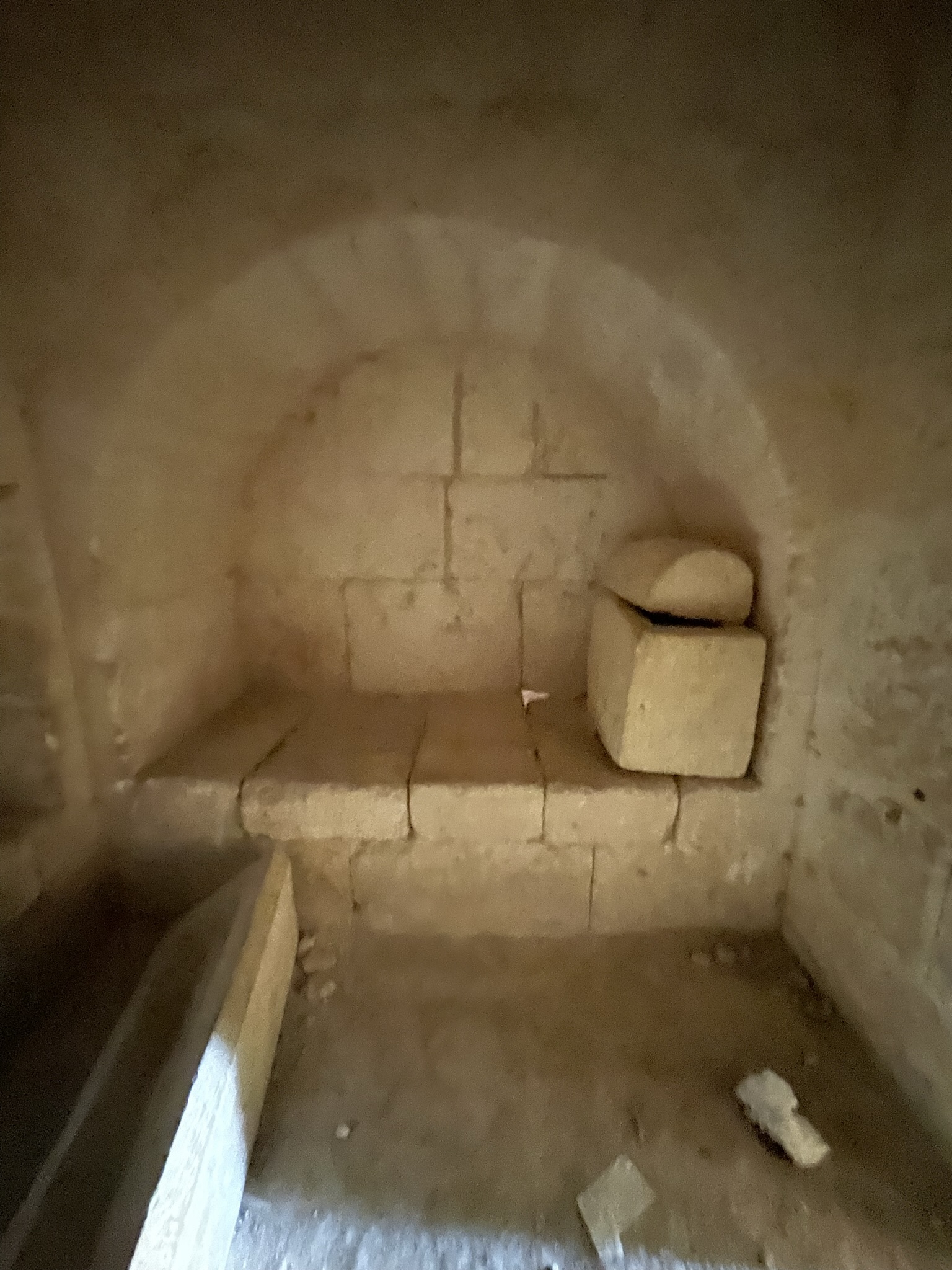
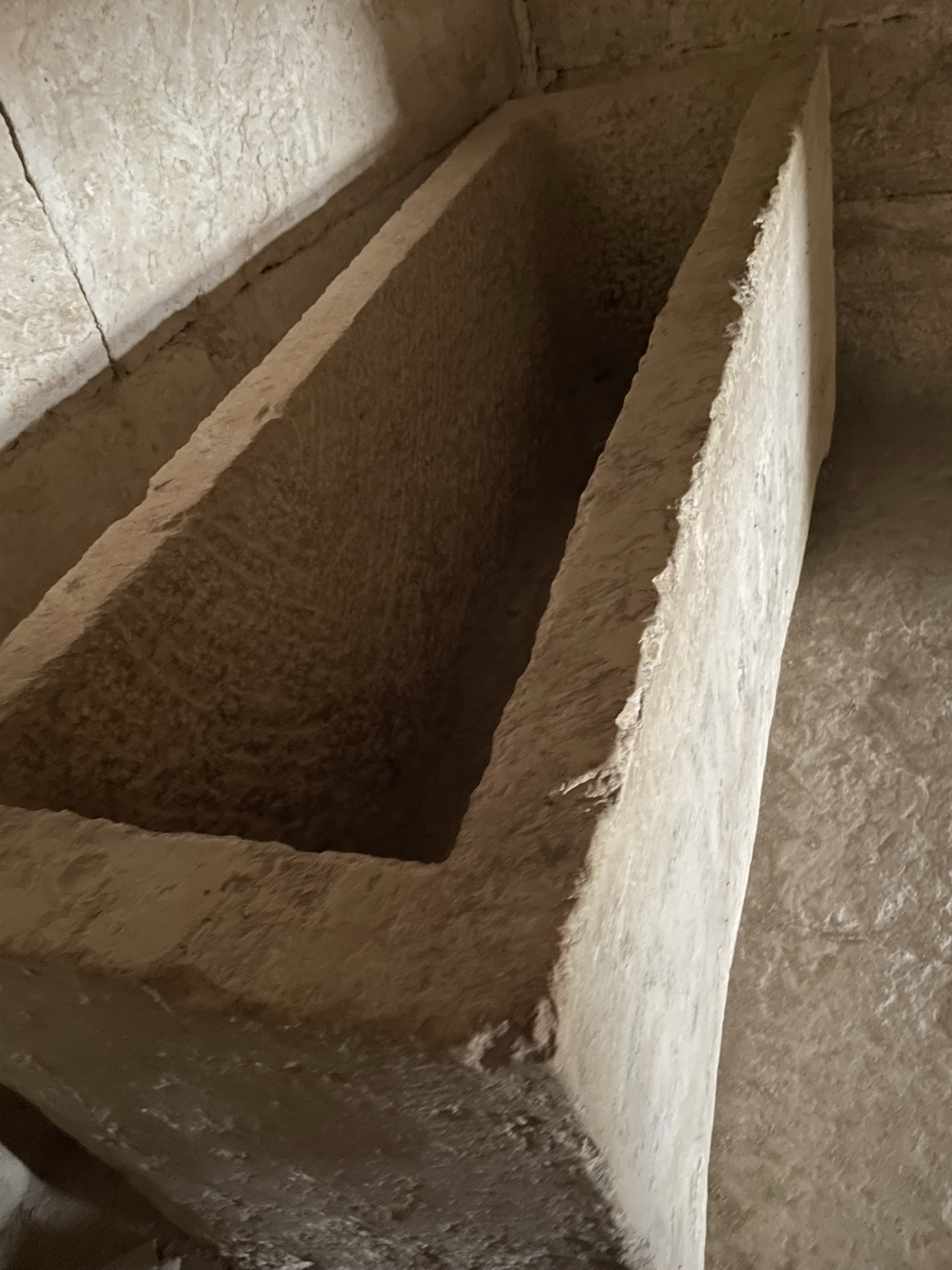
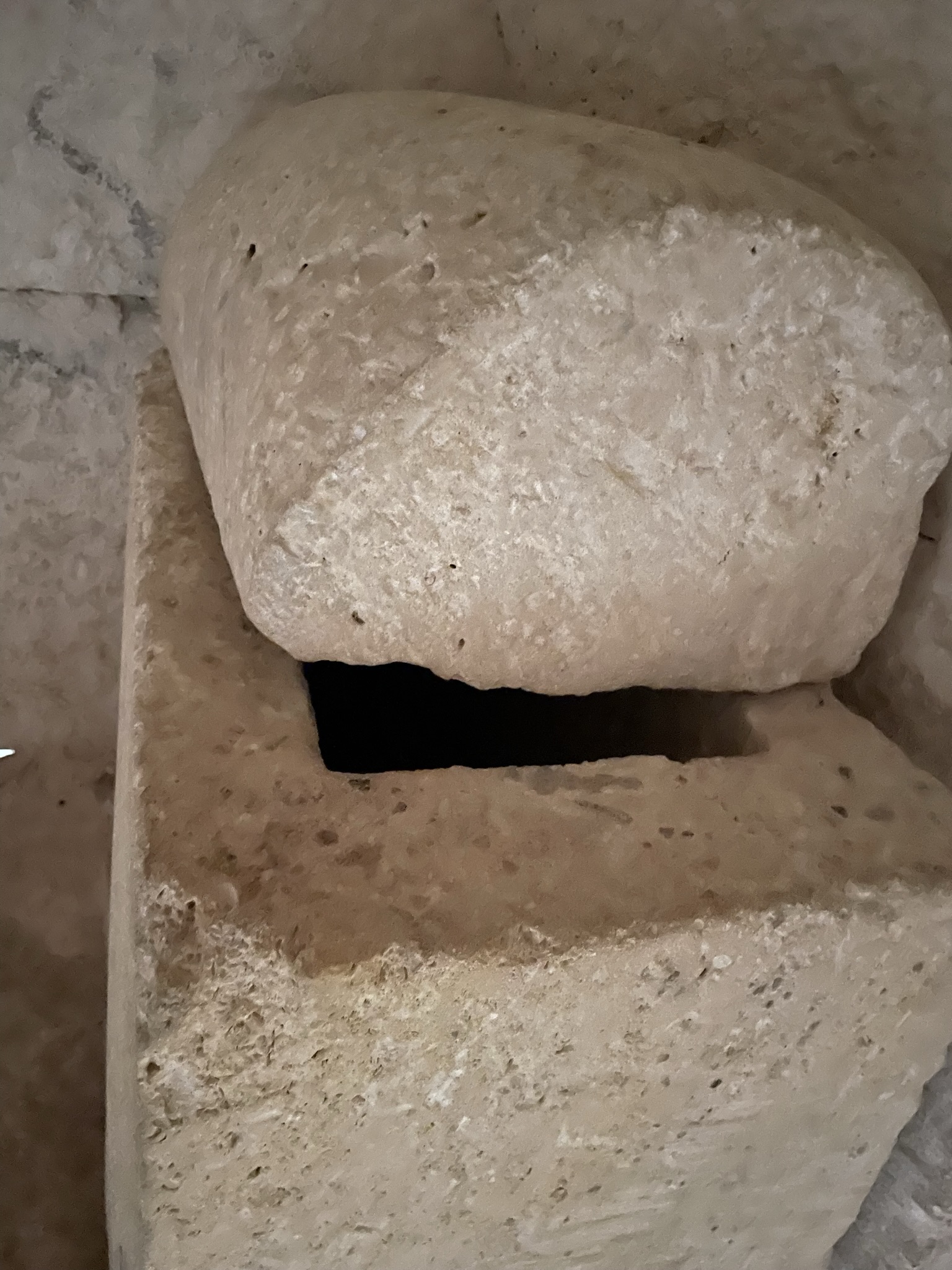
It is always helpful to find places and things intact in a way that allows a better understanding of scripture. First century burial sites can provide helpful insight into how Yeshua (Jesus) would have been buried, i.e. the type of tomb into which his body would have been laid and how those visiting the tomb after the resurrection would have viewed the tomb area.
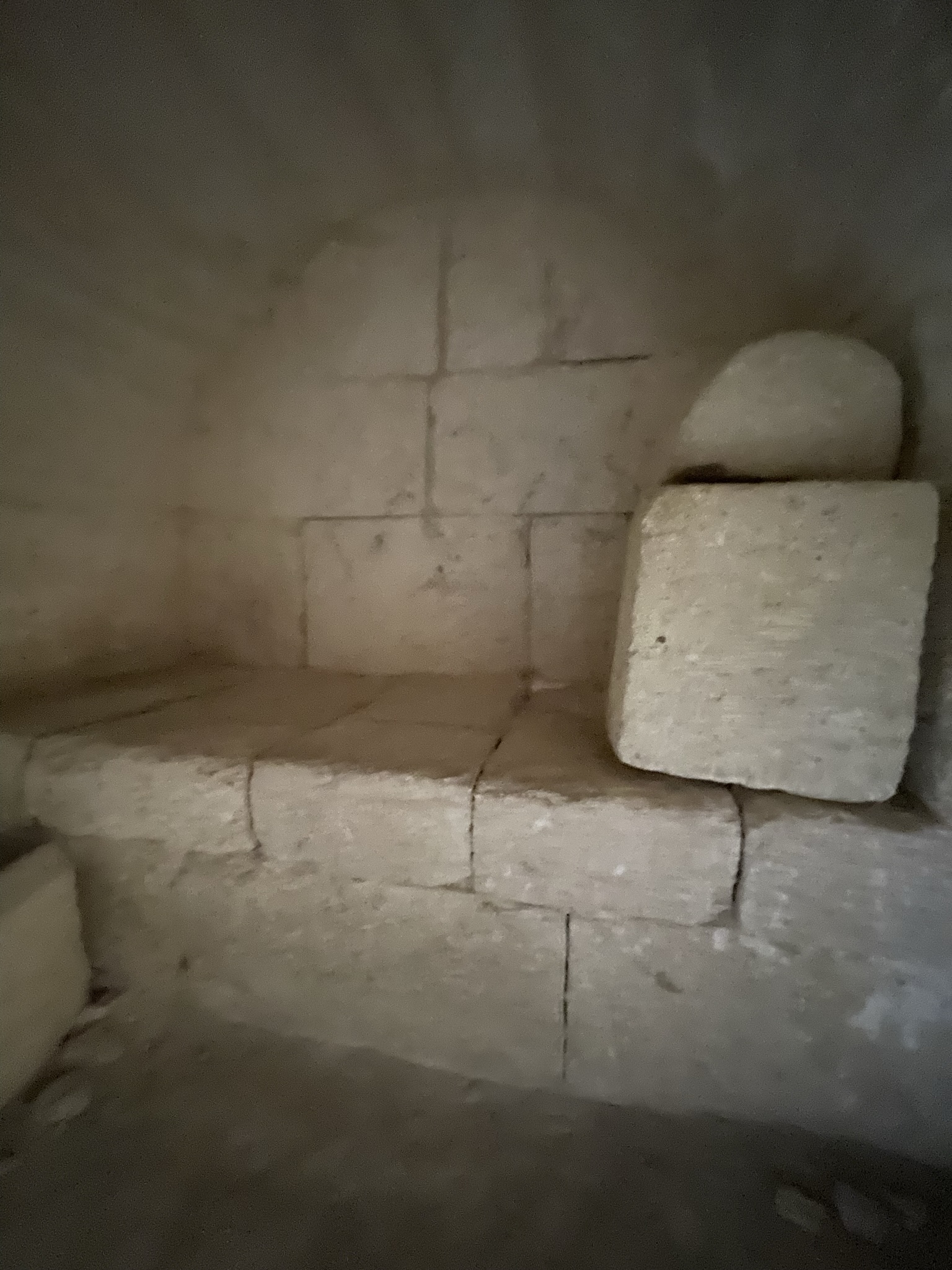
Not far from Jerusalem is an example of the first century burial tomb of a wealthy person. It was carved into the rock which was common, it had slot tombs, which was also common, and it had an entrance area with bench seating for those visiting the graves.
First Century Burial tombs
It is our desire to help you grow in your knowledge of Adonai and His Word. If you are looking for additional information and/or materials, please visit our website at RootedinHisWord.org and our Facebook page.
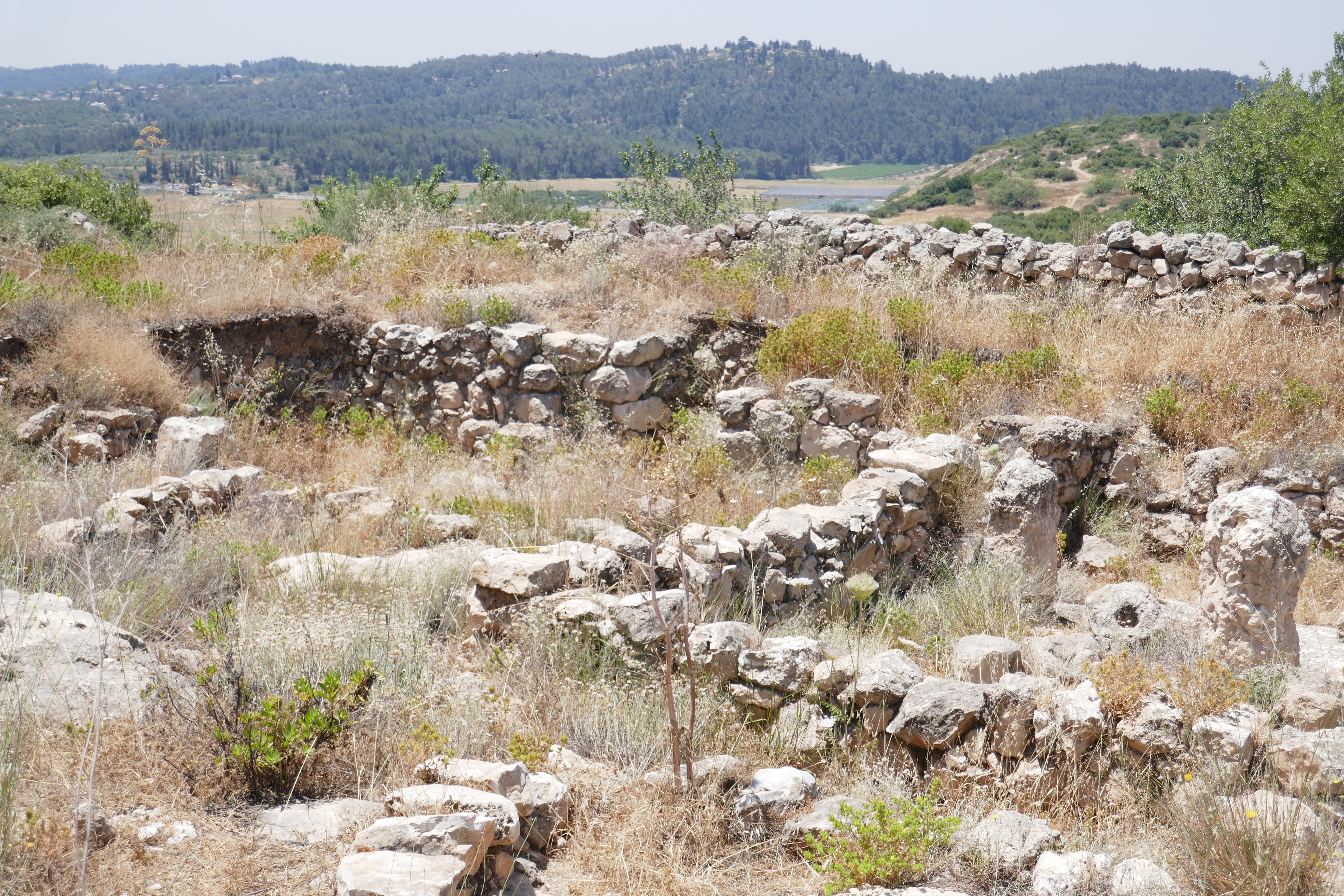
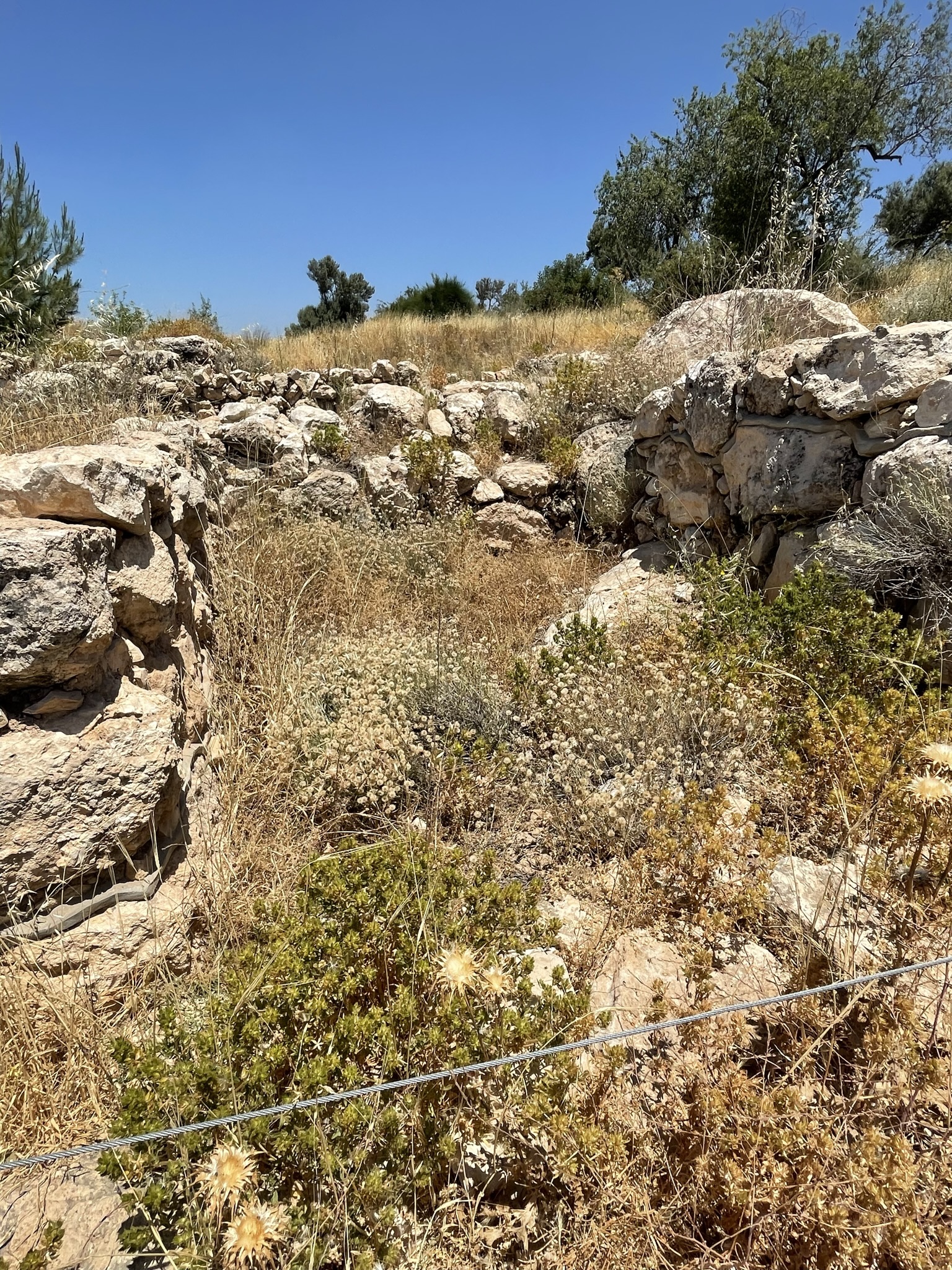
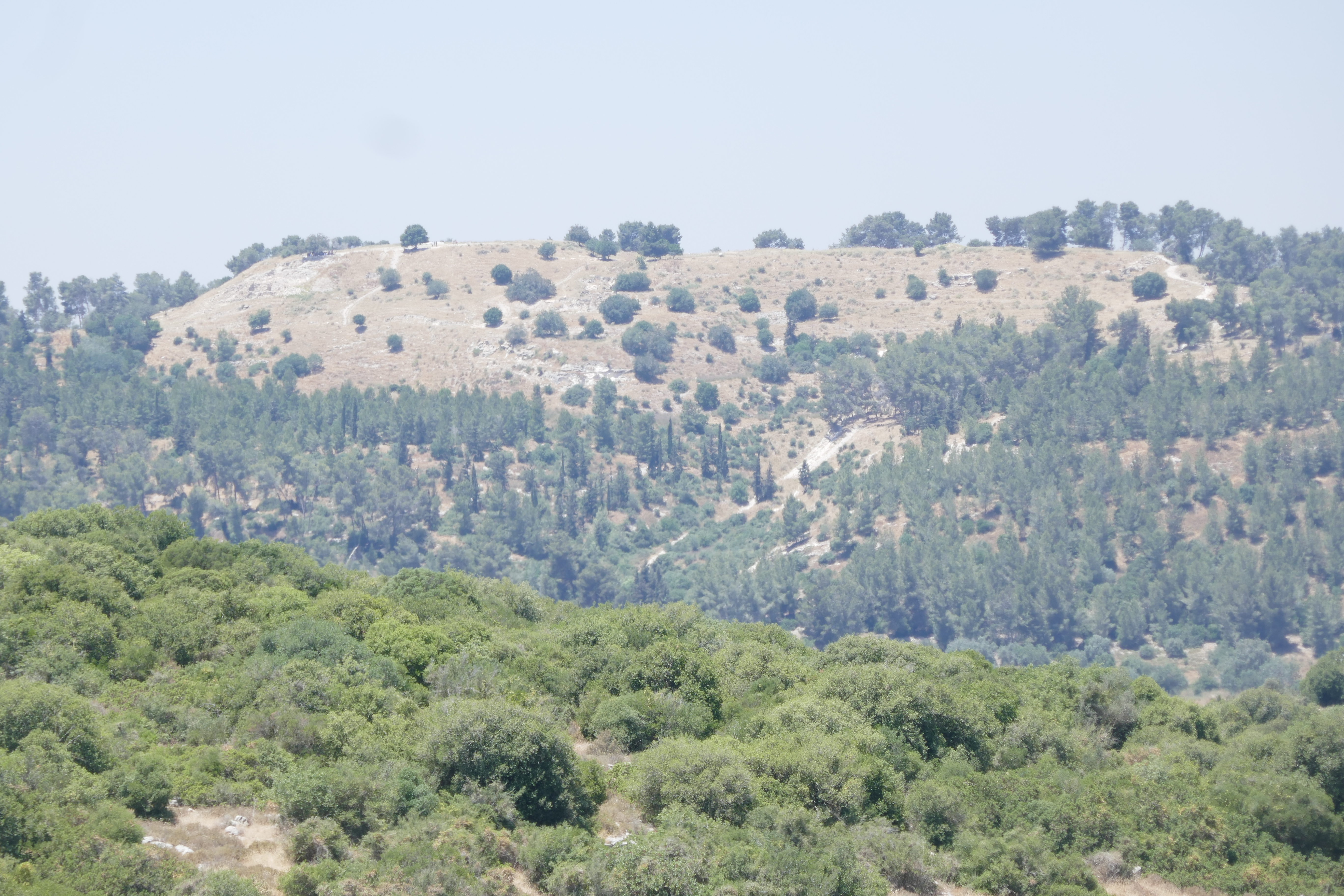
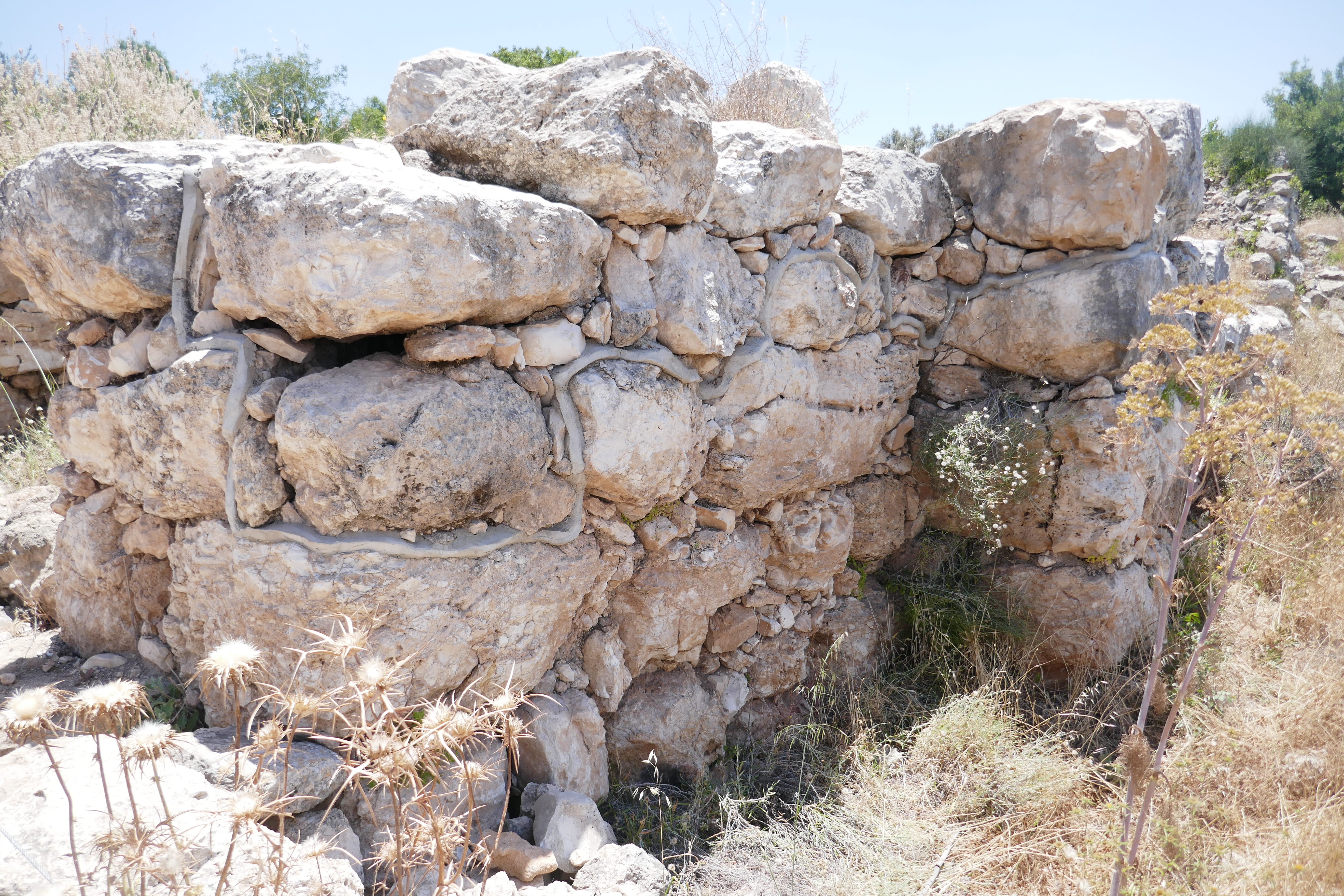
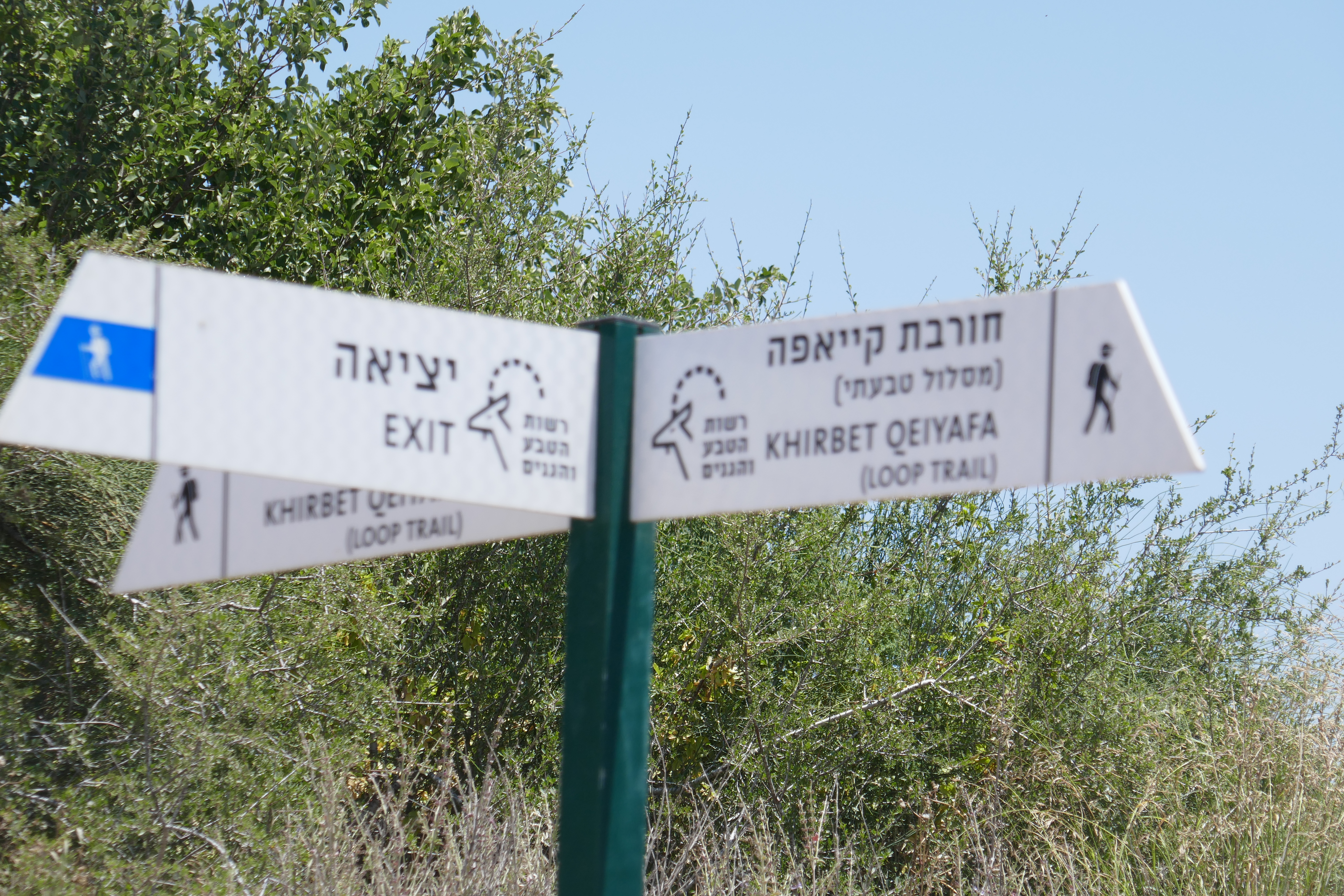
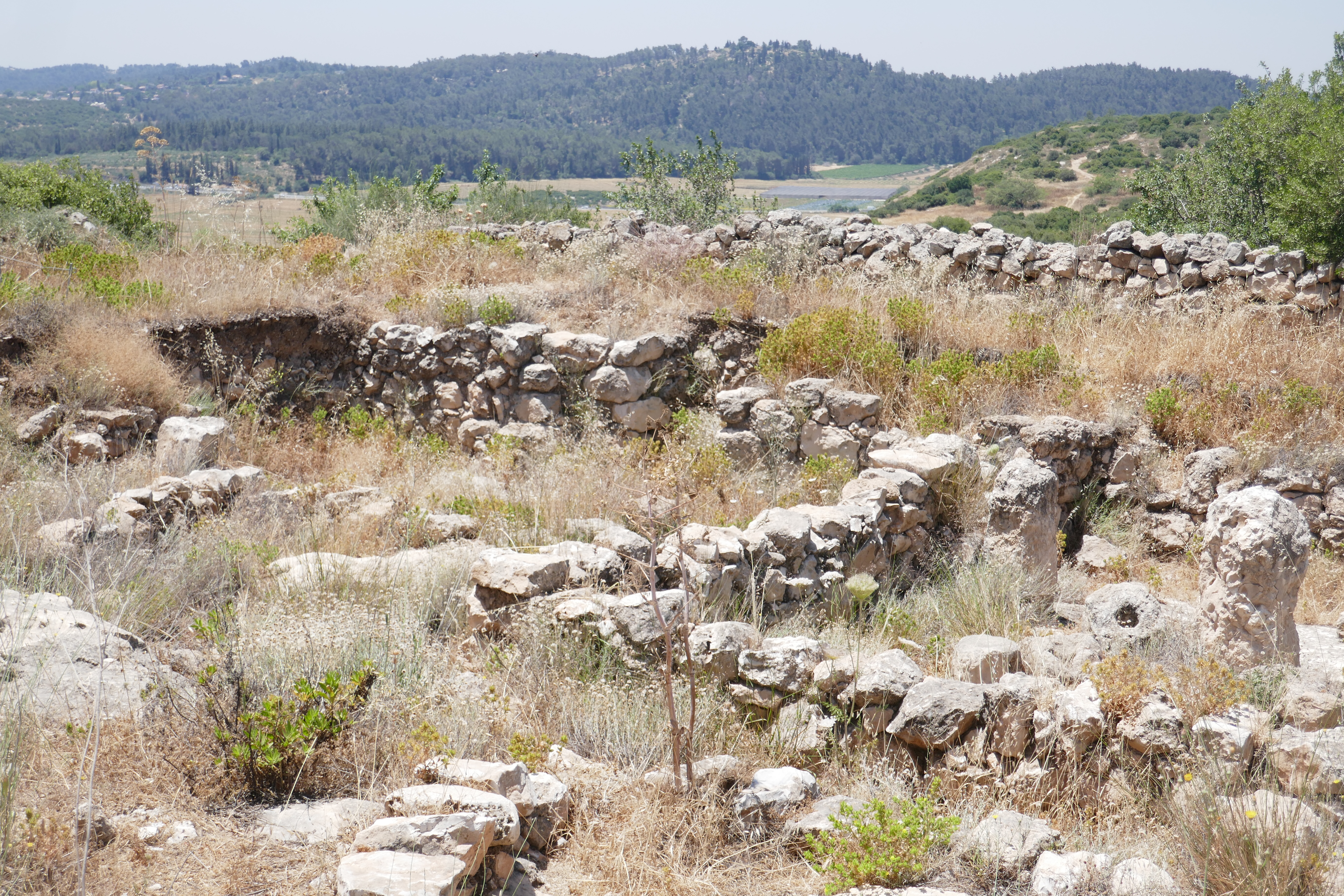
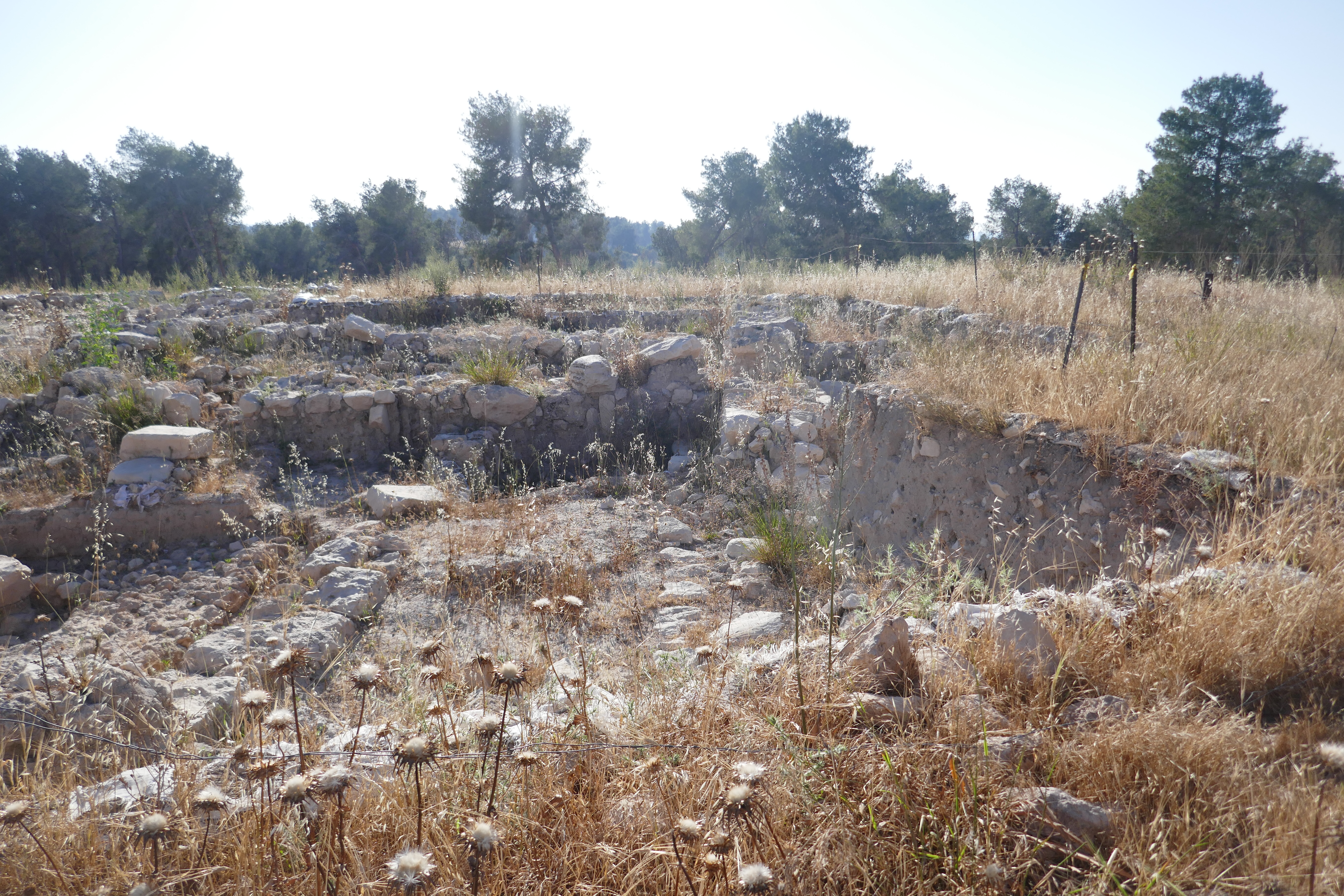
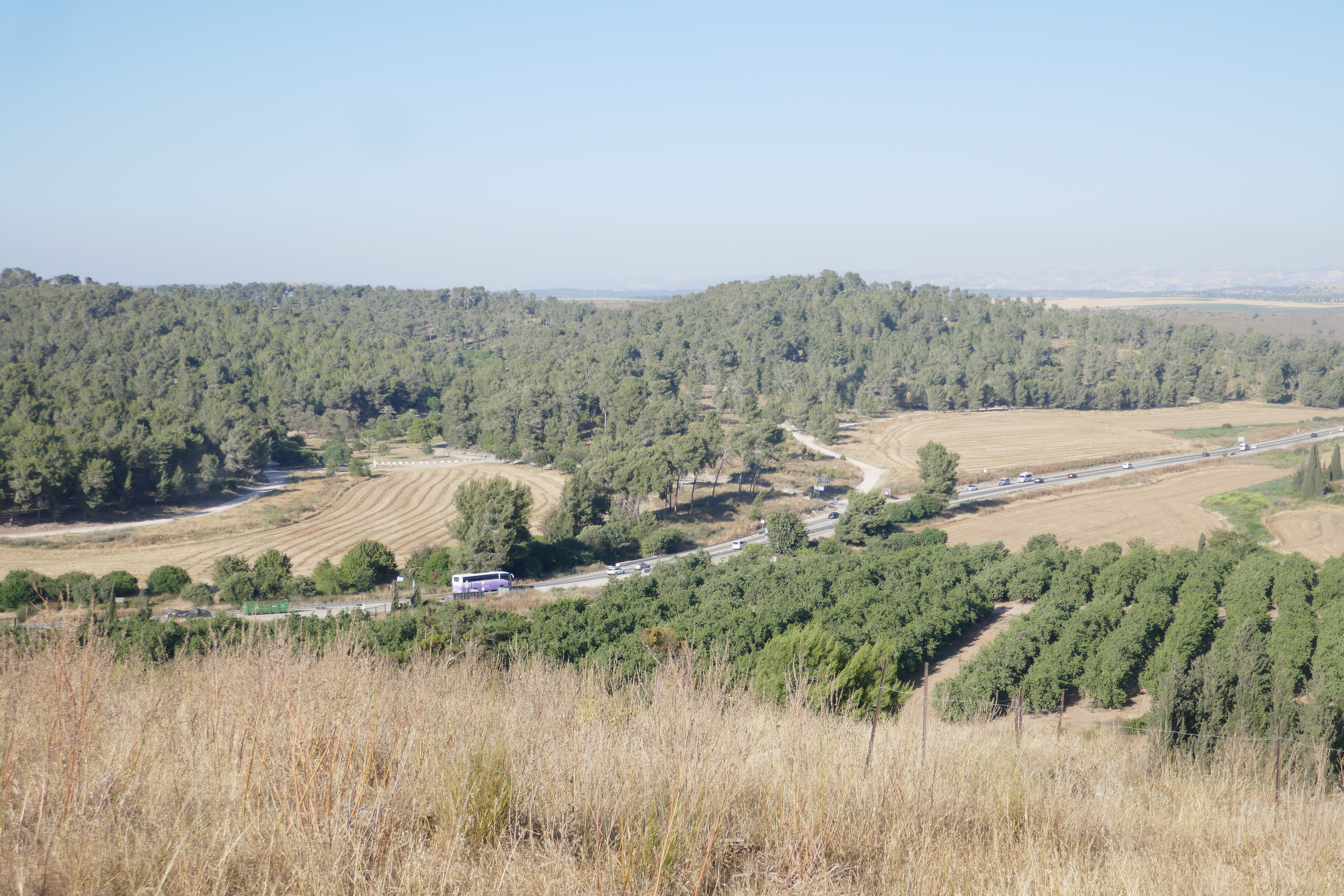
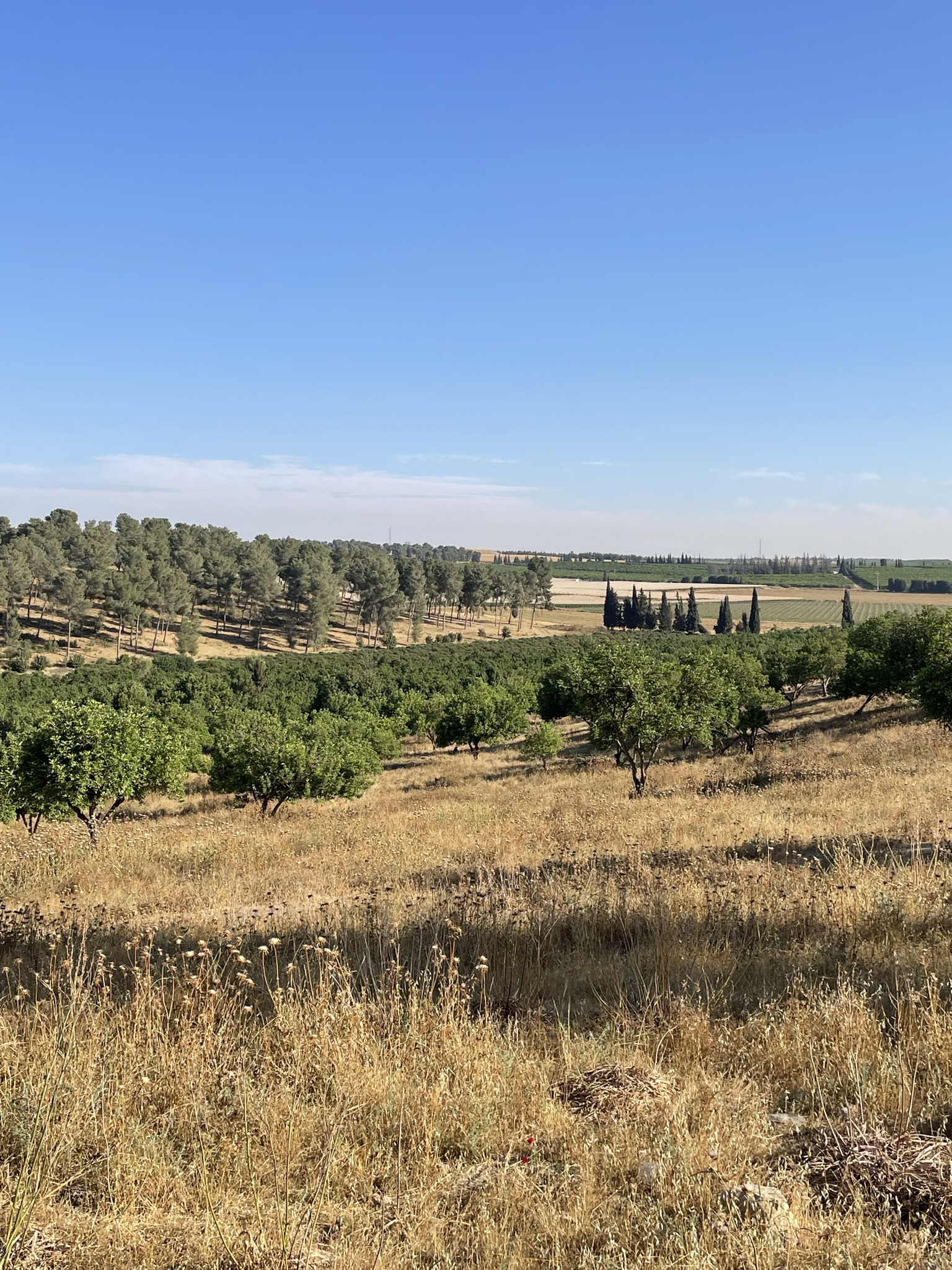
We are still on day one of the tour. After leaving Beit Shemesh, we travel to the Elah Valley to remember the battle between the Israelites and the Philistines, between David and Goliath. Last time we came, we remembered this battle from the top of tel Azeka. This time, we are actually across the valley to the east of tel Azeka, on tel She’arayim, an Israelite city known for having two gates. That is what the word she’arayim means in Hebrew – “two gates.” This is significant because at the time of David, most Israelite cities had one gate. The city would be easier to defend if it only had one gate. This city, which overlooked the valley of Ela had two. It is also identified as Khirbet Qeiyafa. This city was a likely place for staging and supplying the Israelite army when it was facing off with the Philistines as recounted in 1 Samuel 17. It sits just north of where the Israelites were probably encamped.
ruins tel She’ayarimtel She’ayarim ruinsFlat stones cover water channelLooking west toward tel AzekaLooking westward to tel Azekaruins tel She’ayarimview looking south west from tel She’ayarim into the plain where the battle would have likely beenthick line denotes where reconstruction startsruins tel She’ayarimcarved out rock to hold post for wooden gate doorruins tel She’ayarim
It is our desire to help you grow in your knowledge of Adonai and His Word. If you are looking for additional information and/or materials, please visit our website at RootedinHisWord.org and our Facebook page.
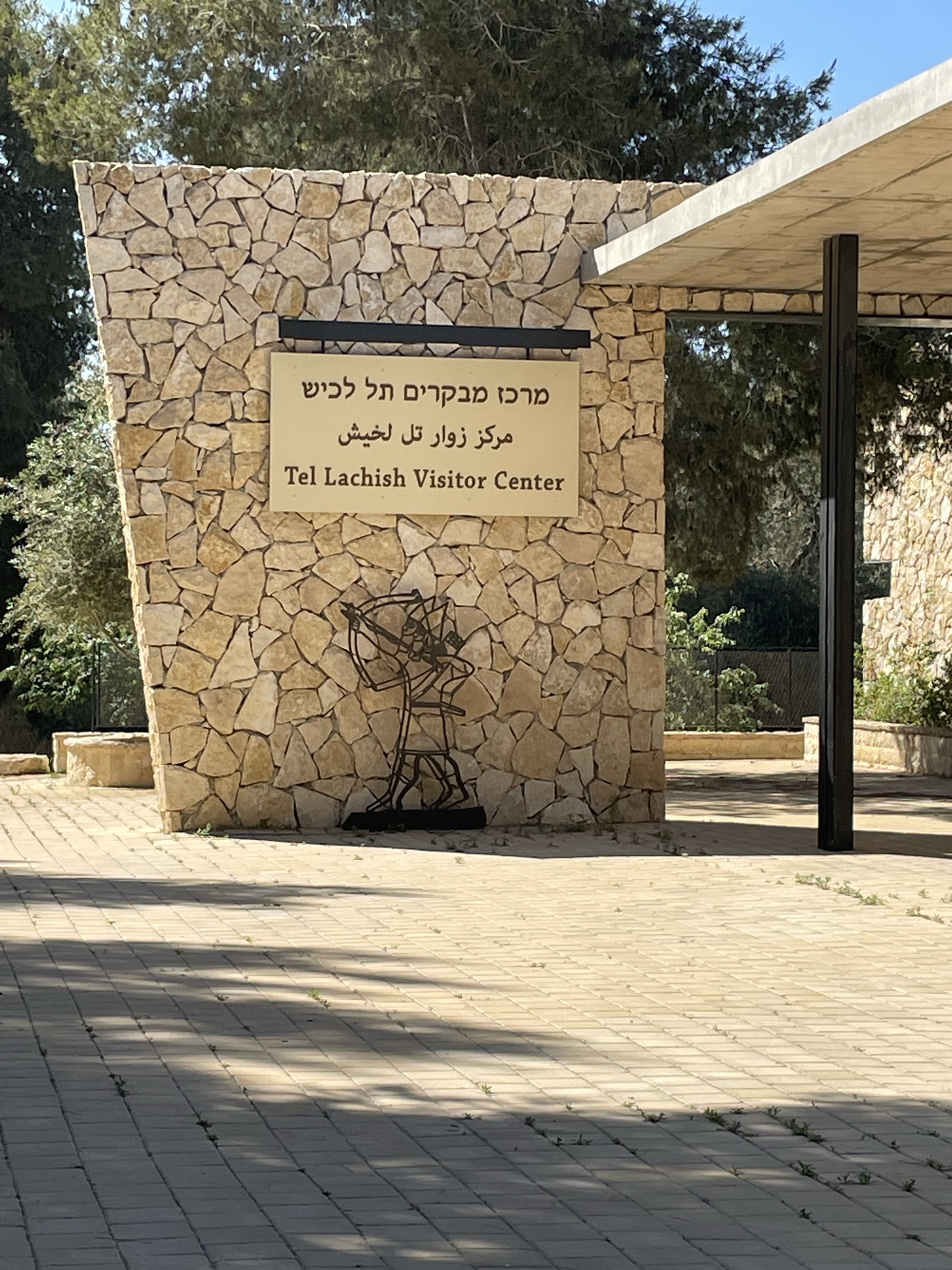
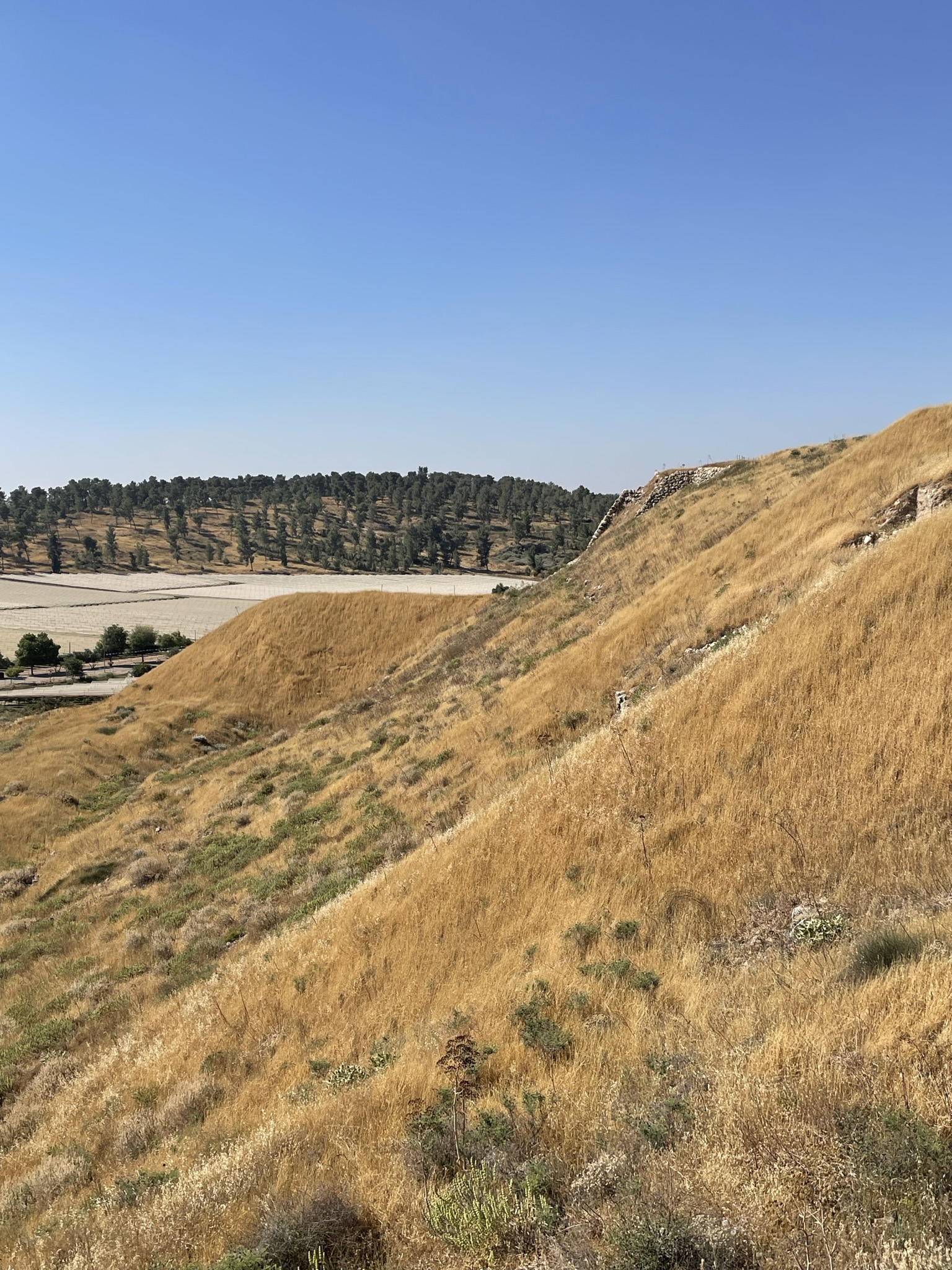
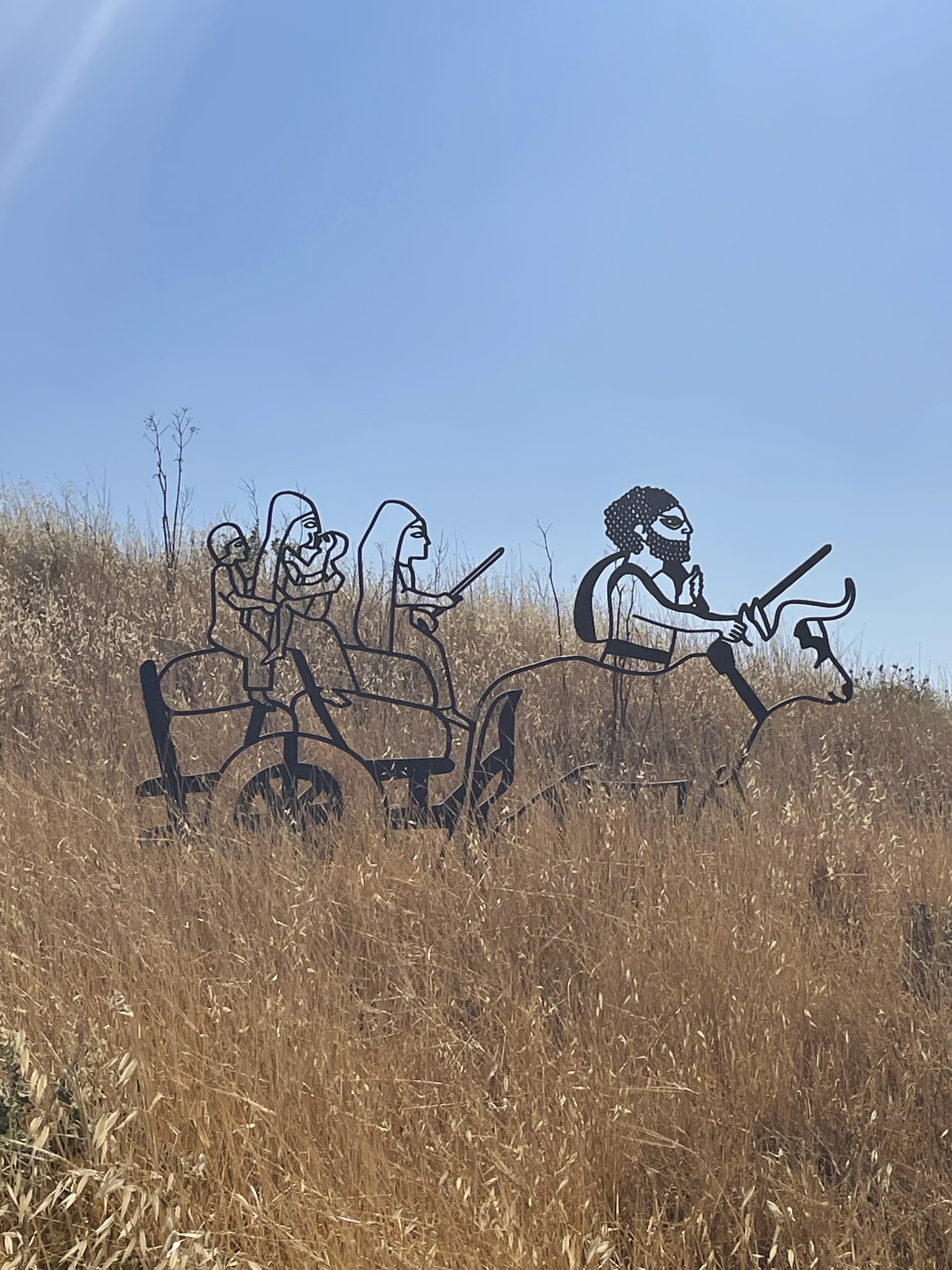
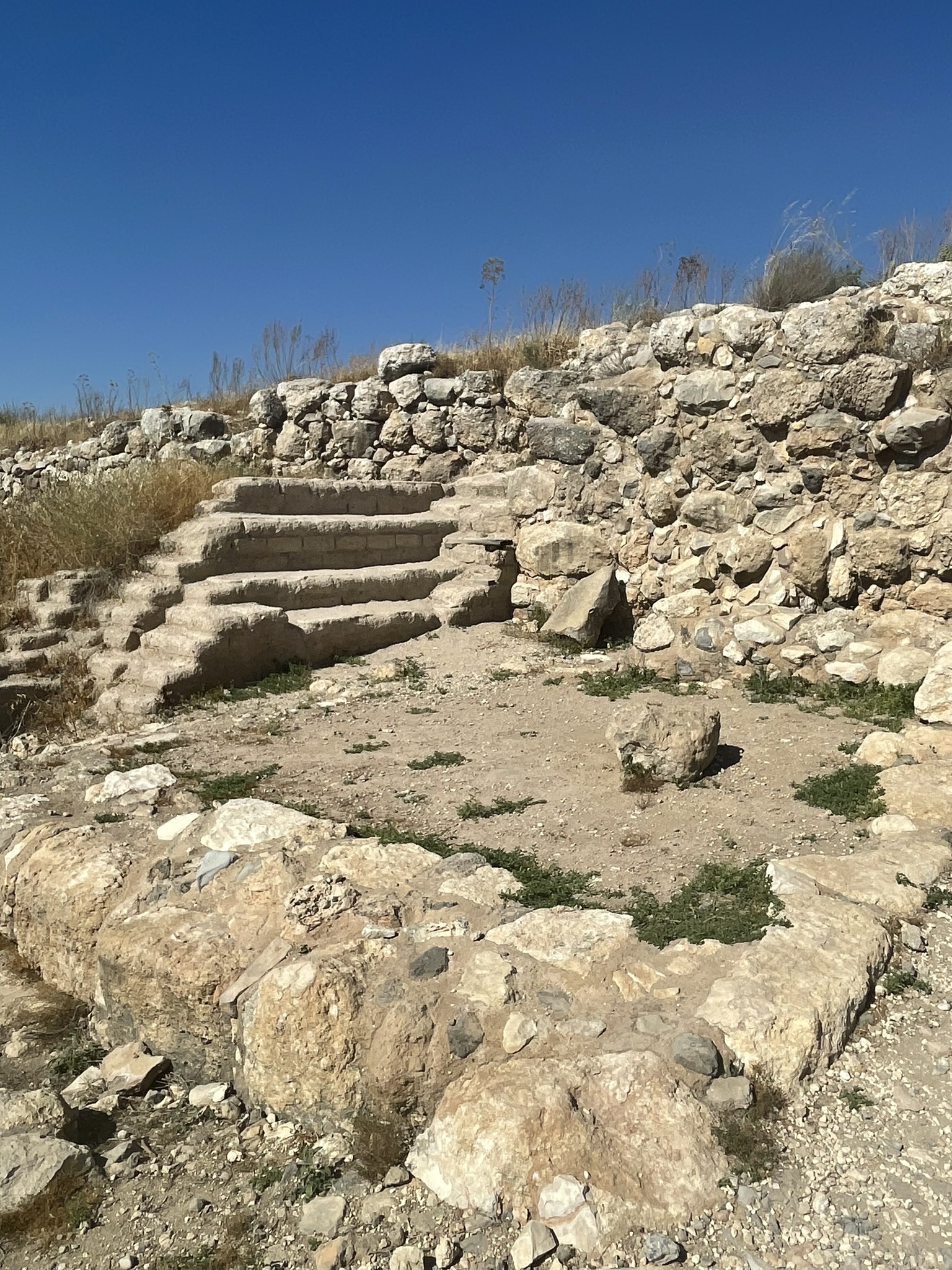
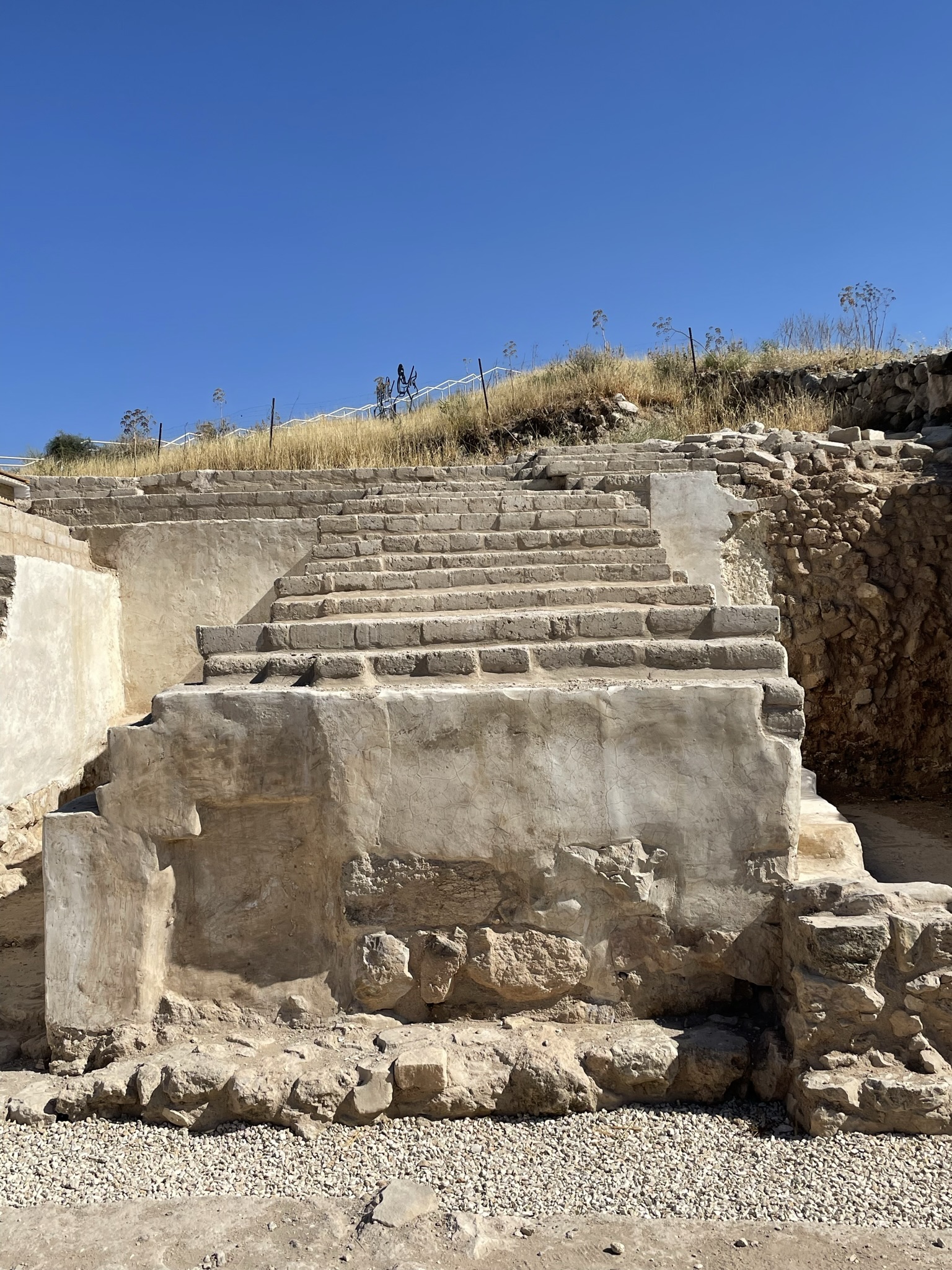
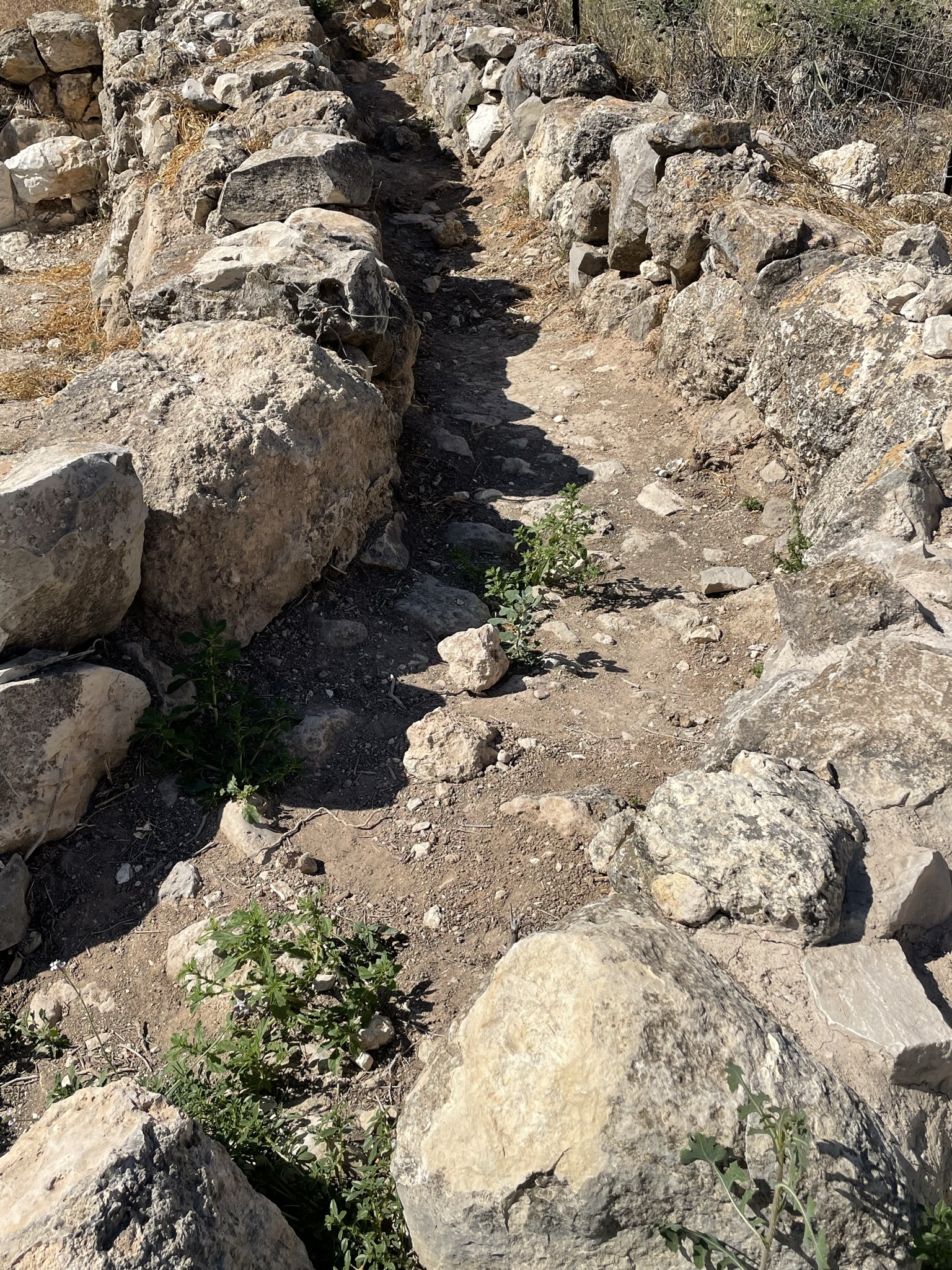
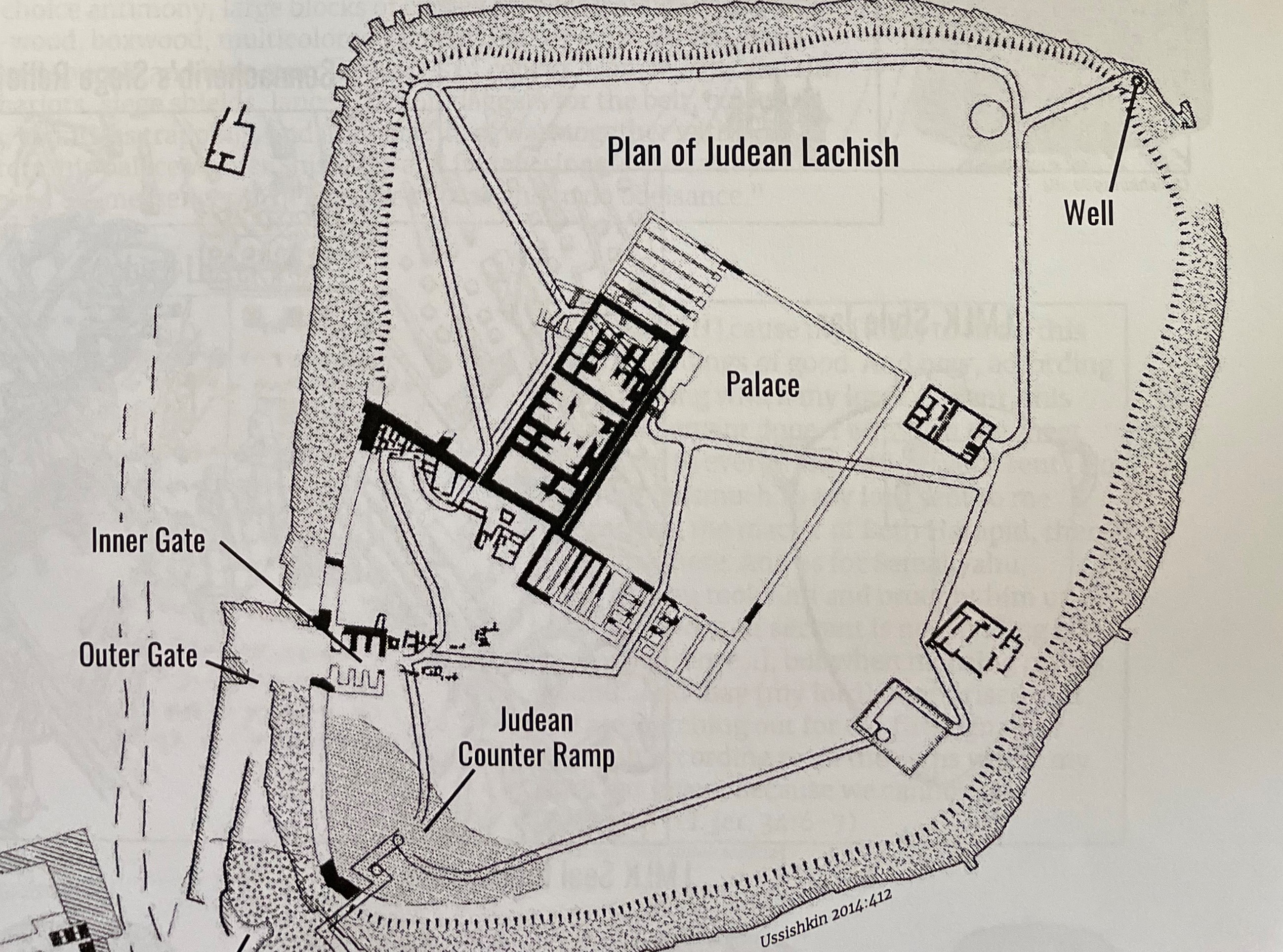
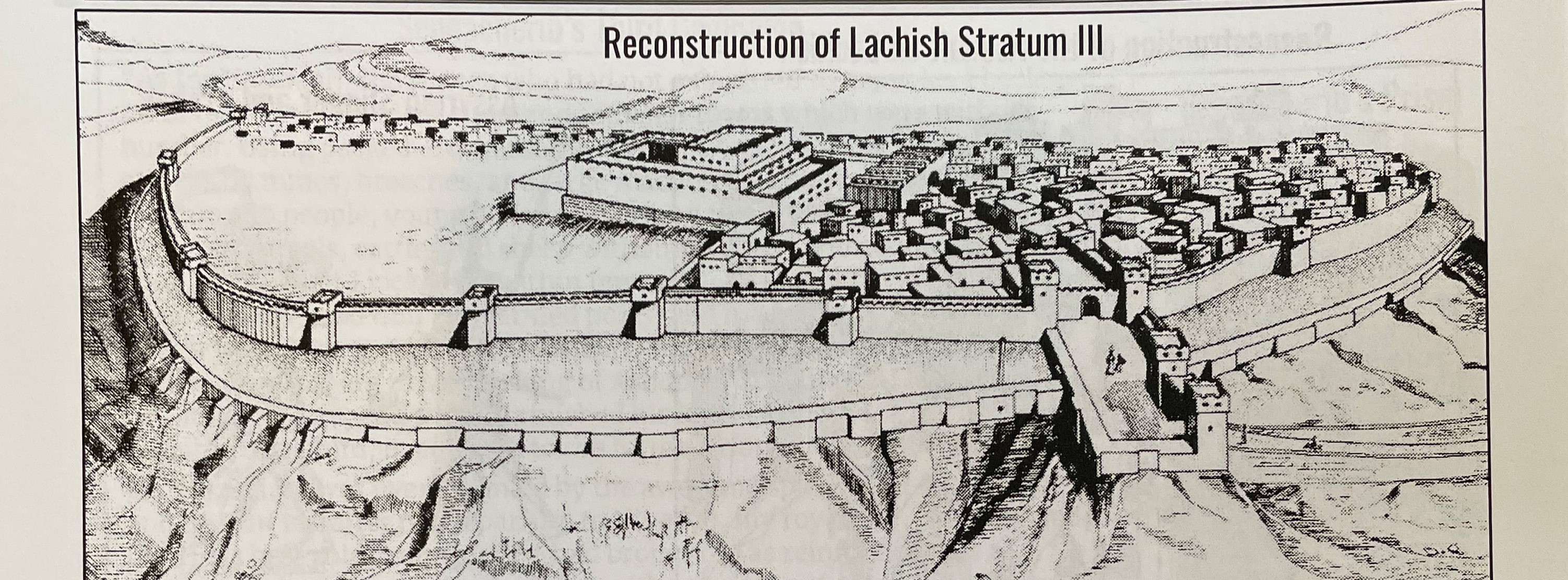
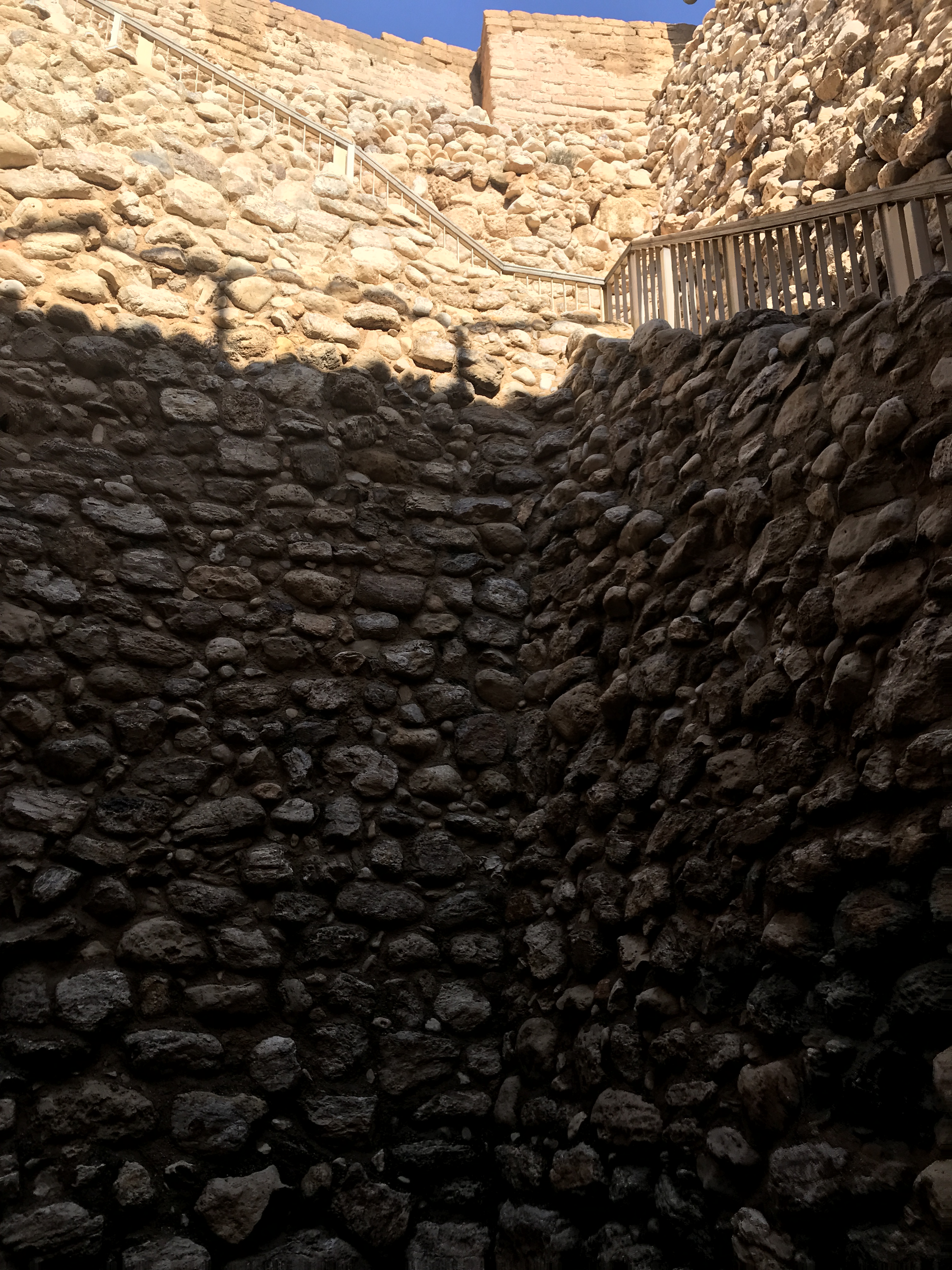
Only recently has the site at Lachish become fully open with all its facilities. The parks service has done a wonderful job at this site. Lachish, you may recall from Bible history, was a great city of the Canaanites even before it was occupied by the Israelites. It is known as one of the fortified cities of Hezekiah, a city that was under siege by Sennacherib, king of Assyria, in 701 BC during the reign of Hezekiah, King of Judah. Lachish was, at the time, a highly fortified city, virtually impenetrable–or so it seemed. It had thick, tall walls, steep ramparts, and a well-fortified gate complex. The Assyrians were formidable foes, building a siege ramp against the ramparts of the city. Their custom was to use locals from surrounding towns and villages that they had already captured to build the ramp to discourage attacks on the builders. The residents of Lachish built their own counter-siege ramp, the remains of which can still be seen. To look up the siege ramp is to take in the amazing defenses of the city and to also know that they could see their end coming–closer and closer, day by day. The Assyrians were known to be such brutal enemies that some surrendered without opposition. This was not the way of the Israelites. They fought courageously until the end.
The tel at Lachish is quite extensive. The remains of the royal palace can be seen with a large open area believed to have been used for horses and chariots.
This site is a must-see.
Assyrian siege ramp at LachishWalls of city of ancient LachishRampart of cityJudeans fleeing Assyriansouter gate at LachishGate structure – with nicheGate structure – LachishView of the expanse of the city of Lachish (much remains to be excavated)Part of water system at Lachish
It is our desire to help you grow in your knowledge of Adonai and His Word. If you are looking for additional information and/or materials, please visit our website at RootedinHisWord.org and our Facebook page.
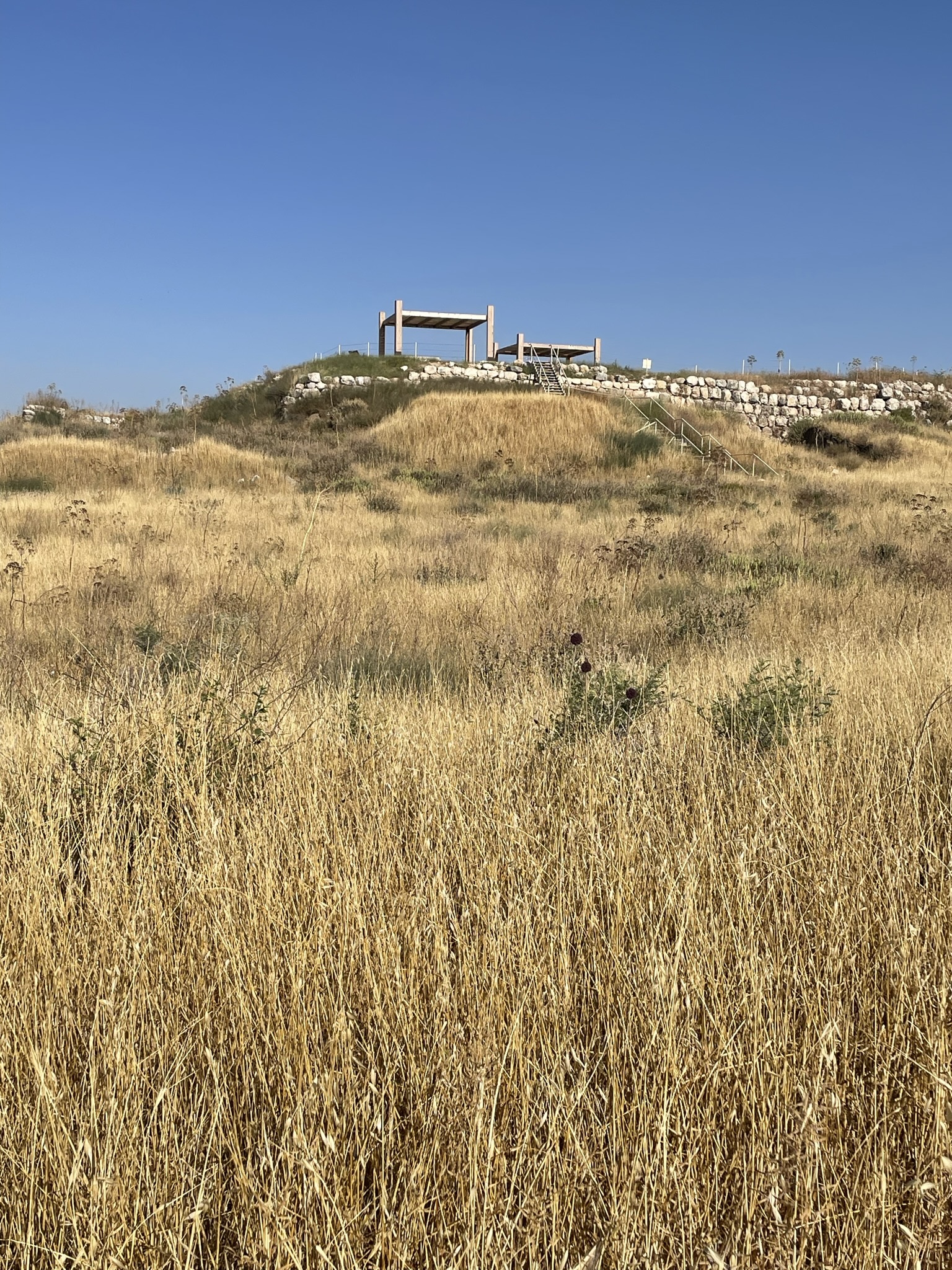
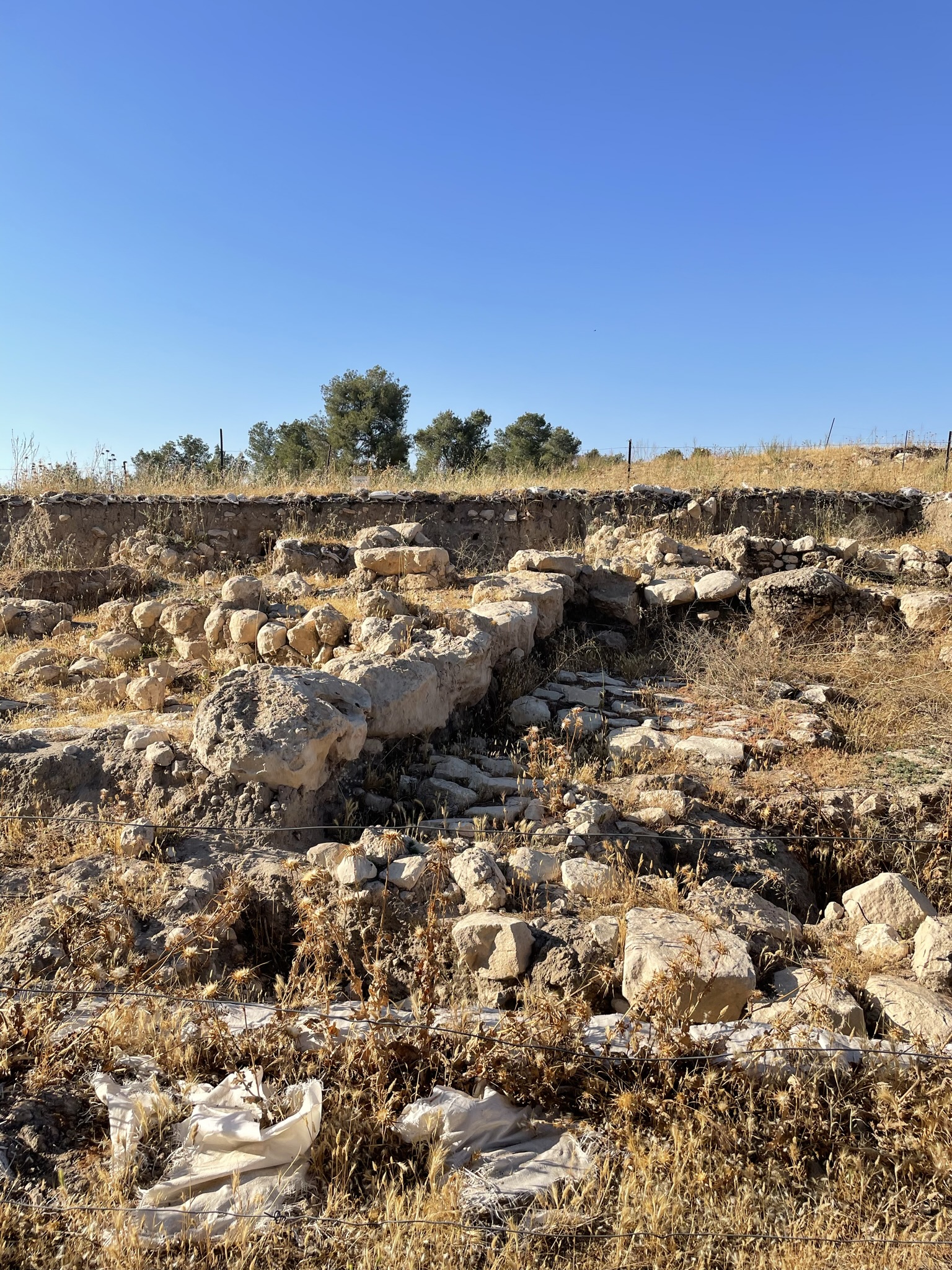
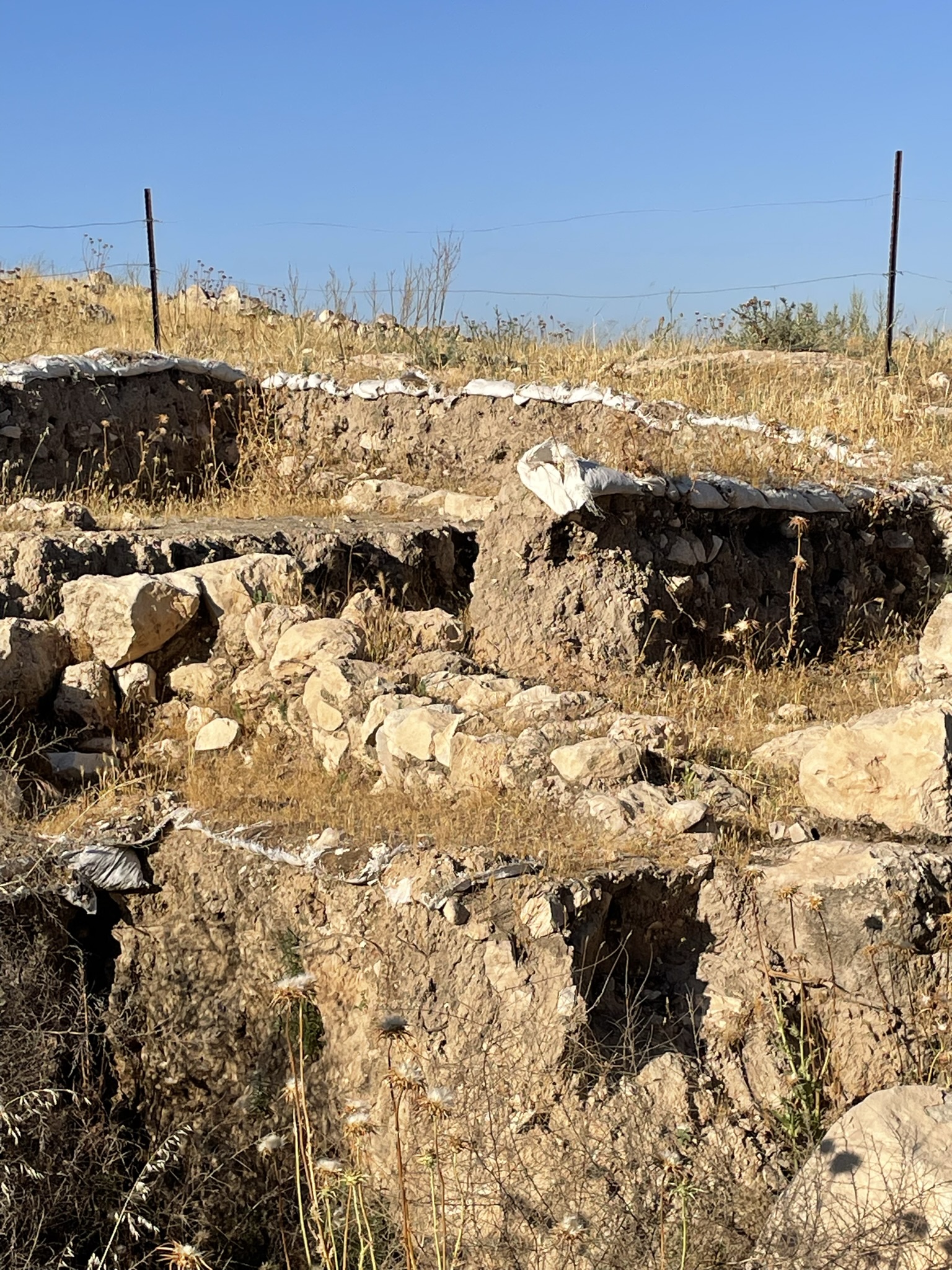
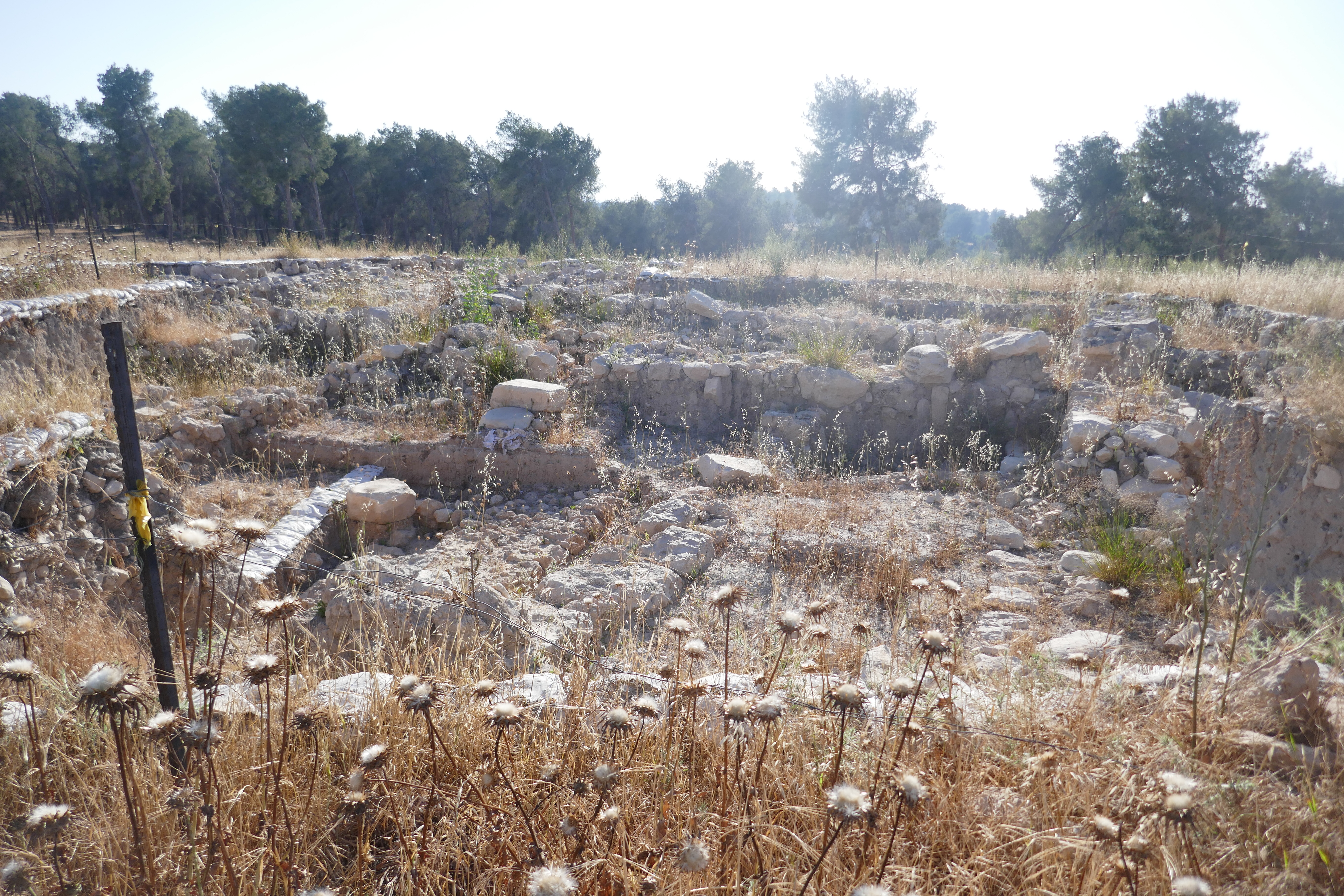
Visiting Ziklag, we found it to be a little off the beaten path. Literally, we had to wait for the herd of goats to pass before we could proceed. We reached a point where the road was impassible, and from there we climbed the tel. Ziklag, you may recall, was where David was at one point hiding out from Saul in the region of the Philistines. Ziklag was a town given to David by Achish, a Philistine king. (See 1 Samuel 27:6) While David was out with his men on a “mission,” his wives and the wives of his men were kidnapped by the Amalekites and the city was burned. (See 1 Samuel 30)
The ruins at this site have not been fully excavated yet, but it is very helpful to put a place to a name in a Bible story.
Tel Ziklag ruinstel Ziklag Iron Age ruinstel Ziklag Iron Age ruinsview from tel Ziklagview from tel Ziklag
It is our desire to help you grow in your knowledge of Adonai and His Word. If you are looking for additional information and/or materials, please visit our website at RootedinHisWord.org and our Facebook page.
the ancient tel is located in the south of Israel and 25 miles north of the Wilderness of Zin where Israelites wandered for 40 years after leaving Egypt
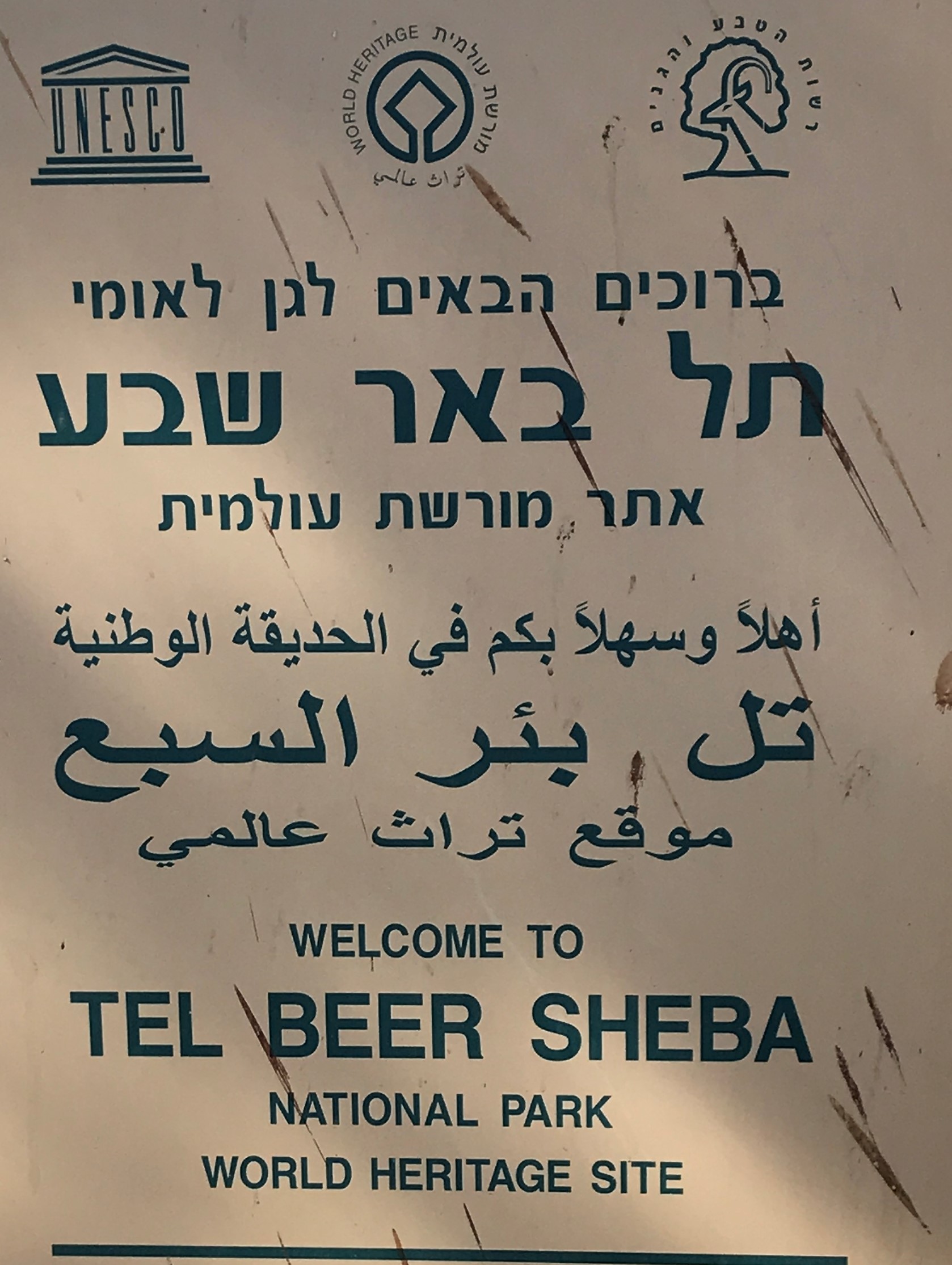
Tel Beersheba is one of the oldest Biblical sites in Israel dating back to the time of the patriarchs. See
Excavations at Beersheba have identified many strata (different civilizations/occupations of the site) When the land was divided under the leadership of Joshua, Beersheba was part of the allotment of Simeon
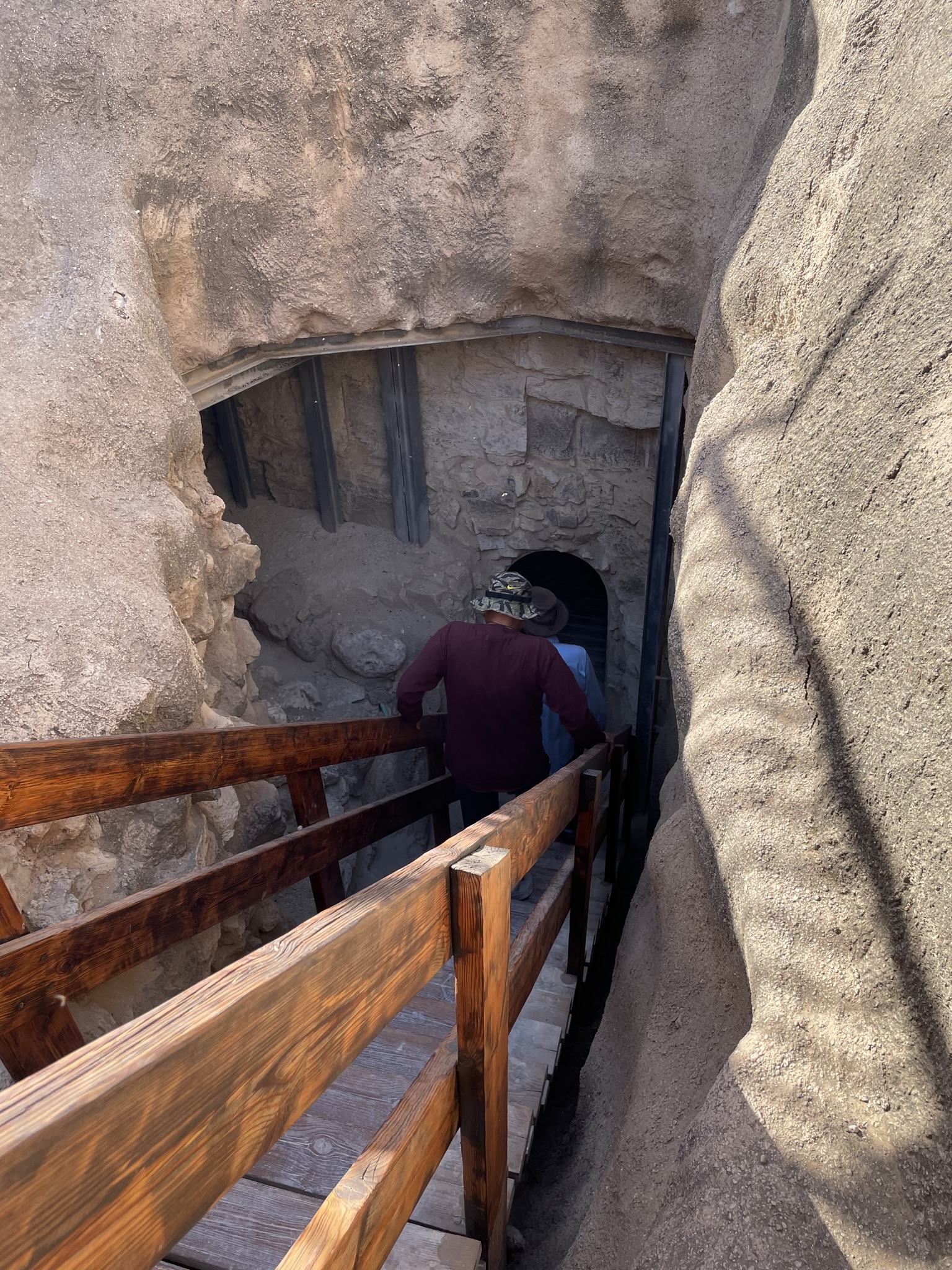
The original water system for the town in ancient times was centered around the well. Later, rain water was collected from roofs and courtyards and diverted by a channel beneath the street into the cistern.
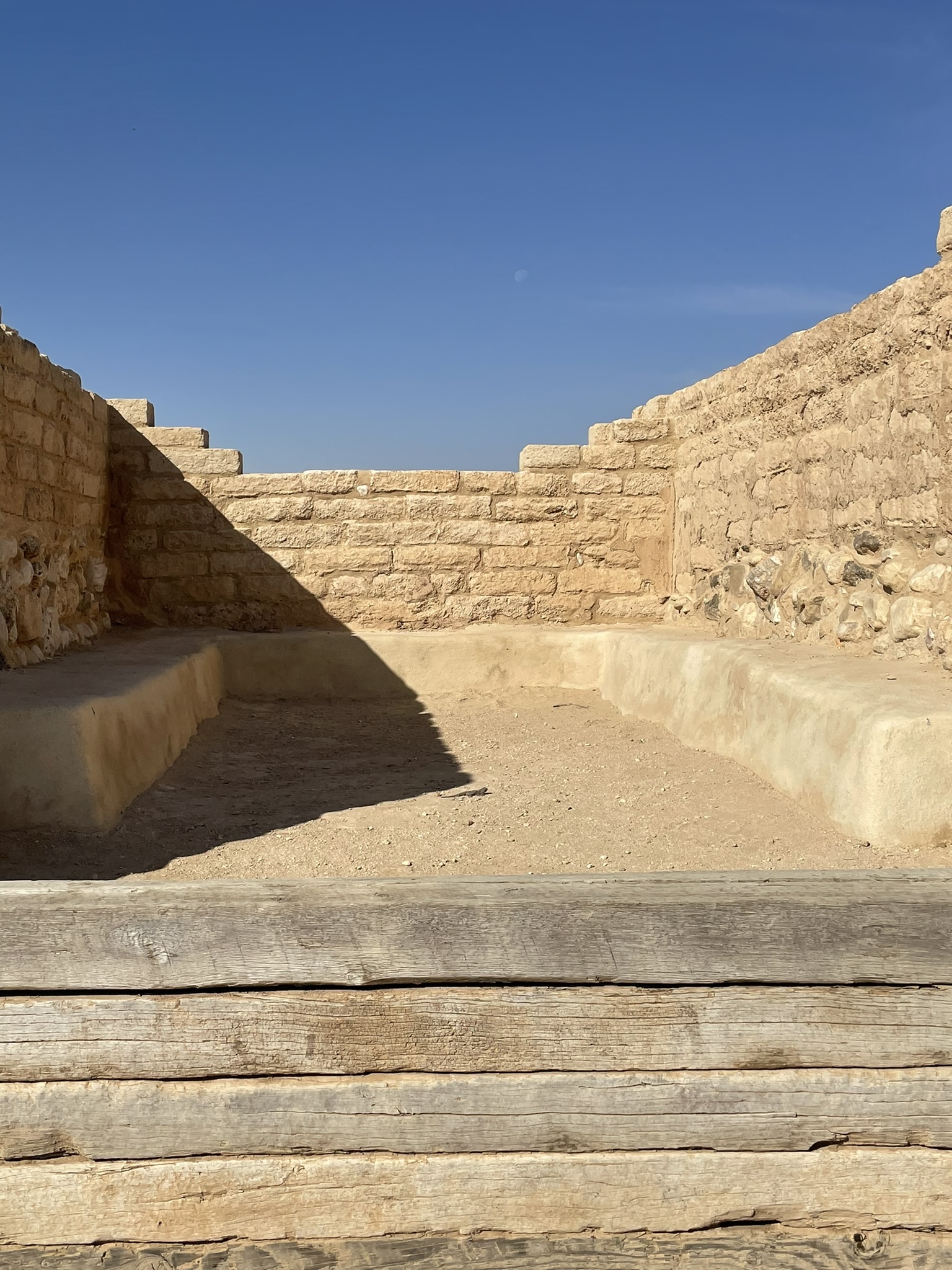
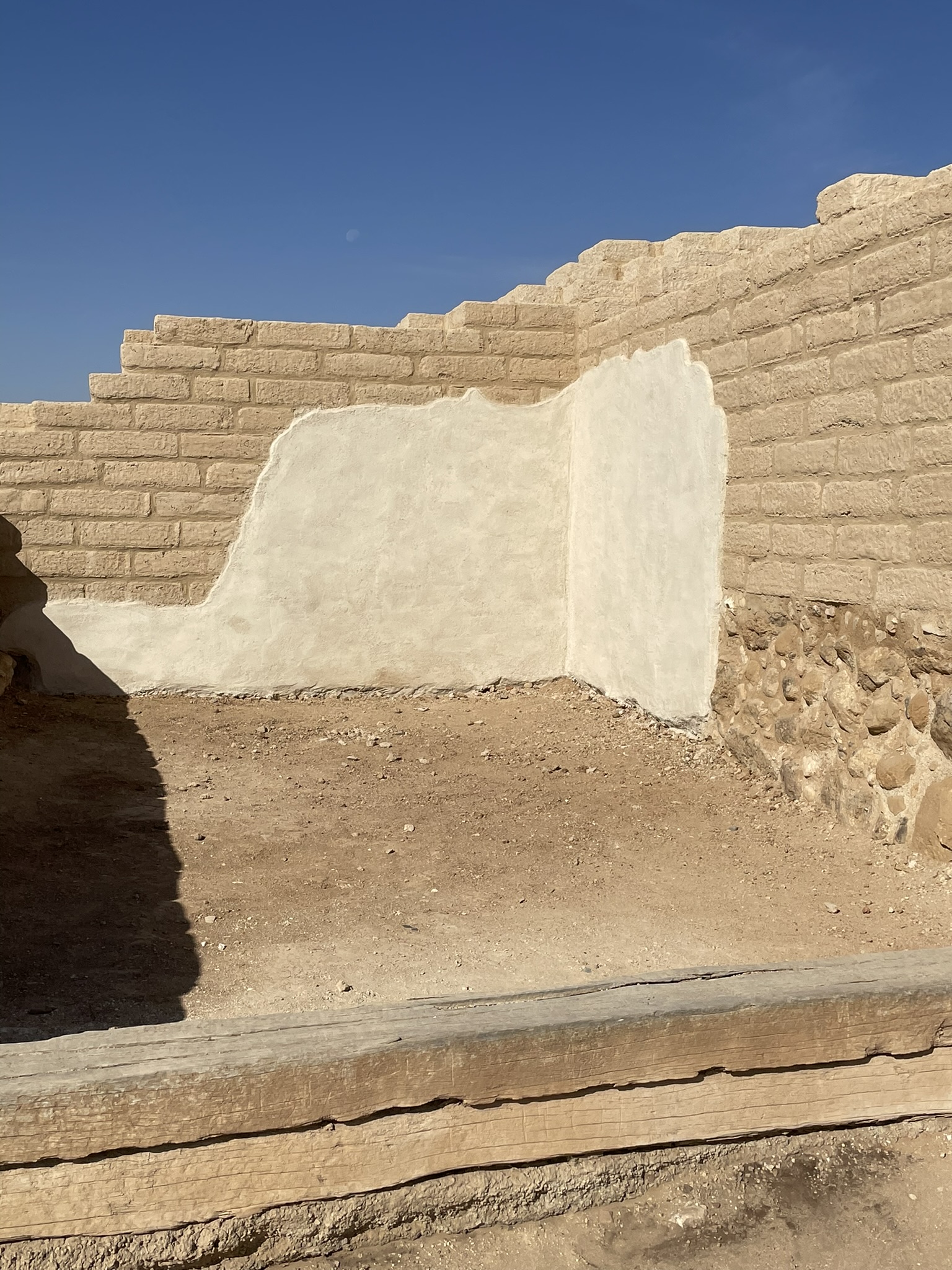
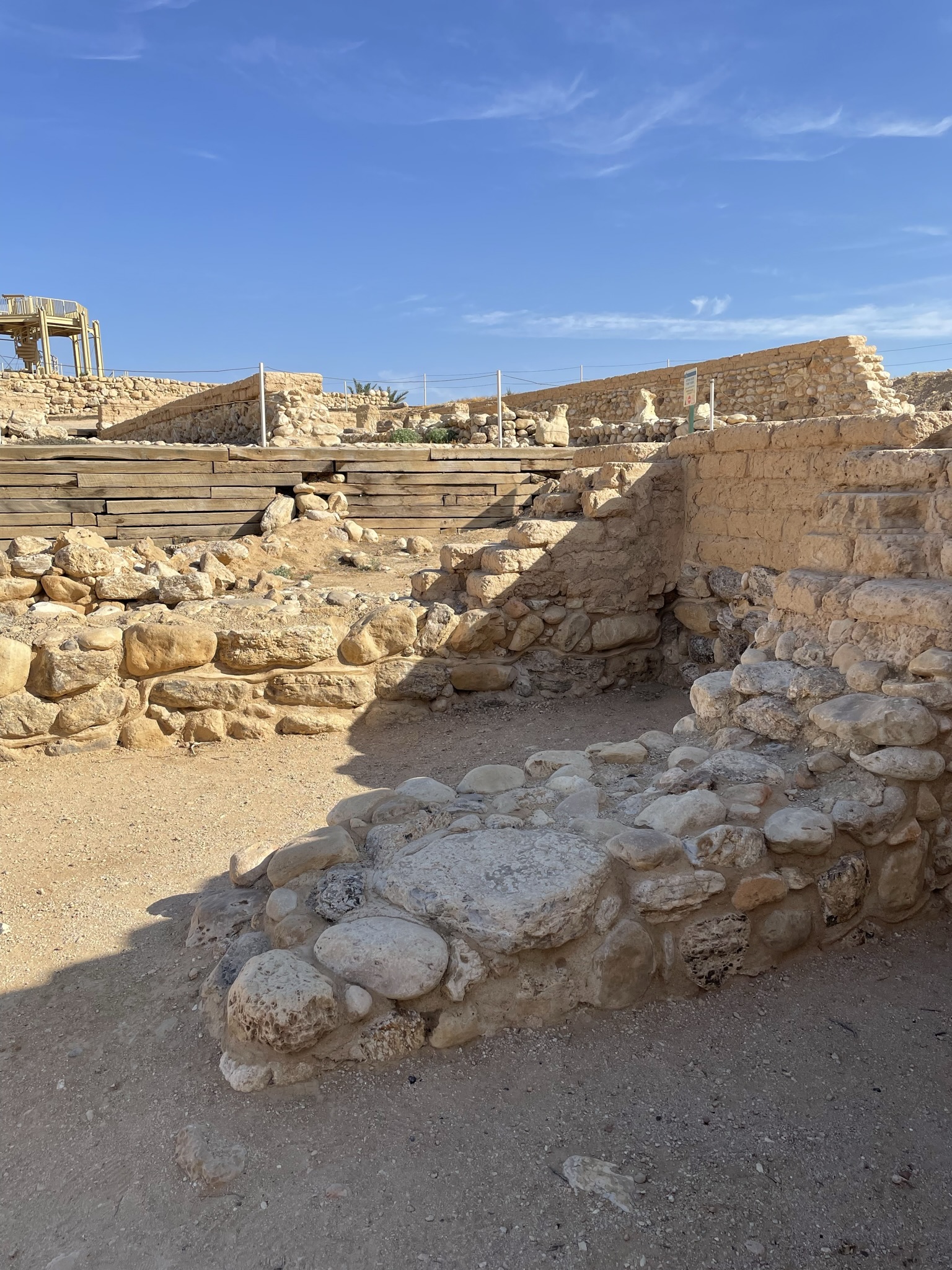
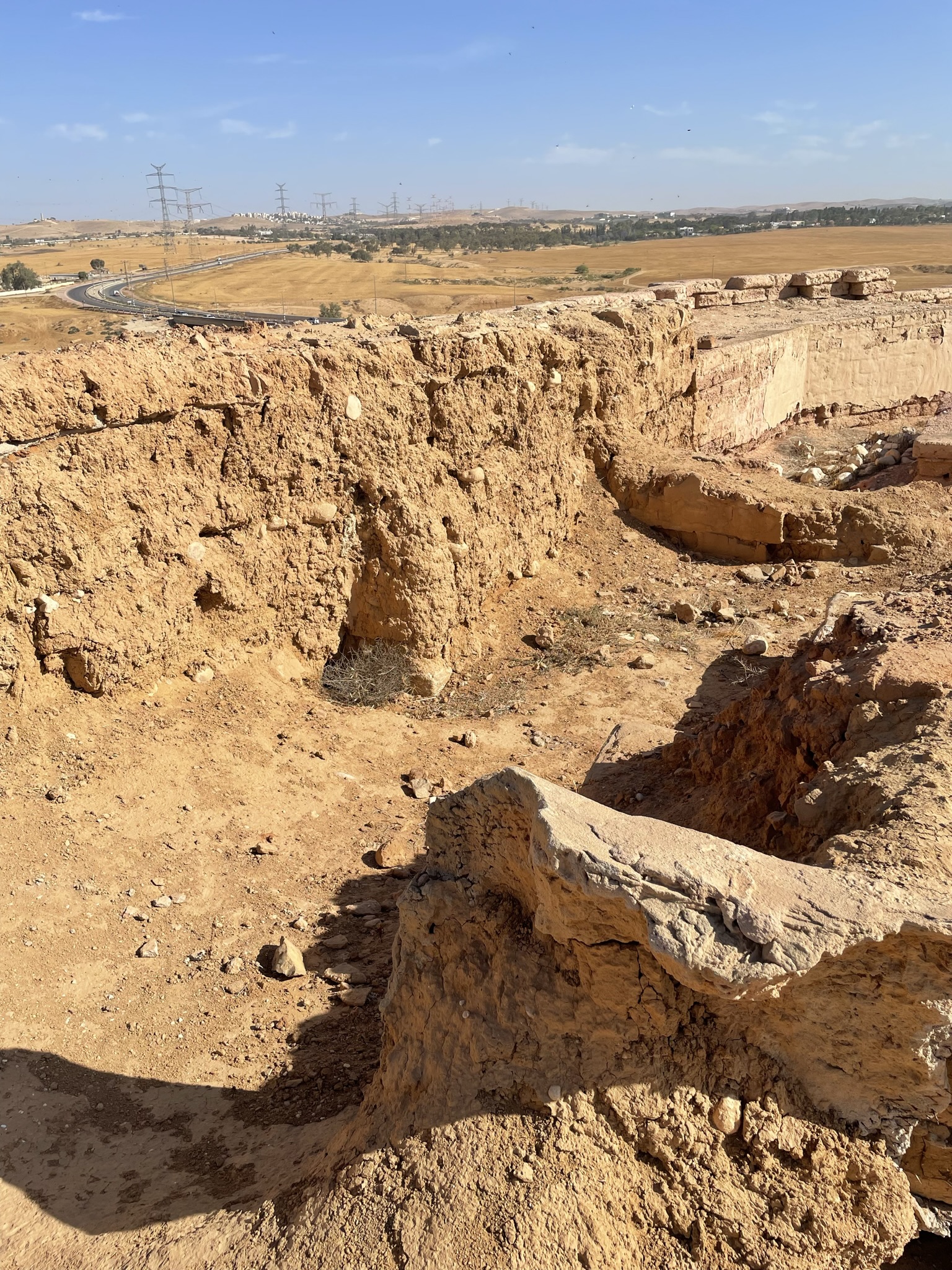
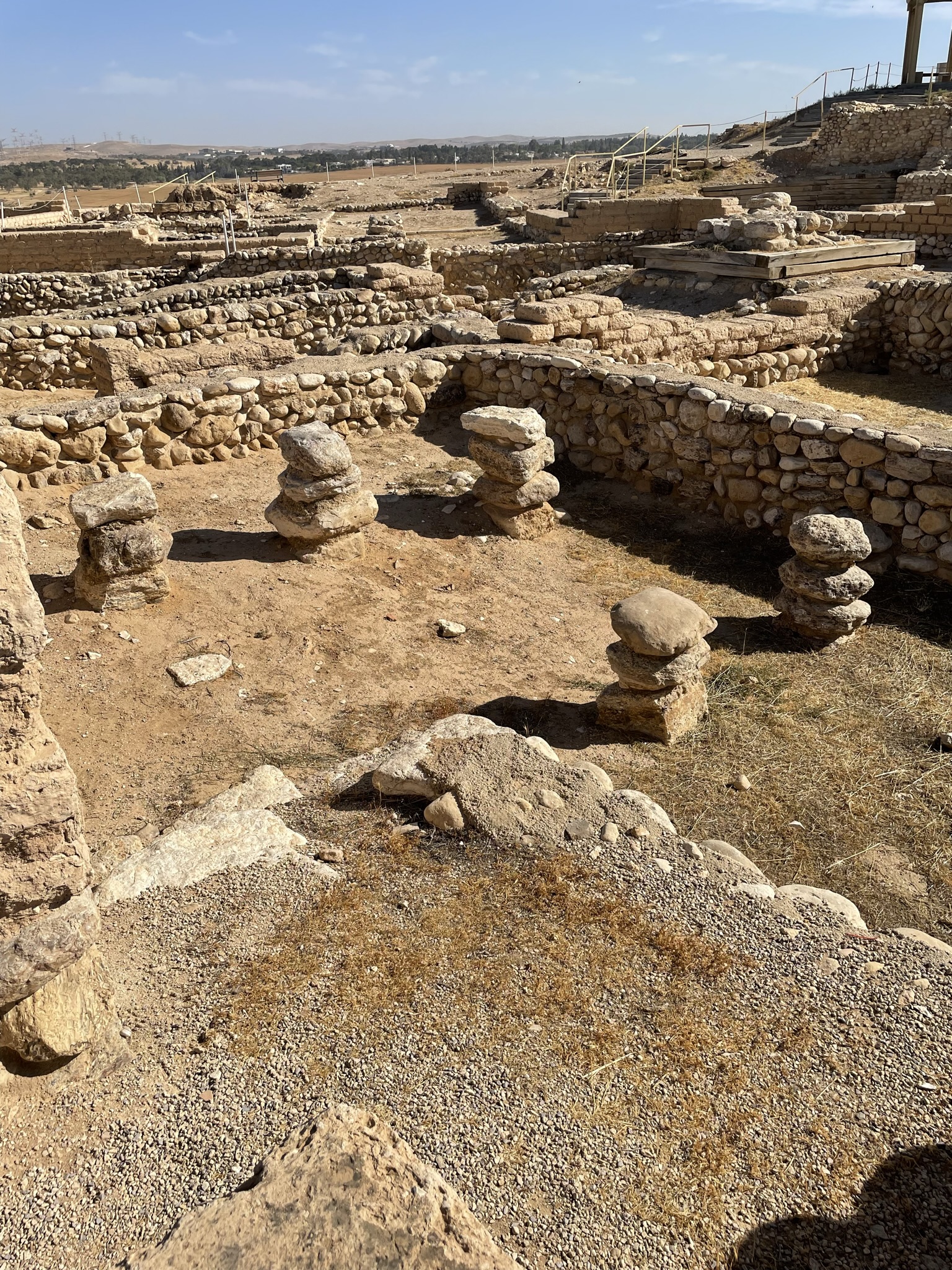
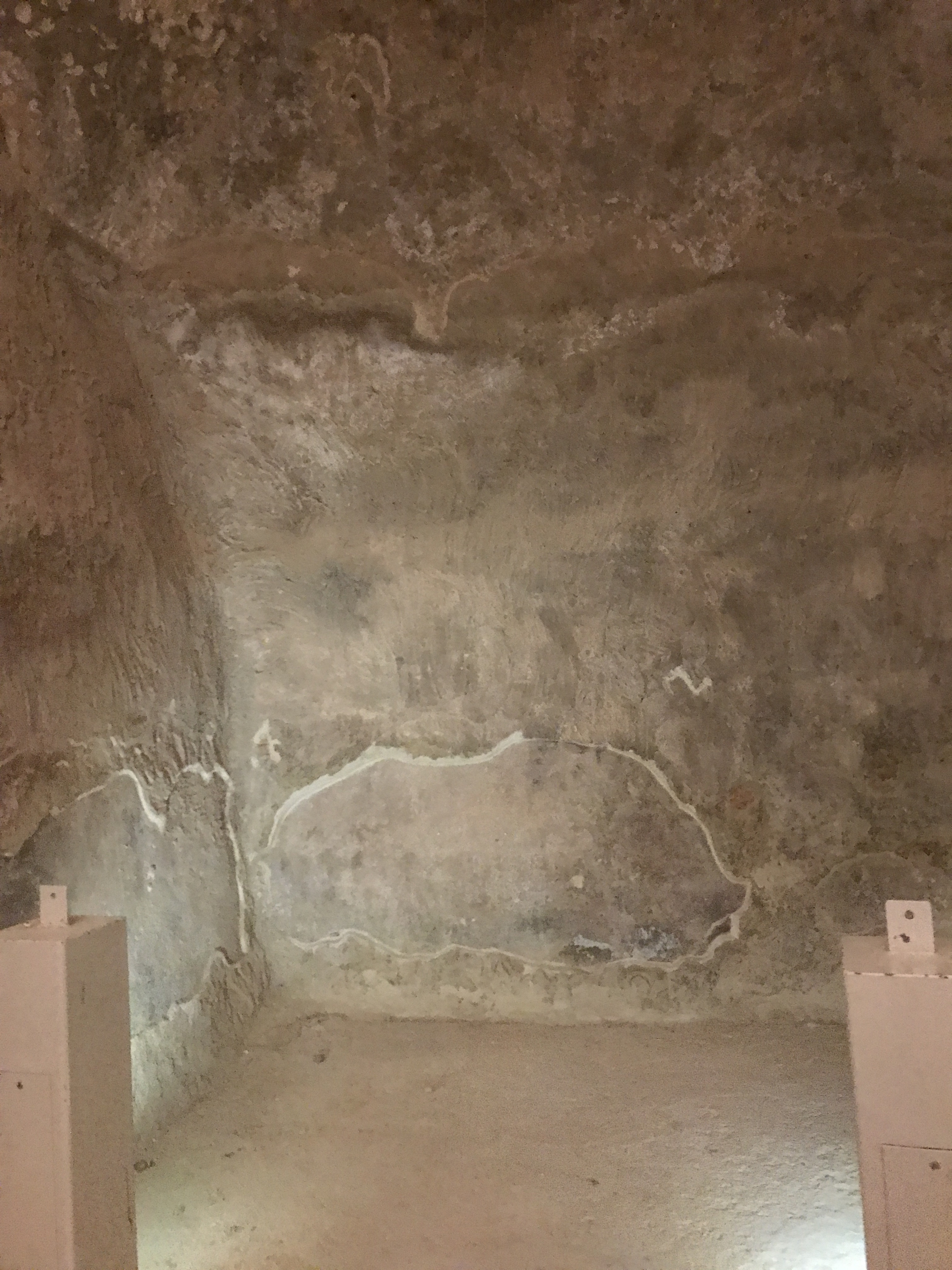
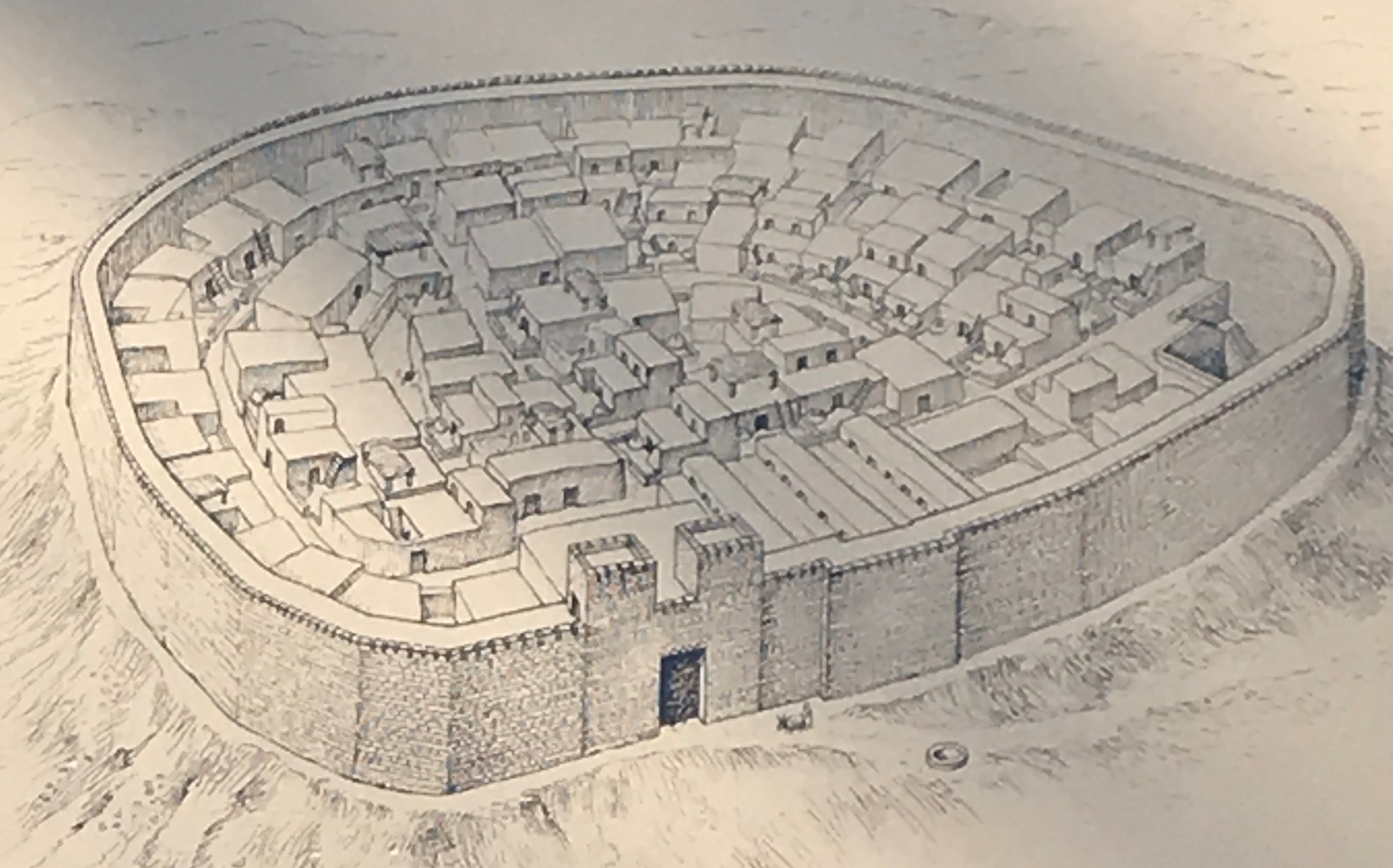
This gives us a good view of the ramparts of the city wall.This provides a view of the rampart (glaci) outside of the city provided added protection for the city.entering the city gateChamber inside of the gate. These areas would be used for conducting civil matters as well as business matters. Note the benches along the walls.Benches inside the city gate where legal matters were handled by the elders of the cityReconstruction in the gate niche showing it was plasteredanother view of the gate niche which would hold soldiers in time of siegeevidence of the casemate wall that existed around the cityBeersheva – ruins of ancient televidence of Israelite occupation – pillared housesview from the observation tower – showing the extent of the ancient telentrance into the cistern (modern)View looking up out of the cisternEvidence of plastering of the cistern wallsThe land/terrain surrounding Tel Beersheva Artist’s rendering of the city in ancient times
It is our desire to help you grow in your knowledge of Adonai and His Word. If you are looking for additional information and/or materials, please visit our website at RootedinHisWord.org and our Facebook page.
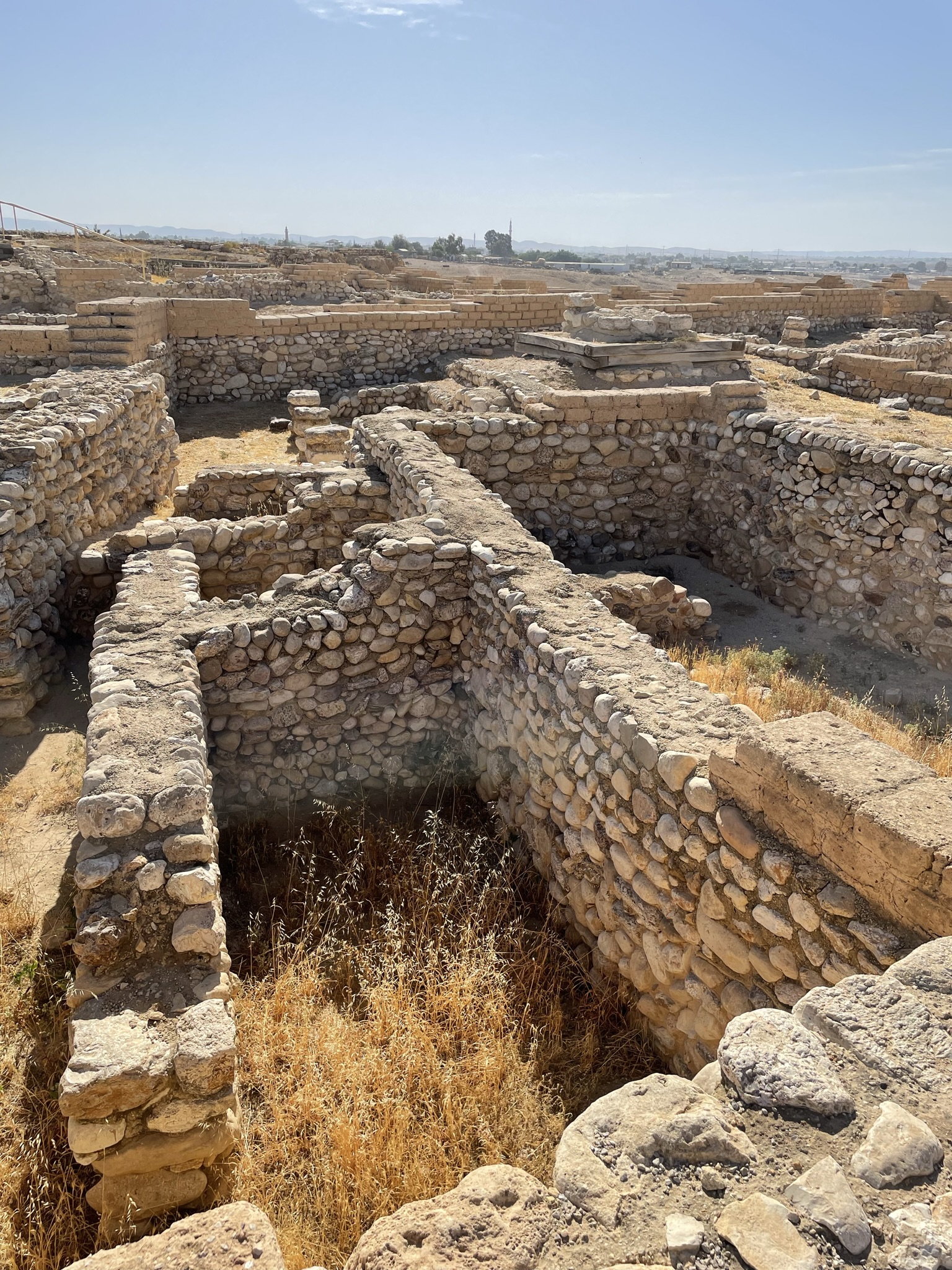
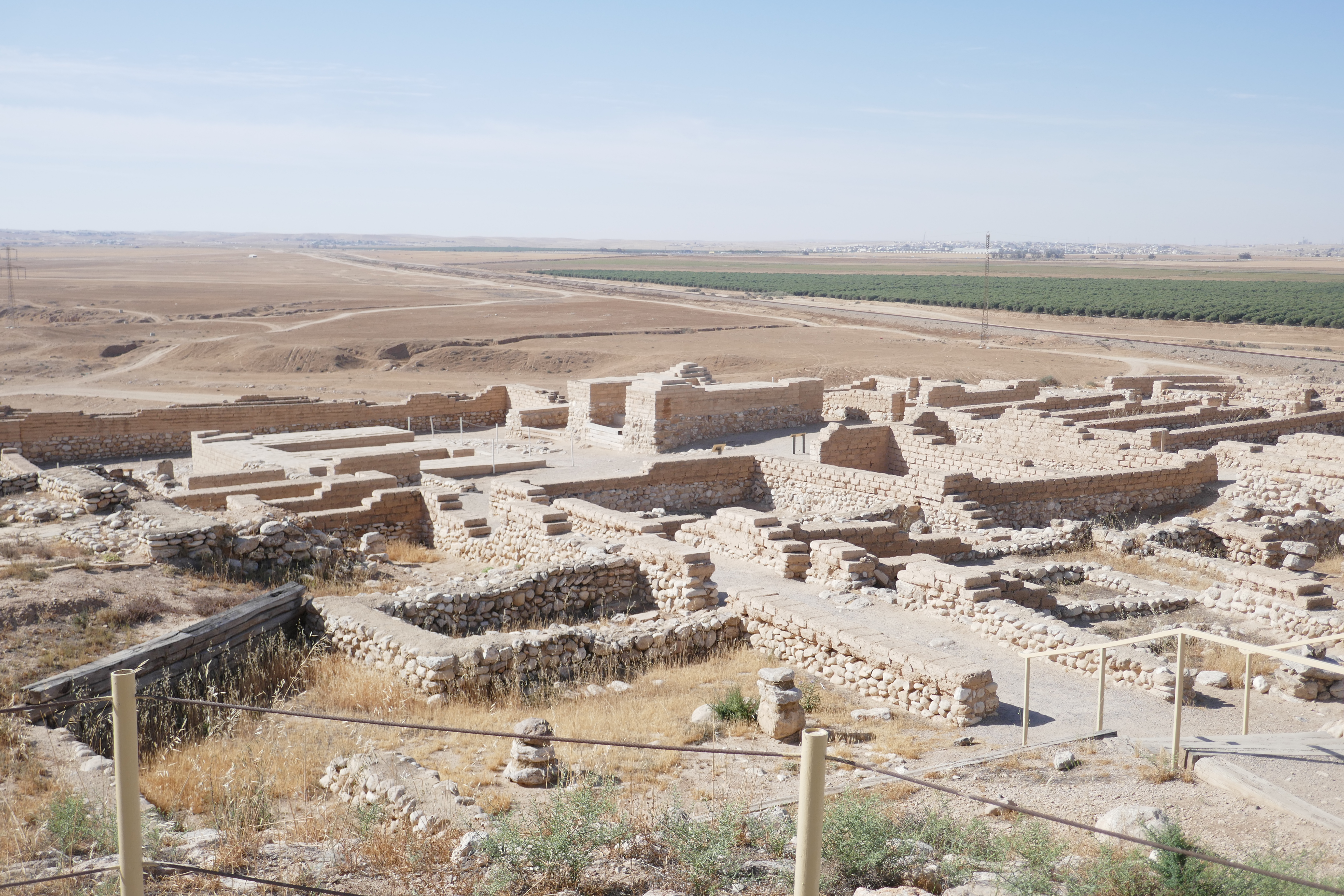
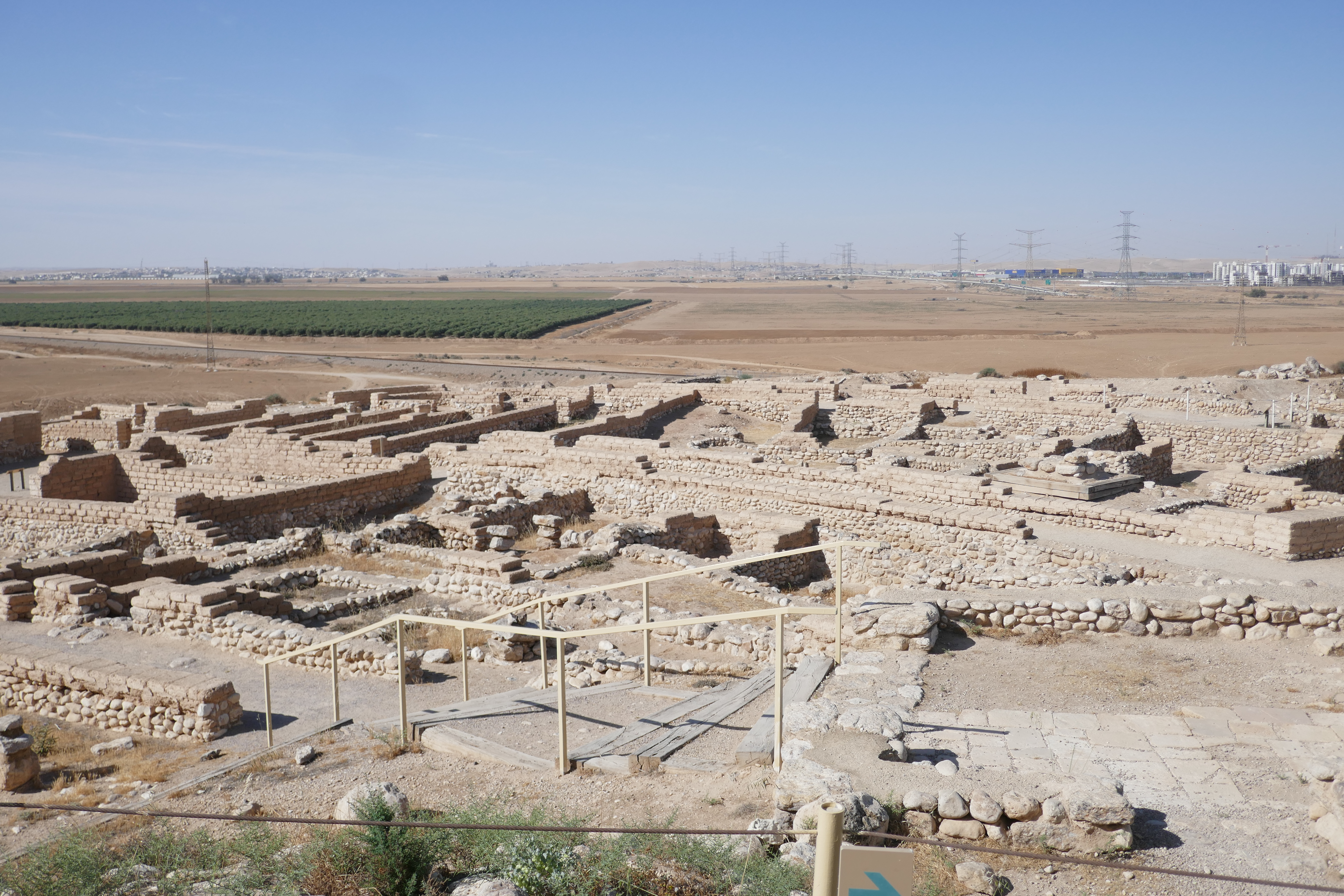
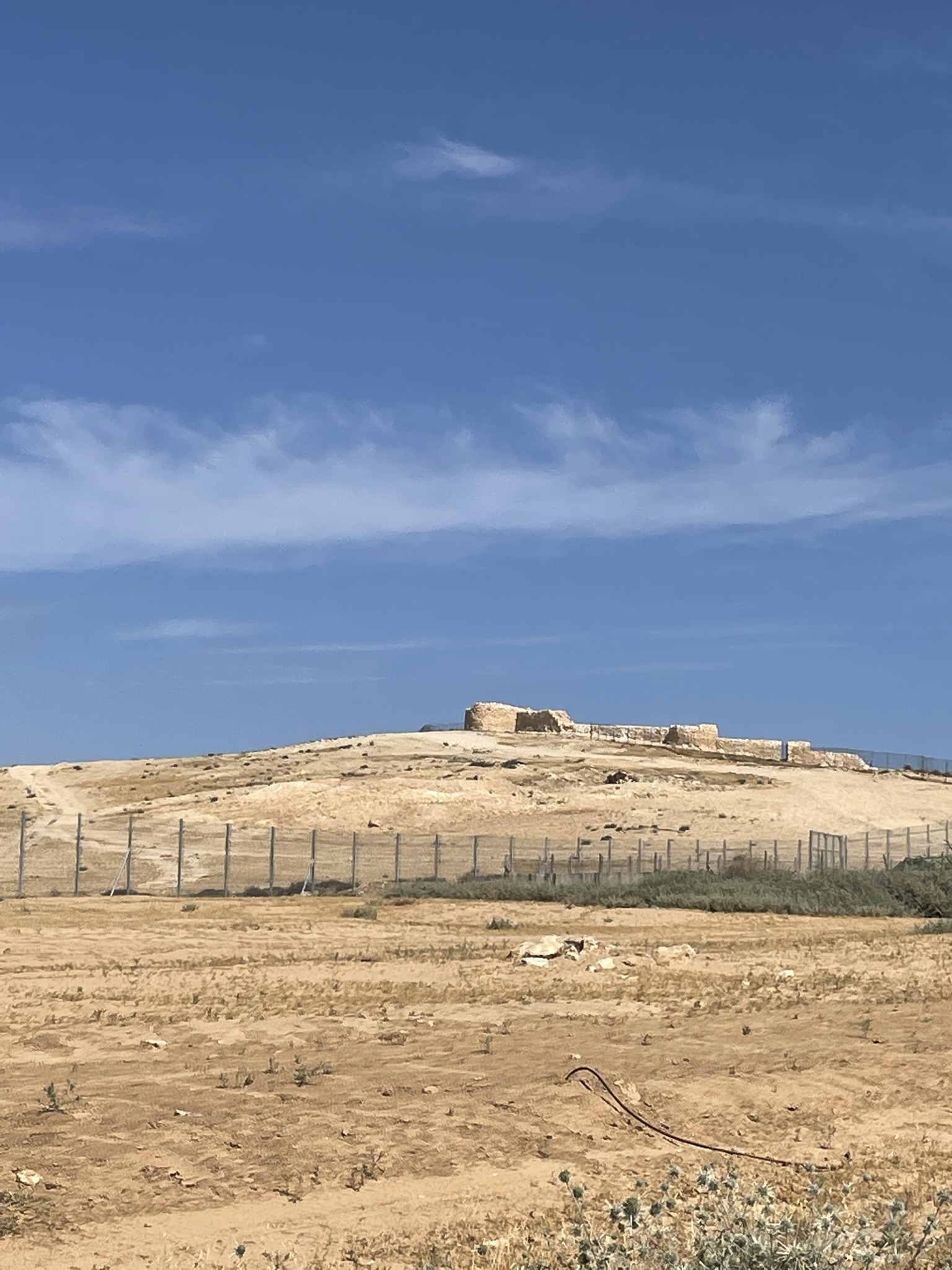
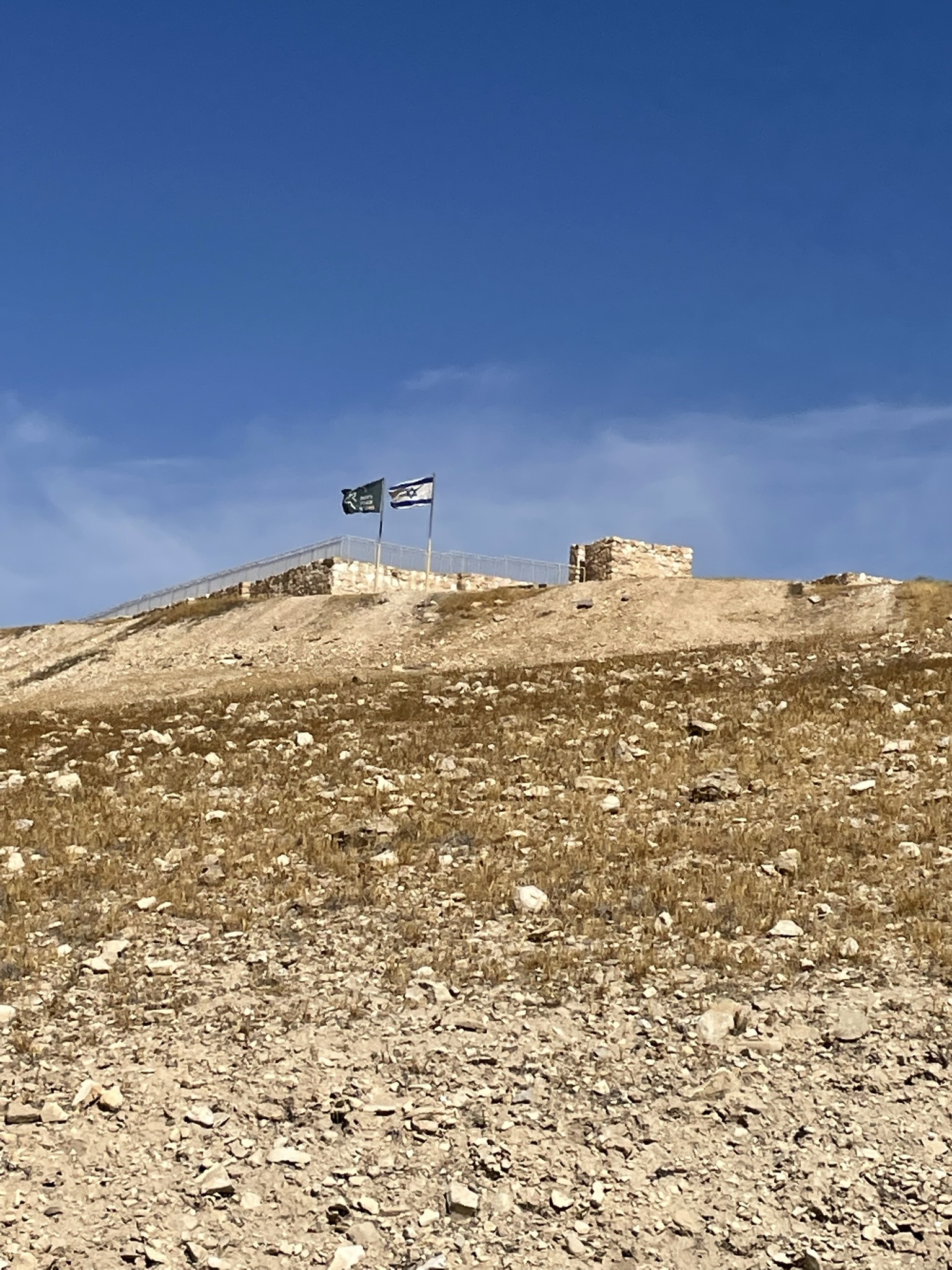
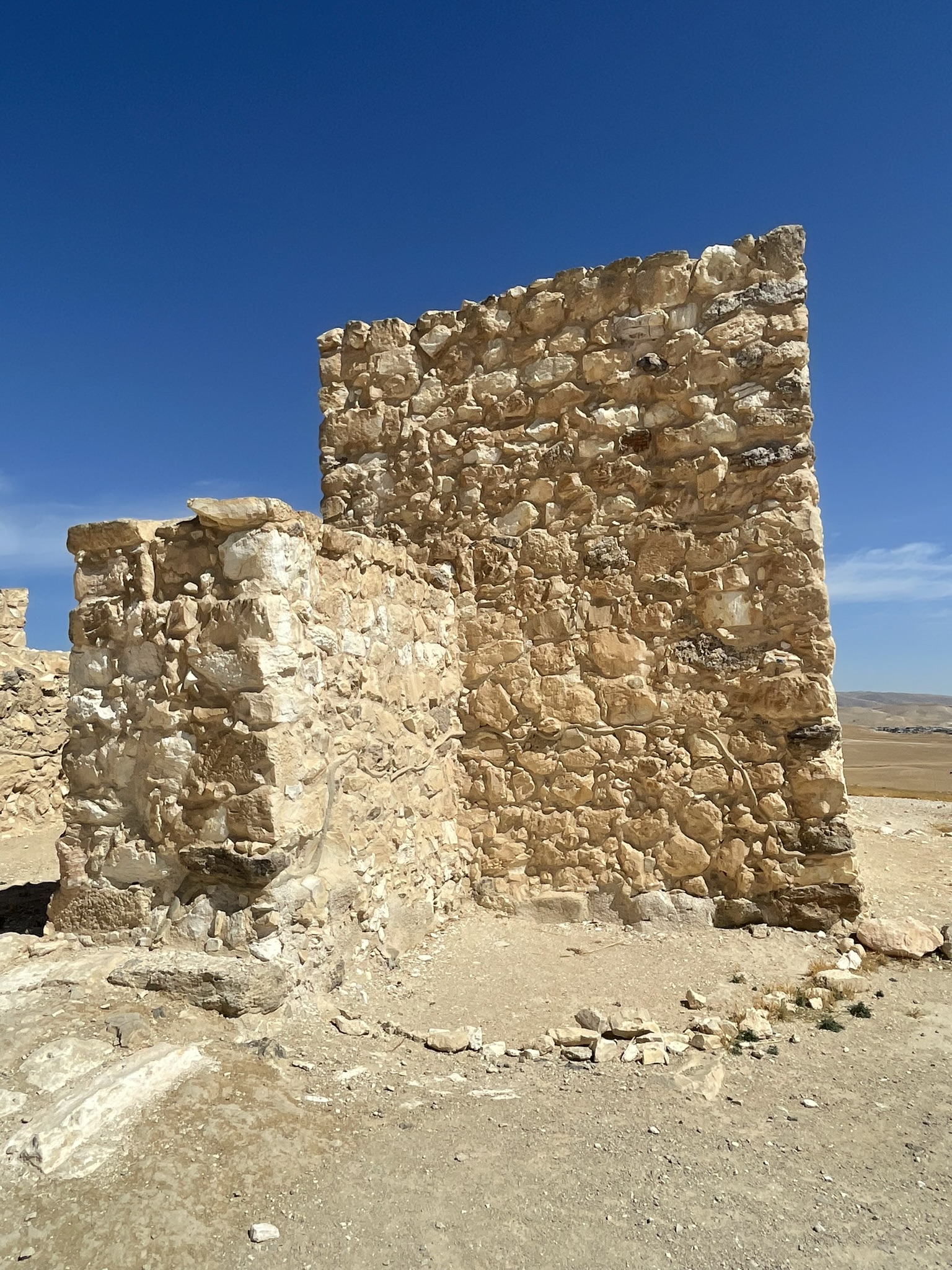
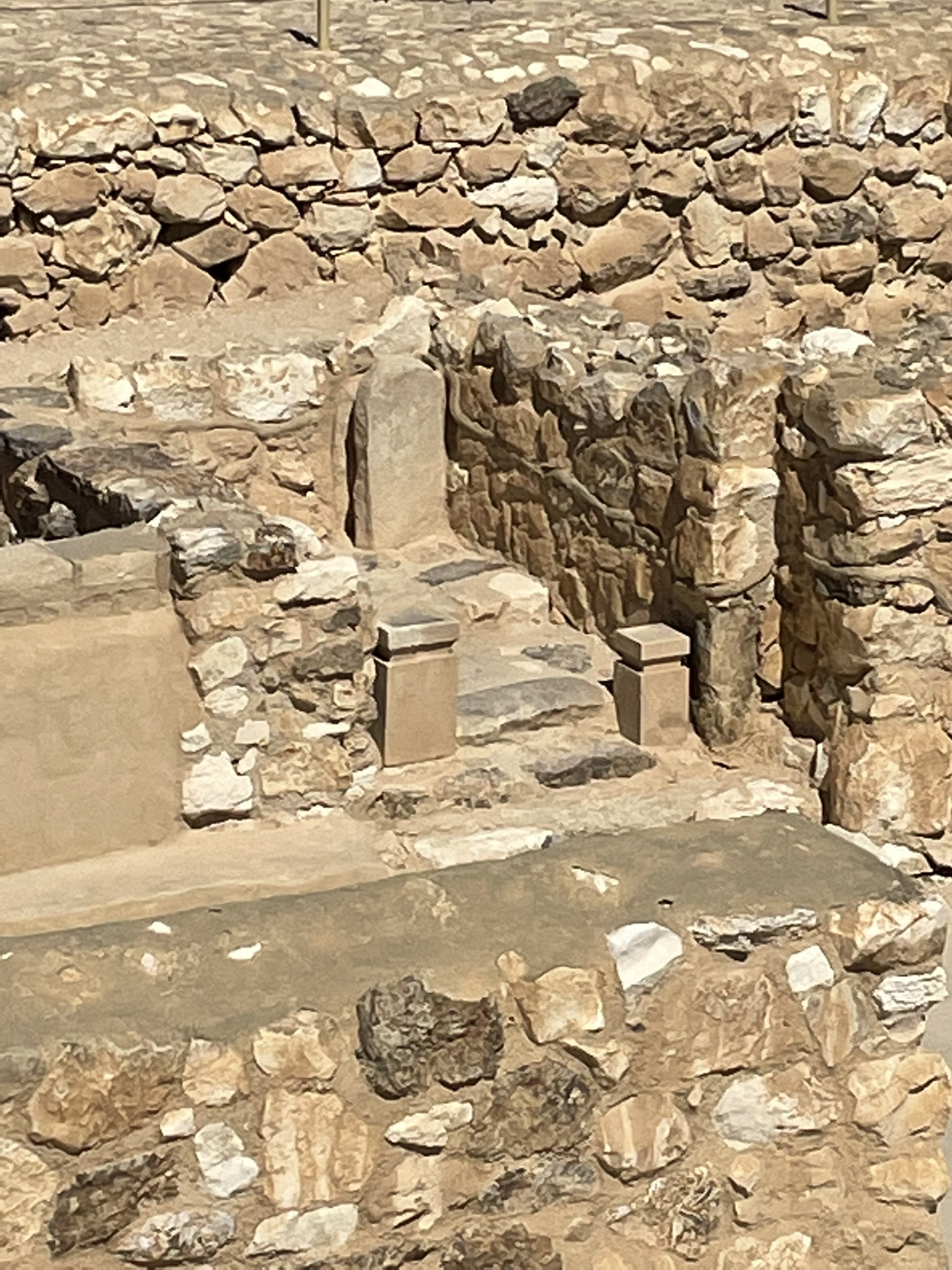
We started in Beersheva and then made our way to the east to Tel Arad, which is located in the eastern Negev. Its location is strategically located on the route which led to both Sinai and Transjordan. Tel Arad was the site of a Canaanite city from the early Bronze Age. The city was a as large as 10 hectares at its peak. The Israelites occupied the site during the Iron Age, building a fortress on the northern portion of the city. Within the fortress, the excavators found a Judahite temple (a cultic site) with two standing stones and two incense altars. The fortress and the lower city both have water systems to collect rain water run off.
tel Arad – the Israelite fortresstel Arad – the rampart and glacisWall structurecasemate walls of tel Arad fortressJudahite temple – standing stones/incense altartsJudahite temple – evidence of cultic worshipFortress – tel Aradruins tel Aradview of the lower city from fortress at tel Aradview of lower city and surrounding area from tel Aradtel Arad
It is our desire to help you grow in your knowledge of Adonai and His Word. If you are looking for additional information and/or materials, please visit our website at RootedinHisWord.org and our Facebook page.
Every time I go back to Israel, I get comments and questions, e.g. Is it safe? Aren’t you afraid? Why would you want to go to Israel? The questions are legitimate. Israel is situated in an area of the world in which there always seems to be a conflict occurring or at least one brewing. It has been that way since the Israelites came into the land more than 3,000 years ago. But I digress.
Going to Israel is essential, in my opinion, to knowing God better and more experientially. It is not a substitute for daily study of the scriptures, but rather it enhances and enriches the devotional life of the student of the Word. This is true whether you are a Jew or a Christian–Protestant or Catholic. Coming to the land where most of the events in your Bible took place changes how you see God, how you experience Him. For the Christian it is also important in coming to a better understanding of the Jews, their customs, their culture and their faith.
In Israel, it is possible to stand where Jesus stood–on the Southern Steps of the Temple mount or perhaps in the synagogue in Magdala. One can see where Elijah challenged the prophets of Ba’al near Mt. Carmel or over look the valley where David took on Goliath or visit the Pool of Bethesda where Jesus healed the lame man. So much of the history of God’s people can be anchored to physical geography of the land of Israel, i.e. the feasts, the worship, the battles, the births, and even the deaths.
But the most significant thing about the land of Israel of me is the close presence of God. God hovers over Jerusalem. Despite the religious diversity, the tension, the rituals, the shrines, and all manner of religiosity, God set His name upon and made promises about Jerusalem. He cannot lie, and so the land emanates the fragrance of God. That is what draws me back–and the chance to learn even more about Him and His people, and the chance to draw ever closer to Him.
It is our desire to help you grow in your knowledge of Adonai and His Word. If you are looking for additional information and/or materials, please visit our website at RootedinHisWord.org and our Facebook page.
Of all the Biblical places, I think Bethlehem was the image that I had most clear in my mind before visiting the Holy Land. After all, every Christmas, we would sing, “O Little Town of Bethlehem how still we see thee lie . . . Yet in thy dark streets shineth the everlasting light . . .” that wonderful hymn written by Phillip Brooks. In my mind’s eye, it was always dark with the moon shining down on it, buildings grey shadows against a blue-black sky. I would imagine that scene or similar ones as I practiced the song on the piano in the second grade and later as I listened to Christmas albums on the record player at home before Christmas. If there was a biblical place I thought I understood, it was Bethlehem.
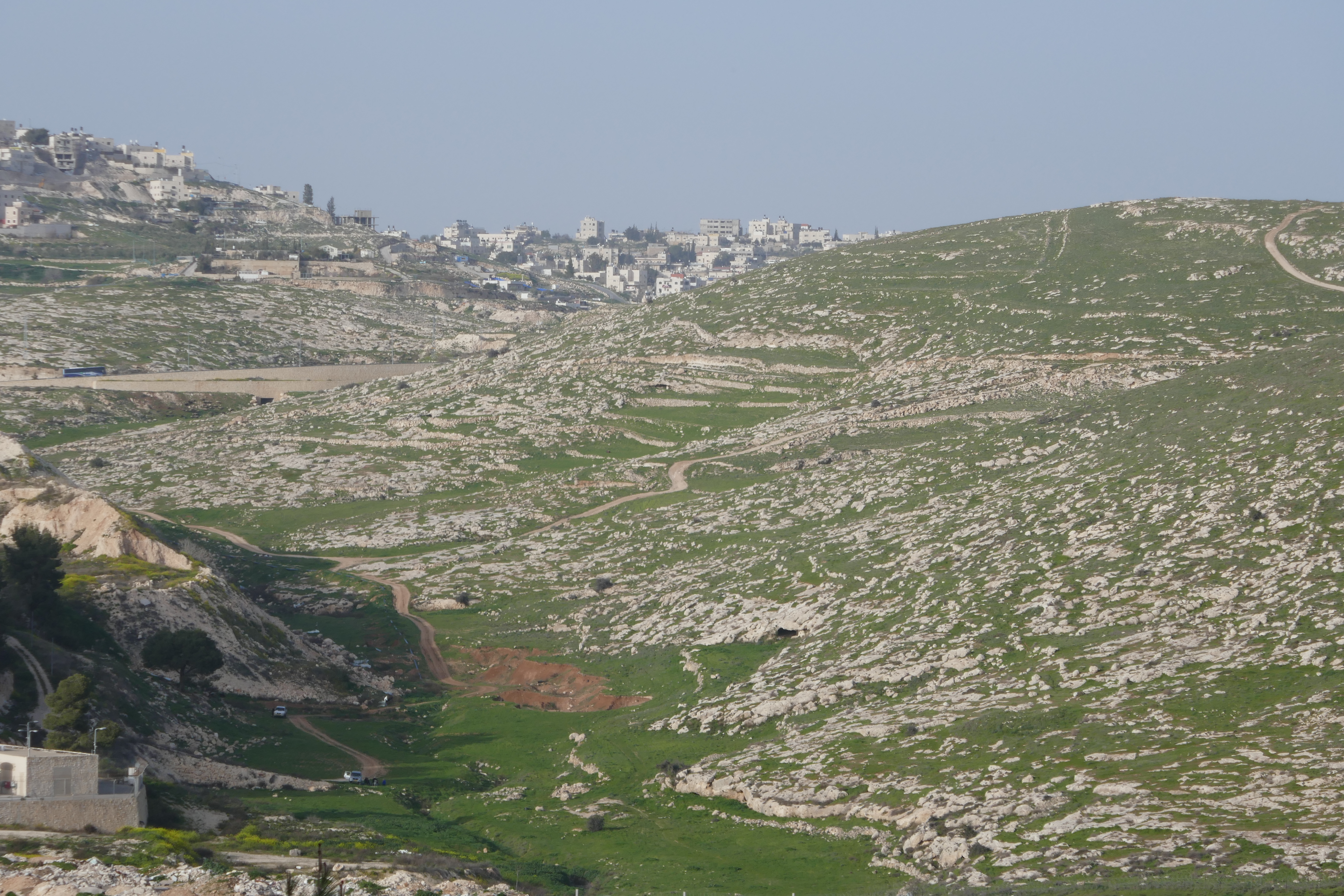
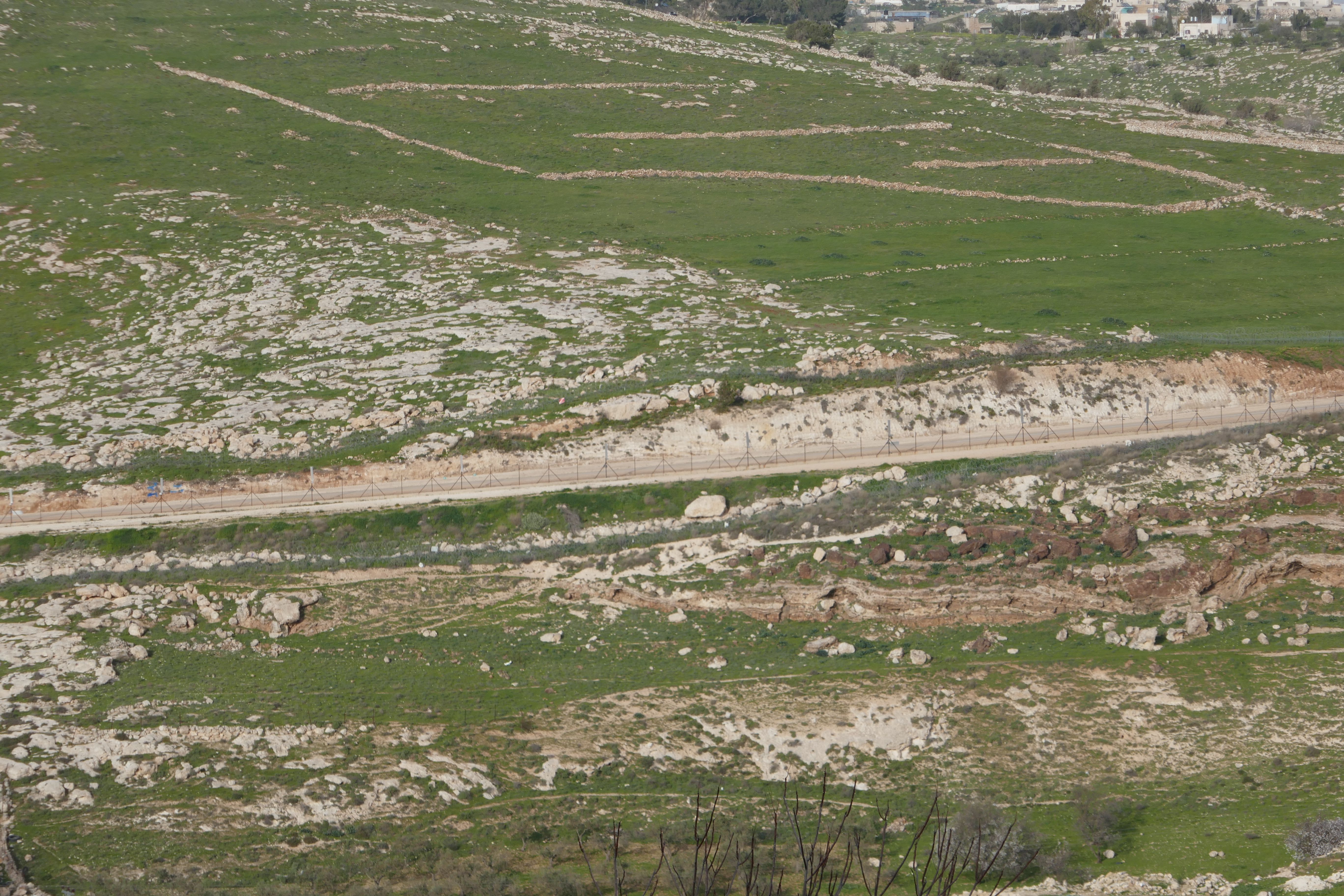
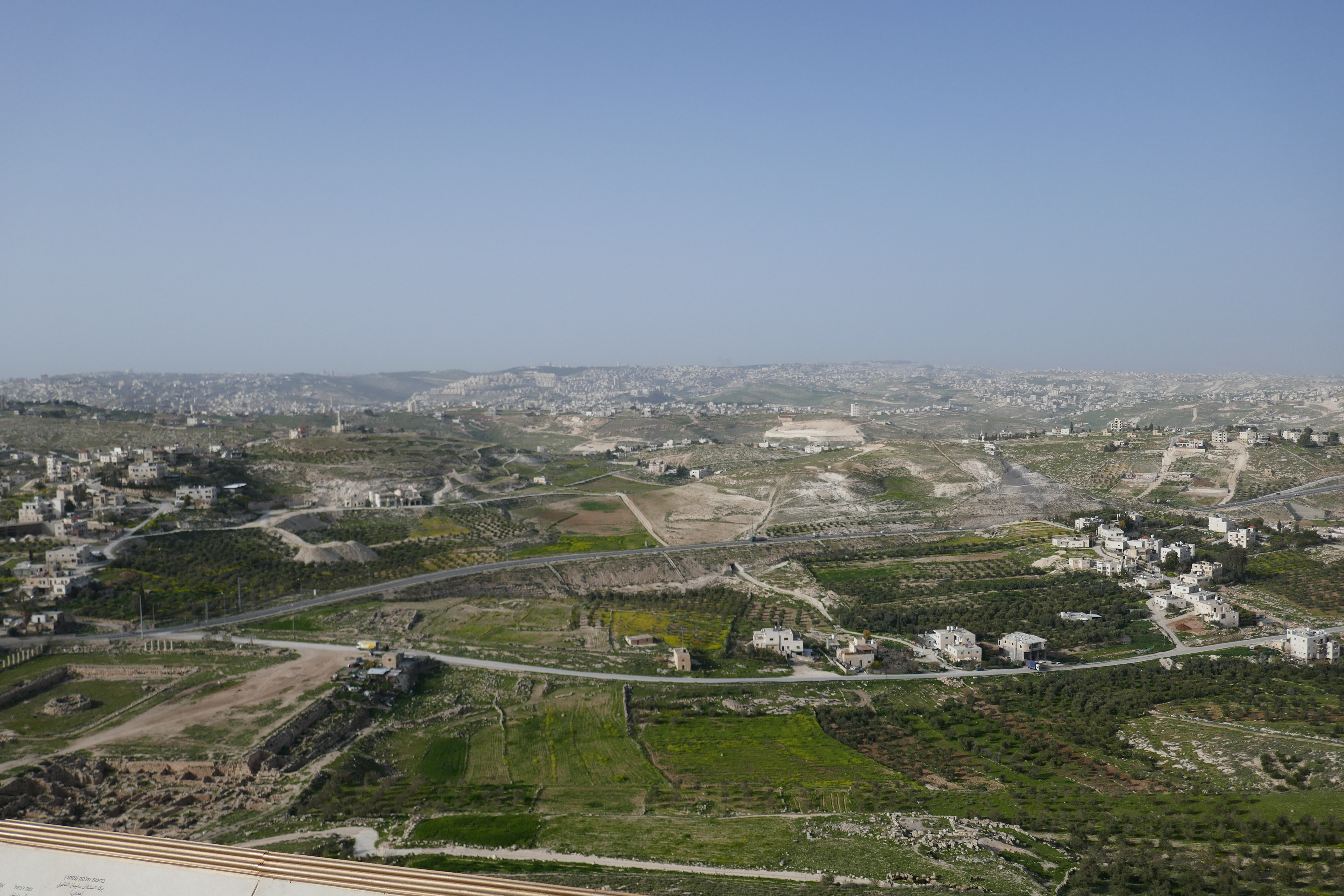
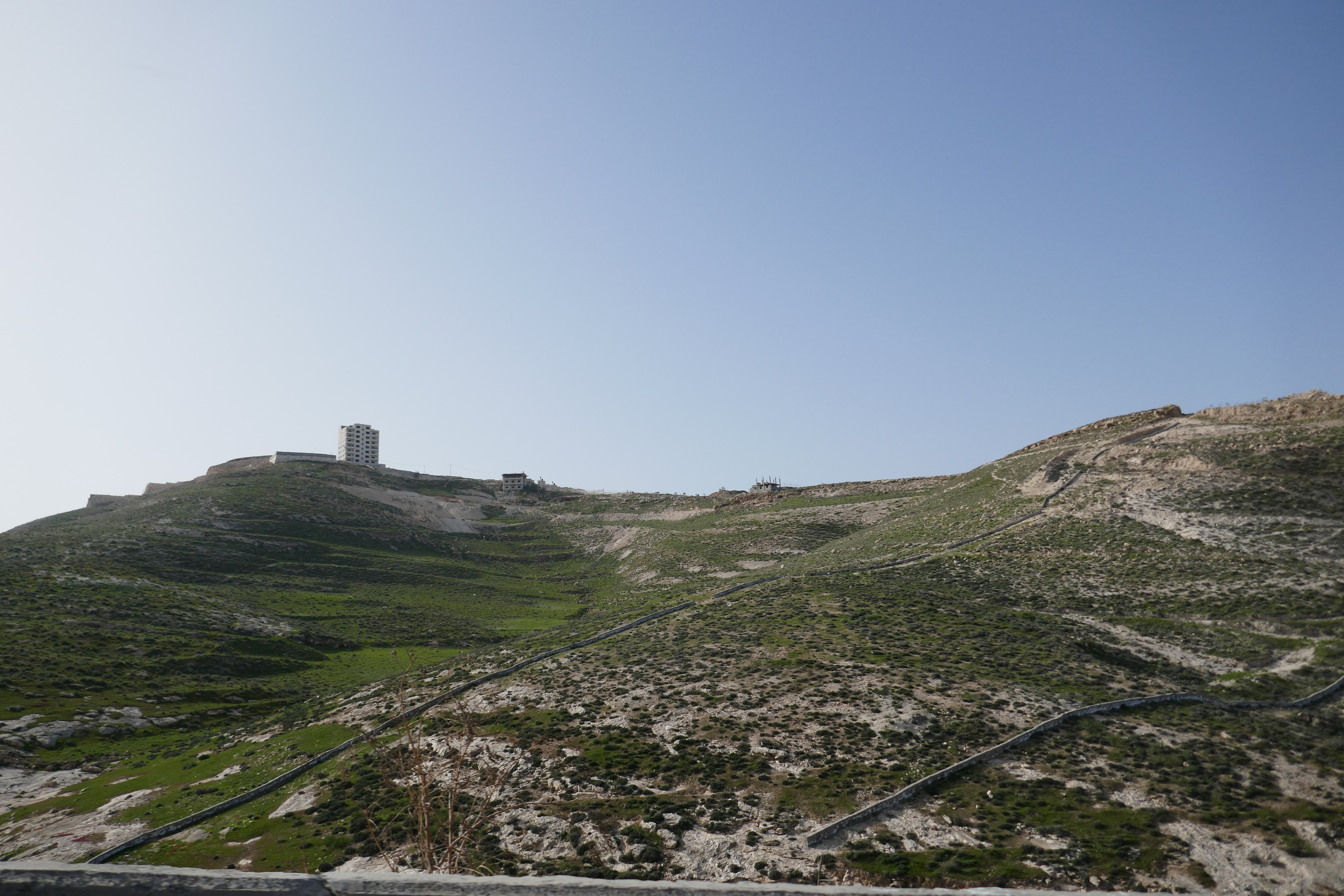
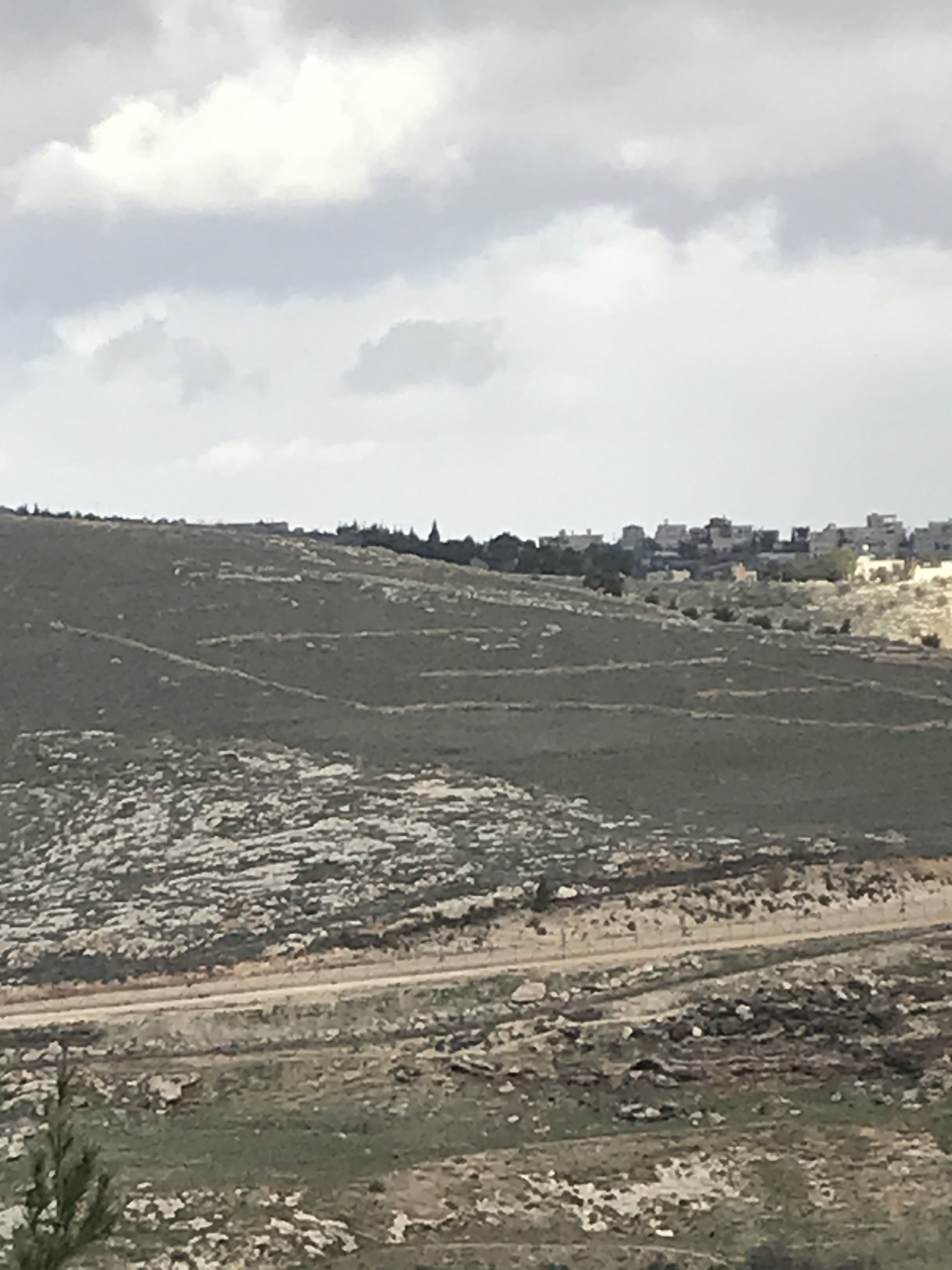
But Bethlehem is so much more than that Christmas hymn. It is not Phillip’s fault that we are stuck with that imagery. Rather, we are woefully uninformed about the land of the Bible. I am including some photos of Bethlehem and surrounding regions, so you can get the feel for the geography there. It is a land of rolling rocky hills and ancient caves, of shepherds still today minding their sheep, alone out in fields and pastures largely untouched by time, weather and war. The hills of Bethlehem today are not that different from what they would have been in the days of Mary and Joseph–and Messiah Yeshua.
Bethlehem regionBethlehem regionBethlehem region – view from HerodianBethlehem regionBethlehem field
It is our desire to help you grow in your knowledge of Adonai and His Word. If you are looking for additional information and/or materials, please visit our website at RootedinHisWord.org and our Facebook page.
The following is a summary of the some of the time periods of the history of the Holy Land which are part of the conversation during most tours of Israel:
Early Bronze Age (3500-2300) c.30000 Development of fortified Canaanite cities (e.g. Gezer, Arad, Jarmuth) Trade relations introduce Egyptian and Mesopotamian influences
Early Bronze IV/Middle Bronze 1/Intermediate Bronze Age (2300-2000 BC) collapse of Early Bronze Age urban centers. Pastoral-nomadic lifestyle mainly in drier regions of the country Agriculture in the hills Copper weapons and tools Shaft tombs
Middle Bronze Age (2000 BC to 1550 BC) Age of the Patriarchs (Abraham, Isaac and Jacob) Re-emergence of walled cities flourishing of Canaanite Cities introduction of horse and chariot by Canaanites in lower Egypt earliest evidence for writing in Canaan (cuneiform) Beginning of alphabetic script in Sinai and Canaan First use of bronze (alloy of copper and tin) for tools and weapons
Late Bronze Age (1550-1200/1150 BC) Beginning of the Egyptian Empire Egyptians conquer Canaan and set up fortified cities in the Holy Land Moses and Exodus; birth of Hebrew nation
Iron Age I (1200-980 BC) Time of the Judges Israel in Canaan Philistines and other “Sea peoples” establish cities along the coast Judges, Samuel, Saul Alphabetic writing and iron technology spread Mostly unwalled settlements
Iron Age IIA (980-830 BC) United Monarchy under Saul, David and Solomon David conquers Jerusalem c. 1000) Solomon builds 1st temple c. 960) Economic prosperity in mining, foreign trade and construction Divided Monarchy – Israel in the north/Judah in the south c.930) Walled cities Regional administrative centers (e.g. Beer-sheva, Gezer, Megiddo, Hazor)
Iron Age IIB (830-720 BC) Divided Monarchy Phoenician and Aramean influences. Elijah & Elisha Rise of Assyrian Empire Deportation Policy of Assyria forms the nucleus of the Samaritan community. Assyrians conquer Samaria (722 BC) Beginning of Aramean wars until Samaria destroyed
Iron Age IIC (720-586 BC) Judah alone Sennacherib’s campaign to Judah (701 BC) Hezekiah’s tunnel, Isaiah & Jeremiah Josiah’s reform (622 BC) Nebuchadnezzar of Babylon destroys Jerusalem (586 BC) Many Judeans go into exile in Babylon
Babylonian Period (586-539 BC) Judah in exile; remnant in the land Persian conquers Babylon (539 BC) The Babylonians inherit the kingdom of Assyria and build it
Persian Period (539-332 BC) Judahites return – return from exile begins with reign of Cyrus (538 BC) Judah becomes Yehud (a Persian province) Ezra and Nehemiah Temple rebuilt in 515 BC Development of Judaism during this time – Great Assembly Earliest coinage
Early Hellenistic Period (332-167 BC) Conquest of Alexander the Great (conquers the known world in 333 BC) Hellenization in Judea Translation of Hebrew Bible into Greek (Septuagint) Greek becomes the lingua franca
Late Hellenistic Period (167-37 BC) Rise of the Hasmoneans – Revolt against Hellenistic culture and oppression Hasmonean Revolt in 167 BC (1st Maccabees) Rededication of the Temple in 164 BC Hasmonean Dynasty (141-63 BC) Jerusalem under Roman rule with Pompey (63 BC) Herod the Great appointed king of Judea by Rom (40 BC) Inter-testamental literature
Early Roman Period/Herodian (37 BC – 132 AD) – New Testament Period Roman conquest of Palestine; Judea a Roman province influence of Roman culture; material prosperity and spiritual turmoil Rise of Herod the Great; Herod dies in 4 BC Rebuilding of the Temple Direct Roman rule under Roman prefects/procurators based in Caesarea (AD 6) Jesus of Nazareth Jews rebel against Roman oppression (1st revolt) fall of Jerusalem and destruction of Second Temple by Titus (70 AD) Fall of Masada (73 AD)
Late Roman (132-324 AD) Simon Bar Kochba leads 2nd revolt – Bar Kokhba Revolt (132-136 AD) Hadrian destroys Jerusalem – builds Aelia Capitolina (135 AD) Judea renamed Palestina. Jewish villages and synagogues flourish in Galilee Mishna (codification of Jewish oral law)
Byzantine Period (324-638 AD) Constantine inaugurates Christian rule over Jerusalem (326 AD) Era of the Talmud Samaritan revolt (529 AD) Persian invasion (614 AD) Moslems defeat Christians at the Battle of Yarmuk (636 AD) Jerusalem falls to Omar (638 AD)
It is helpful to commit these to memory.
It is our desire to help you grow in your knowledge of Adonai and His Word. If you are looking for additional information and/or materials, please visit our website at RootedinHisWord.org and our Facebook page.





















 Rooted and Grounded