For just as you once presented your members as slaves to impurity and to lawlessness leading to more lawlessness, so now present your members as slaves to righteousness leading to sanctification. Romans 6:19b
What characterizes a slave of righteousness?
Ownership: Be owned by righteousness–be its slave. Bear righteousness as your family name. Be part of those who are fellow slaves to righteousness. Belong.
Obedience: Know the standard of righteousness (Torah/Christ). Do righteousness. Make righteousness your distinctive, what identifies you.
Choice: Present yourself (again and again) to the standard. Consider yourself. Evaluate where you are and where the standard is. Choose to move toward righteousness.
Righteousness is moral responsibility to God which is only possible through union with Christ.
Glory is an oft neglected subject of Theology. However, we do have passages that mention glory and give us valuable insight. One example is John chapter 17, often called, Yeshua’s High Priestly prayer.
“I do not ask for these only, but also for those who will believe in me through their word, that they may all be one, just as you, Father, are in me, and I in you, that they also may be in us, so that the world may believe that you have sent me. The glory that you have given me I have given to them, that they may be one even as we are one, I in them and you in me, that they may become perfectly one, so that the world may know that you sent me and loved them even as you loved me.” John 17:20-23 (ESV)
What is this “glory” that Yeshua says that he has given to them–the disciples? This is before Pentecost, so it doesn’t really make sense to understand it as the Holy Spirit. Is this “glory” speaking of God’s presence or some aspect of His presence that He is giving to them? Is it His presence with them (His glory) that makes them one, unifies them?
Perhaps His glory is what will make us perfectly one. Perhaps when Christ is with us–Father in Him and He in us as described in John 17:20-23–in that order–union with Him makes (will make) us perfectly one with Him (the Triune God) and with each other.
This is passage offers so much hope. It is worth sitting with and meditating on for greater understanding. Of course it is helpful to read other passages that discuss glory and consider how they relate and illuminate each other.
It is our desire to help you grow in your knowledge of Adonai and His Word. If you are looking for additional information and/or materials, please visit our website at RootedinHisWord.org and our Facebook page.
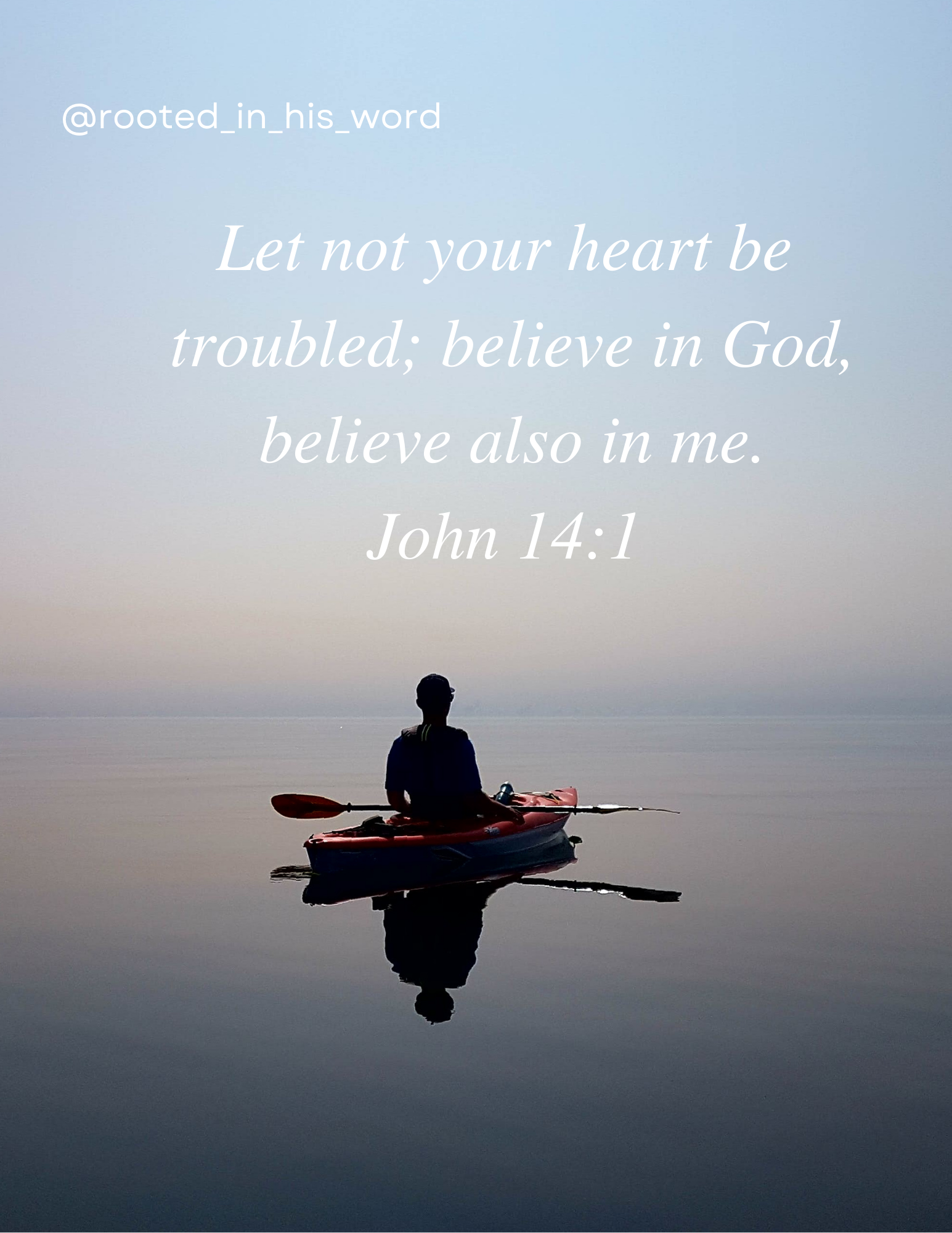
You may be facing difficult circumstances today, but these words of Yeshua (Jesus) are just as true for you today as they were for the disciples in the first century. Believe and rest. God has not forgotten or forsaken you.
It is our desire to help you grow in your knowledge of Adonai and His Word. If you are looking for additional information and/or materials, please visit our website at RootedinHisWord.org and our Facebook page.
One thing have I asked of the Lord, that will I seek after: that I may dwell in the house of the Lord all the days of my life, to gaze upon the beauty of the Lord and to inquire in his temple.
For he will hide me in his shelter in the day of trouble; he will conceal me under the cover of his tent; he will lift me high upon a rock.
Psalm 27:4-5 (ESV)
As I meditate on Psalm 27:4-5, I am aware that the psalmist, like me, not only desires, but is seeking holiness–something that only comes from God. Holiness cannot be summoned up or acquired through human effort. It is best understood to be transferred from the holy One, God Himself. To be near God–in His presence–is to have the best chance at holiness.
The psalmist also seeks to see God and inquire of God which speaks to me of communion, of fellowship with God. This also takes place in God’s presence. For the Israelite this would have meant being in the Tabernacle or the Temple where the glory of God resided in ancient Israel.
In Psalm 27:5, the psalmist goes on to speak of the protection of Adonai who “will hide me in the day of trouble.” Then, in what is beautifully intimate imagery, the psalmist says that God “will conceal me under the cover of his tent.” To be in His tent suggest being part of his family, is to be no longer a stranger, no longer alien to the household of God. The final image of the verse is one of protection. “He will lift me high upon a rock,” out of the way of trouble, far from the reach of my adversaries and enemies.
Who is like our God? Only God can extend intimacy to me–intimacy cannot be grabbed for or taken; it must be given, opened to me. Like the psalmist, I desire intimacy with God. To see Him, to be with Him, to speak with Him, to be hidden by Him, to be taken into His family and to be protected by Him. Thank You, Abba, for this offer of intimacy you make to me through the sacrifice of Messiah.
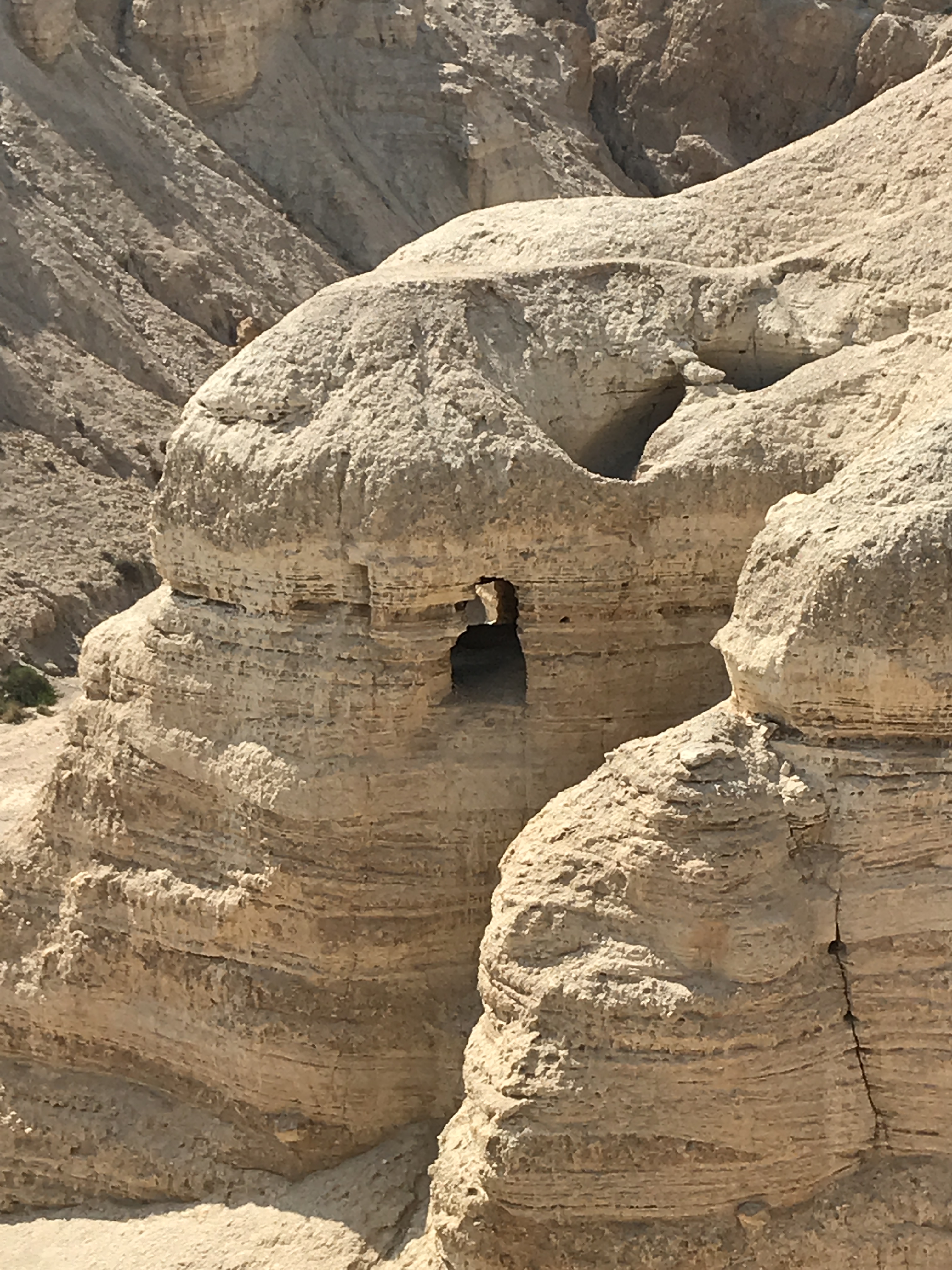
Qumran, Israel
It is our desire to help you grow in your knowledge of Adonai and His Word. If you are looking for additional information and/or materials, please visit our website at RootedinHisWord.org and our Facebook page.
As a believer in Adonai, I am a communication from God. (2 Corinthians 3:2-3) He writes a letter to me on my heart, but at the same time, He is writing a letter to those around me. It is His love letter to them. I am the ambassador, bringing the message of hope and restoration to them. (2 Corinthians 5:20) The message is His. The heart is His. The life is His. For it is as true of me as it was of the Apostle Paul who wrote, “I have been crucified with Christ; it is no longer I who live, but Christ lives in me; and the life which I now live in the flesh I live by faith in the Son of God, who loved me and gave Himself for me.” (Galatians 2:20)
As a living epistle, I evidence the completed covenant Adonai made to put His Torah within us, and “write it on [our] hearts.” (Jeremiah 31:33) It is important to remember that despite what it may sometimes appear, my flesh and the adversary have no access to edit the letter Adonai is writing on my heart. He alone is the “author and finisher.” (Hebrews 12:2)
If I accept these assertions of scripture, then I must ask, “What is my life saying?” “What is God saying through me to those around me?” It is also important to ask, “What is God saying to me –what is the content of the letter He is writing on my heart?” The answer may be more than I want–it might be greater than I can understand. Remember that Adonai knows how to write epic stories. He wrote Esther from captive to Queen. He wrote David from shepherd boy to King. He wrote Joseph from slave to second to Pharoah. He wrote Saul from killer to apostle.
Adonai wants to write on our lives that we might seek to know our Author and receive the goodness He has promised. He writes, so that as His epistles, we might be read of all men-as a witness to the manifold glory of God.
It is our desire to help you grow in your knowledge of Adonai and His Word. If you are looking for additional information and/or materials, please visit our website at RootedinHisWord.org and our Facebook page.
We throw words like mercy and forgiveness around like inflatable beach balls across the well-worn net at the ocean’s edge. It is all kingdom entitlement with little consideration of the underlying truth. Being able to ask for mercy is a privilege. It implies that there is One who has the capacity to punish and harm–it is He from whom we seek mercy. In asking for mercy from God, we are acknowledging His right to bring judgment and just consequences. He alone is God. Let your words be few.
Be not rash with your mouth, nor let your heart be hasty to utter a word before God, for God is in heaven and you are on earth. Therefore let your words be few. Ecclesiastes 5:2.
Brothers, I, for my part, do not think of myself as having yet gotten hold of it; but one thing I do: forgetting what is behind me and straining forward toward what lies ahead, I keep pursuing the goal in order to win the prize offered by God’s upward calling in the Messiah Yeshua. Philippians 3:13-14 CJB
I love that he calls them brothers. Despite having just finished giving his credentials in Judaism to them, he reflects his renewed priorities in Messiah Yeshua. He doesn’t think of them as talmadim (disciples) as a Rabbi would, but rather he calls them (us) brothers–suggesting an equality unheard of in his culture and religious system prior to his meeting Yeshua the Messiah on the road to Damascus.
He gives us three things in this short passage that are worthy of comment and meditation:
Forgetting what is behind me In making this statement, Paul is telling us that his past is no longer going to be in the center of his thoughts and focus. This is important to think on for a moment. Our past grows in size and importance often as we age. It can loom as a great disappointment–failed relationships, failure in career, failure in faith and pleasing God. It can also loom large a great point of success as it did with Paul. He lists in Philippians 3:5-6, his claims to religious fame–these are things of considerable importance in Jewish culture. We may also have great accomplishments in career, academia or even in religious circles. What Paul is saying is to work on forgetting those things, both good and bad, and move forward with God. It is true that our past forms us, it carves us and imprints on us–but Paul is letting us know that it is not the end of the story in our relationship with God. He is telling us to work to forget what came before and who we were before we met the Messiah and live with God in the now by the power of the Spirit. (Galatians 2:20)
Straining forward toward what lies ahead The verb “straining” is a strong action verb. It suggests intentionality and going beyond oneself, going beyond one’s current location. We are not to be pew-sitters or Youtube watchers only, we are to work out our salvation with fear and trembling–get out of our chairs, get out of our houses, get out of our normal routine, seek the kingdom of God. To strain for what lies ahead means to be longing for God’s coming kingdom as well as for opportunities to share the love God, the beauty of His majesty, the comfort of His close presence. Straining implies I am making an effort to see God’s kingdom come. Life with Adonai is not a spectator sport.
Keep pursuing the goal in order to win the prize To keep pursuing requires steadfastness, determination and diligence. We must decide to follow Yeshua as the example of righteous living. We must continue steadfastly and with determination in Adonai’s commands, and we must use diligence to follow the dictates of Torah–the instructions for righteous living.
What is the goal? The goal is to live righteous lives as true witnesses of the God of Abraham, Isaac and Jacob–Adonai. The goal is to keep Torah by the power of the Holy Spirit. We must be the witnesses that God’s word is true and that His ways are pure and holy. This life of righteousness will impact the world around us–it will show us to be different. It will cause us to stand out, which is exactly what it was intended to do. “Be holy as I am holy,” says the Lord God Almighty.
What is the prize? Eternal life with God. To rule and reign with Yeshua. To be forever in the presence of Adonai–never separated from Him. Eternally His.
It is our desire to help you grow in your knowledge of Adonai and His Word. If you are looking for additional information and/or materials, please visit our website at RootedinHisWord.org and our Facebook page.
But Jesus said to him, “No one who puts his hand to the plow and looks back [to the things left behind] is fit for the kingdom of God.” (Luke 9:62 Amp)
With God everything is about motive, about intention, about the heart. Yeshua is warning in this passage those who would seek to serve God while keeping an eye on the world and what it can offer. The divided heart is not a new problem. God, through the prophet Hosea accuses the Jewish people of having a divided heart because of their love of idolatry. (Hosea 10:2). David also speaks of the divided heart in Psalm 12. “Help, Lord, for the godly man ceases! For the faithful disappear from among the sons of men. They speak idly everyone with his neighbor; With flattering lips and a double heart they speak. (Psalm 12:1-2)
In the Apostolic writings, James offers a stern warning against double-mindedness. “Now if any of you lacks wisdom, let him ask God, who gives to all generously and without reproach; and it will be given to him. But let him ask in trust, doubting nothing; for the doubter is like a wave in the sea being tossed and driven by the wind. Indeed that person should not think that he will receive anything from the Lord, because he is double-minded, unstable in all his ways. (James 1:5-8) The remedy is offered by James later in his letter. “Therefore, submit to God. Moreover, take a stand against the Adversary, and he will flee from you. Come close to God, and he will come close to you. Clean your hands, sinners; and purify your hearts, you double-minded people!” (James 4:7-8)
Let us consider our hearts before God. Are they divided? Do I hold things in my heart above God? Is He second to my desires, my ambitions, my job, my kids, my hobbies? Search this thing out for it is no small matter. To have a divided heart is to be unfit for the God’s kingdom–the coming kingdom–the forever kingdom.
It is our desire to help you grow in your knowledge of God and His Word. If you are looking for additional information and/or materials, please visit our website at RootedinHisWord.org and our Facebook page.







 Rooted and Grounded