Feeds:
Posts
Comments

Archive for the ‘Israel’ Category

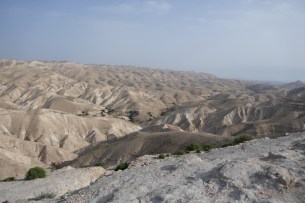
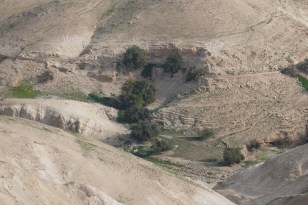
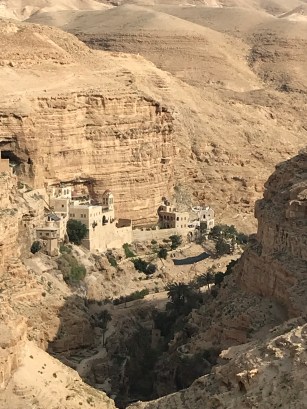
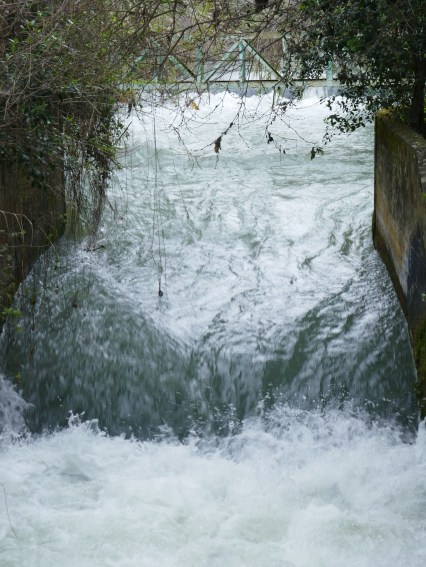
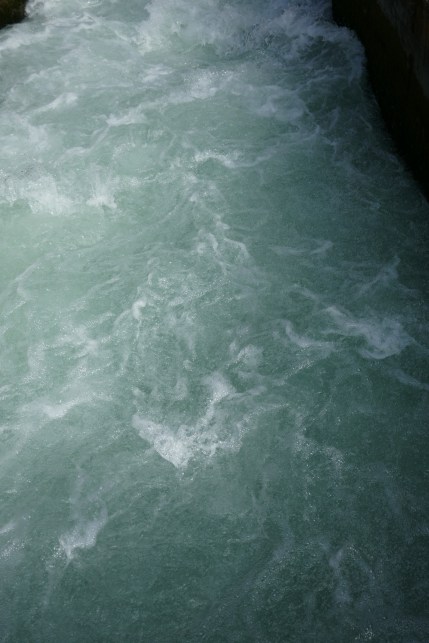
Outside of Jerusalem as you travel east, you will find Wadi Qelt. A wadi is a common feature in Israel. It is a ravine or stream bed that dries up until the raining season when it may become a rushing river or a generous stream depending on the rainfall, the run-off and the ravine itself. Wadi Qelt is such a ravine that originates near Jerusalem and extends to the Jordan River near Jericho.

Some have suggested that David may have been thinking of such a ravine when he wrote Psalm 23:4 (CJB), Even if I pass through death-dark ravines, I will fear no disaster; for you are with me; your rod and staff reassure me.

This very familiar verse reminded me of God’s guidance and correction in my life and how they prove His love for me. Moreover, my love and acceptance of God’s correction speaks of His imprint on me. In that I can see that He has brought me to this point of sanctification. I also know that He will continue to sanctify me until I am made perfect when I see Him face to face.

P1010361

Wadi Qelt

P1010354

Wadi Qelt

P1010355

Wadi Qelt

IMG_4012

Wadi Qelt

If you are looking for additional information and/or materials, please visit our website at RootedinHisWord.org and our Facebook page. 

34857624_201435477340473_855160484356161536_n

Read Full Post »

One of the places that you may visit if you visit Northern Israel is Caesarea Philippi. It is where Jesus asked His disciples the pointed question, “Who do you say that I am? and of course, it is where Peter responded, “You are the Christ!”

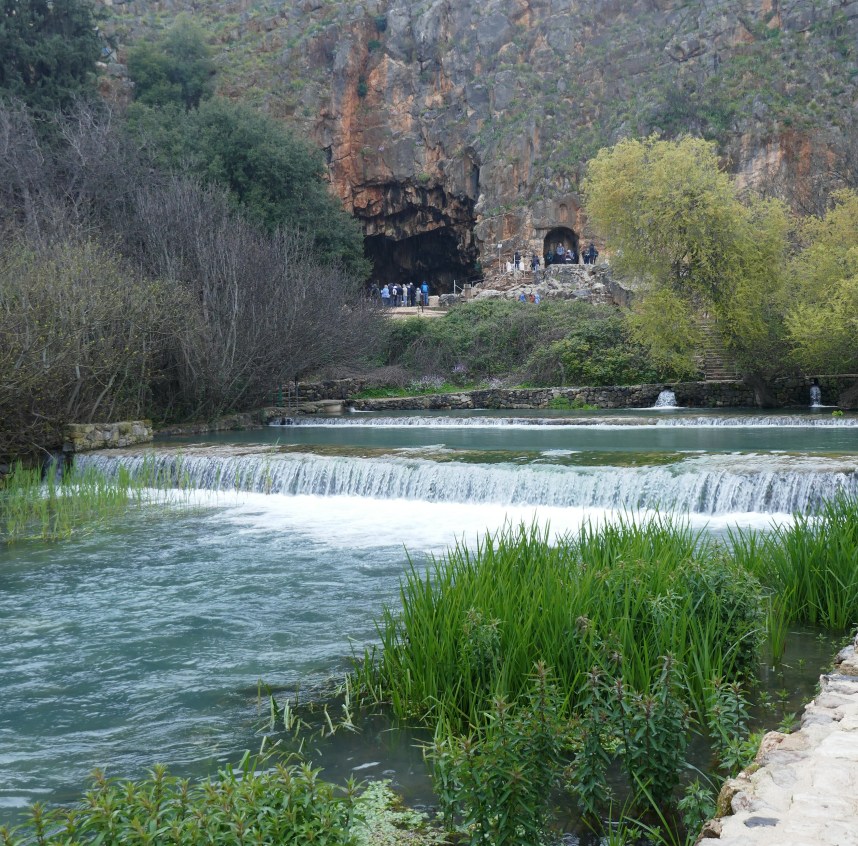
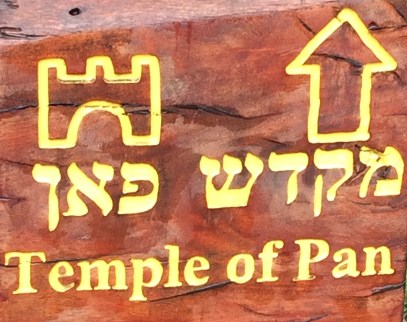
But Caesarea Philippi is largely a pagan spot. It is also known as Banias (or Panias).  It was made famous in ancient times for being where the Greek god, Pan, was said to have visited a nearby spring. During those days, Pan worship was prevalent here.

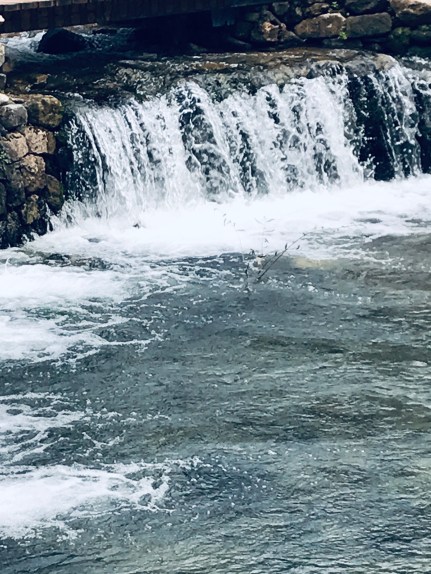
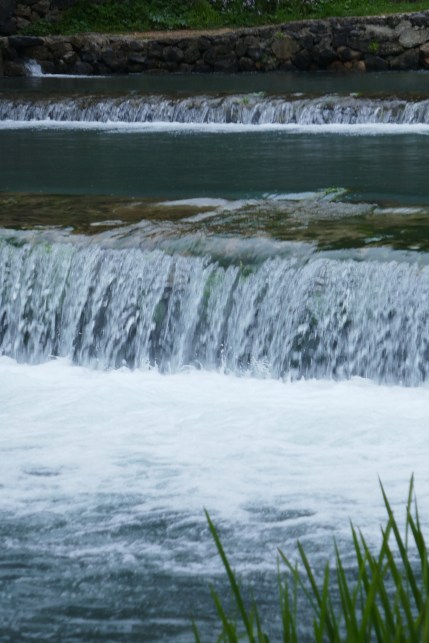
What I enjoy about Caesarea Philippi is the abundance of living water. Water literally comes out of the rocks. The pictures below give you an idea.

IMG_9025P1040716P1040719P1020094P1020095

At the time Jesus and His disciples visited Caesarea Philippi it would have been a city filled with temples to a variety of pagan gods including those of the Greeks and Romans. Only the ruins of some of those temples and others built later remain today.  See the photos below of some images of the ruins and the cave of Pan.

IMG_5633

Temple of Pan

IMG_8997

Caesarea Phillip (1)

IMG_8992

Caesarea Philippi (2)

IMG_9002

Caesarea Philippi (3)

IMG_5670

Caesarea Philippi (4)

IMG_5668

Cave of Pan (Caesarea Philippi)

Read Full Post »

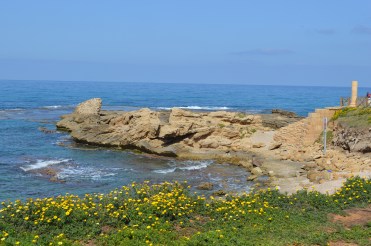
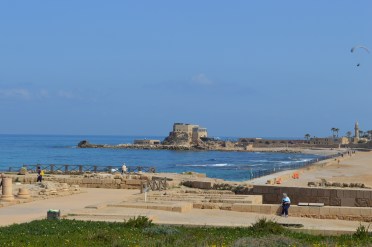
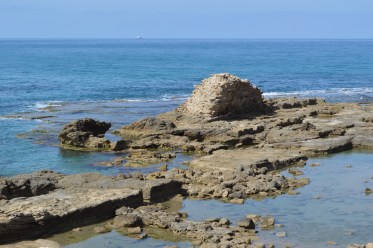
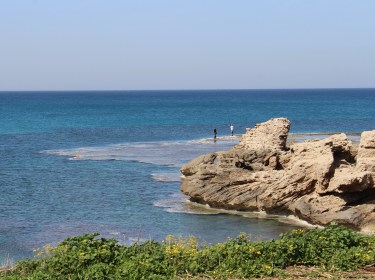
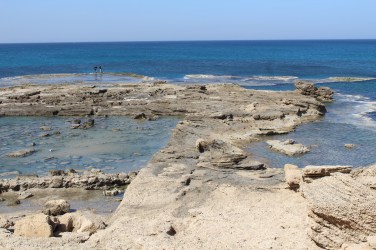
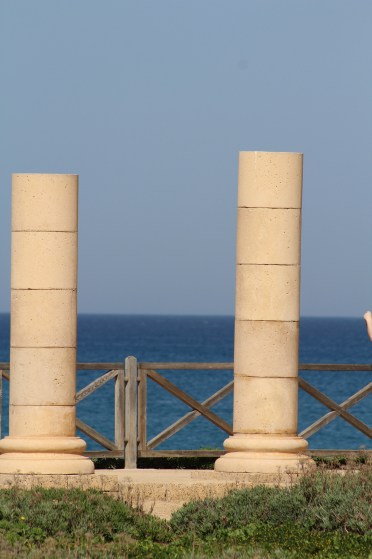
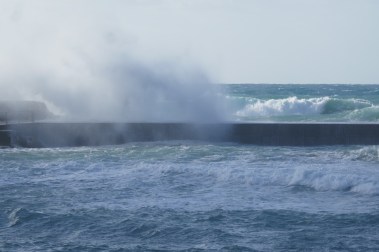
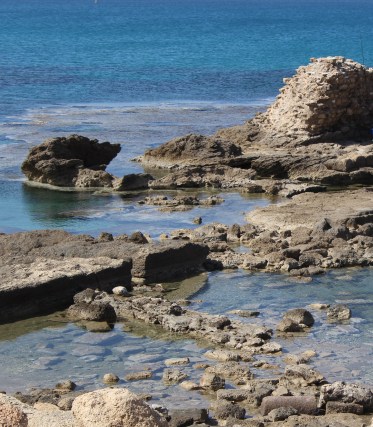
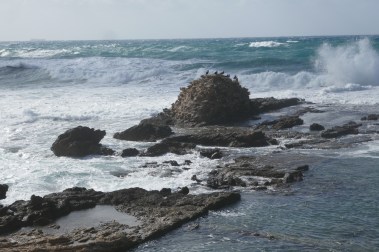
Have you ever been to the Mediterranean Sea? It is beautiful. The seaport of Caesarea is on the coast of the Mediterranean, and it is spectacular although most of what is left of the man-made harbor and the ancient city is only ruins. The varied blue hues of the sea captivate. I have been to Caesarea on several occasions and most recently when I was there, the sea was rough and tempestuous as compared to earlier visits. Below are some of the photos I have taken on my visits:


DSC_0045DSC_0042

dsc_0053

Caesarea Maritima

img_3432

Caesarea Maritima

img_3451

Ruins of Herod’s Port at Caesarea

img_3442

Caesarea Maritima

IMG_3454

Caesarea Maritima

The photos below are from my visit in 2020. The sea was very different that day than I had seen it in the past.

IMG_9511P1050046P1050095

In Caesarea, no natural harbor existed. It was Herod the Great, the master builder, who built a huge man-made harbor here. It was a great feat of design and engineering. Unfortunately, Herod’s structure was no match for the forces of nature.

Caesarea has a new visitor’s center which opened last fall which features a short movie about Herod and provides lots of interesting information about Caesarea.

If you are looking for additional information and/or materials, please visit our website at RootedinHisWord.org and our Facebook page. 

34857624_201435477340473_855160484356161536_n

Read Full Post »

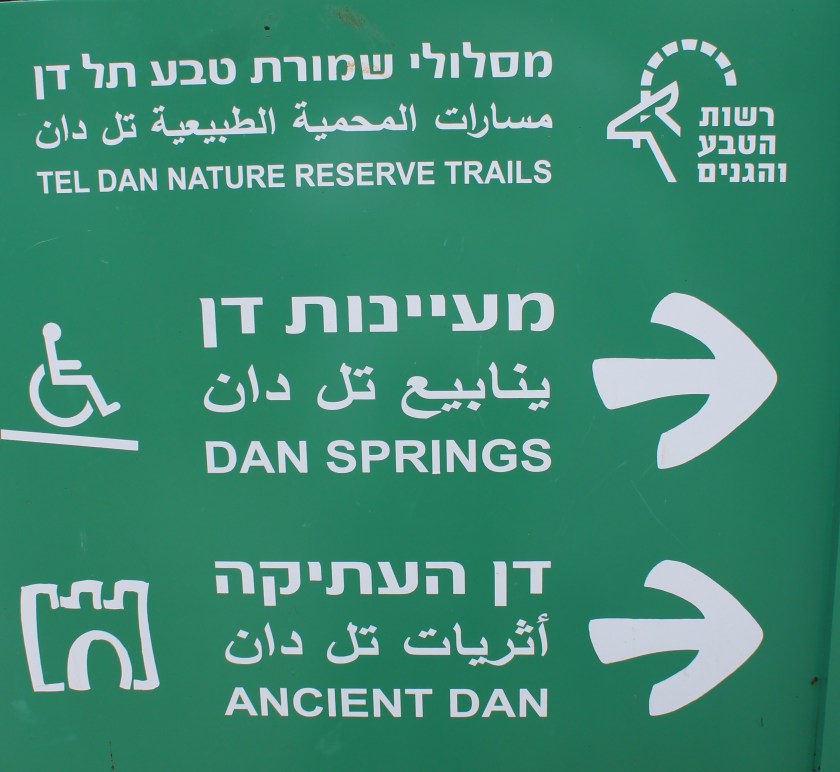
Tel Dan

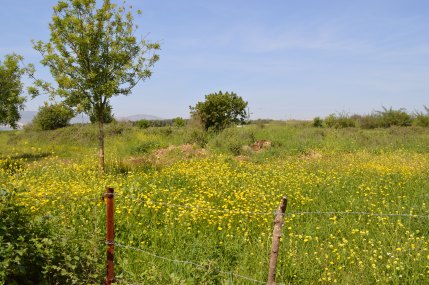
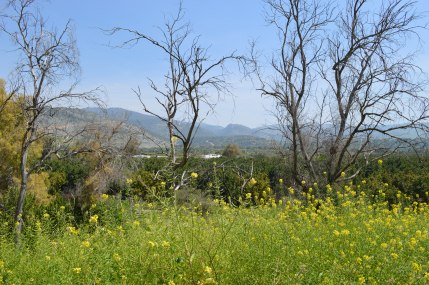
In the north of Israel, almost to the border with Lebanon, is some of the most beautiful landscape in Israel. Here one can find the head waters of the Jordan River, and some very important places in the history of the people of God.

You may not know this, but Dan is the name of one of the 12 tribes of Israel. When each of the tribes was given its portion of the promised land by lot in the Book of Joshua, the portion given to the tribe of Dan was in the south of the country. A portion of the land given to Dan bordered the coast of the Mediterranean, but unfortunately, to the south of the land given to Dan lived the Philistines, arch enemies of Israel. Because they were unable to defeat the Philistines and ended up in constant conflict with them, the Danites decided to relocate to the north to a city previously known as Laish.

Dan was part of the Northern Kingdom (Israel) when the kingdoms were divided after Solomon died. They worshiped idols including a golden calf which was located at Tel Dan.

DSC_0257

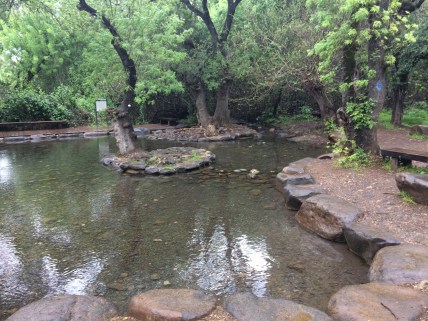
Spring at Tel Dan

DSC_0277

Spring at Tel Dan

IMG_5723

Beautiful greenery and water at Tel Dan

IMG_3910

P1020011

2020 with the rains, the water flow was tremendous at Tel Dan

P1040672

Head waters of the Jordan River

P1040671

Snow melt from Mt Hermon (Head waters of the Jordan River)

IMG_5709

Head waters of the Jordan River

The pictures above show you how green it is in the Spring at Tel Dan and the tremendous flow of water. This water will end up flowing in the Jordan River.

Below are photos of the site where the altar was in Dan. It was a pagan altar and not a place sanctioned by God for worship by the Israelites. The northern kingdom was ultimately destroyed by the Assyrians which God clearly stated was because of Israel’s idolatry.

DSC_0269

Altar site at Tel Dan

DSC_0267

Altar Site at Tel Dan

DSC_0266

Altar remains at Tel Dan

Also at the Tel Dan Nature reserve are the remains of the ancient city of Laish and the gate of the city which is sometimes called “Abraham’s Gate” because it is believed that this is the city gate that Abraham would have come through when he was looking for Lot and his family who had been kidnapped. (See Genesis 14) That will be addressed in a future post.

If you are looking for additional information and/or materials, please visit our website at RootedinHisWord.org and our Facebook page. 

Read Full Post »

So you know you have a fabulous tour guide when you get into a site that isn’t open to the public yet.

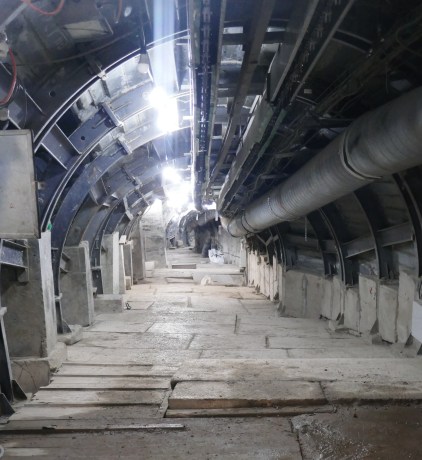
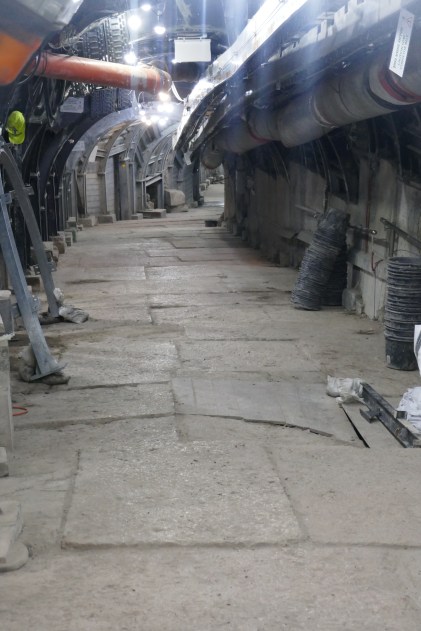
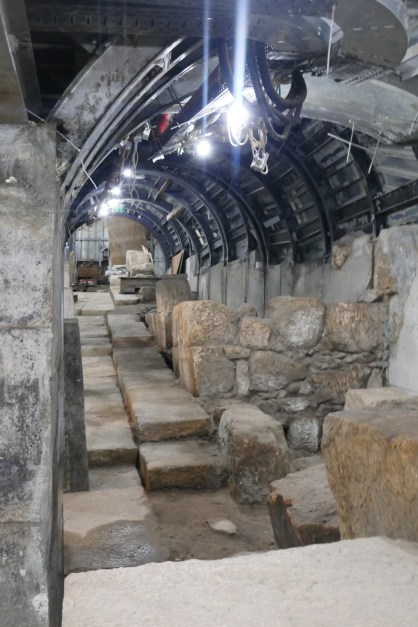
We were able to get a brief look at the Pilgrim’s Passageway in February of this year. The passageway is being excavated under a street in an Arab neighborhood close to the city of David. There is quite a stir and much excitement among archaeology and Bible history buffs about this discovery.

The Pilgrim’s Passageway leads from the pool of Siloam up to the Temple. Pilgrims coming to give their sacrifices would have made their way along this paved road in the 1st century. It would have been a route that Jesus could have taken when coming into the city and making His way to the Temple.

P1050298

Pilgrim’s Passageway Jerusalem

P1050299P1050303P1050306

It is clear in the pictures that the ceiling had to be braced with steel brackets. Above the passageway are homes and a street. In the picture above, you can see the small booths that lined the passageway where vendors sold their goods to pilgrims entering the city.

The project has been slowed recently because a large portion of the passageway was gone and either needs to be restored or other provisions made before the site can be opened to the public. Despite all that is going on in the world today, in Jerusalem and all over Israel, the past is coming to light.

Read Full Post »

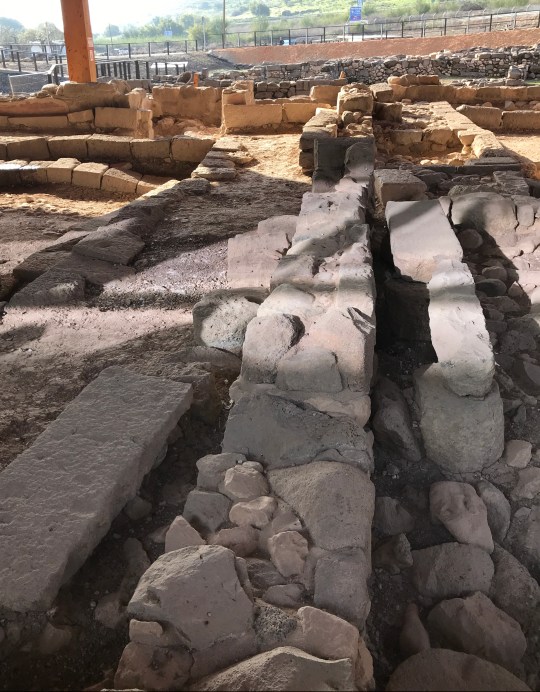
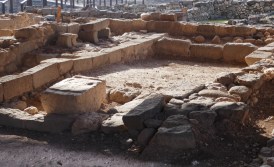
Magdala was an ancient city on the eastern shore of Lake Kinneret, several miles north of Tiberias. Today, if you visit the area, you will find the ancient city has been excavated and the ruins of the city reveal volumes of information about Jewish life in the first century in this area.

Magdala is in my top 5 favorite spots for New Testament insight. It is one of the few places in Israel where you can say with almost certainty that Jesus was here. In fact, he may have been here many times during his life and ministry. He may have even read and taught in this very synagogue.

IMG_9246

Magdala 1st Century Synagogue

P1040803

Magdala 1st Century Synagogue

As the pictures above reflect, the synagogue is largely intact. It was never built over, it appears much as it would have in the 1st century when Jesus of Nazareth would have visited and probably taught there on a Sabbath.

One of the the significant artifacts found at the site was a box (see images above) on which there were carvings of the menorah in the Temple. It was likely that there were members of the priestly family in Magdala who would have served in the Temple and been familiar with the menorah.

P1010977

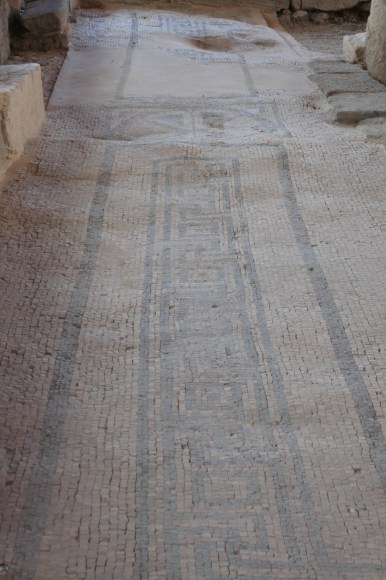
Mosaic on the floor of 1st Century Synagogue in Magdala

P1040821

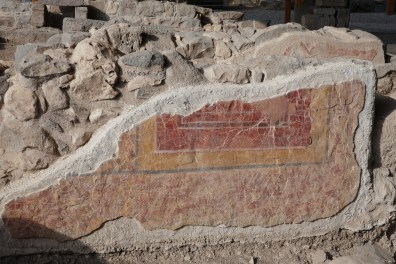
Plaster on walls with decoration from 1st Century Synagogue in Magdala

P1040820

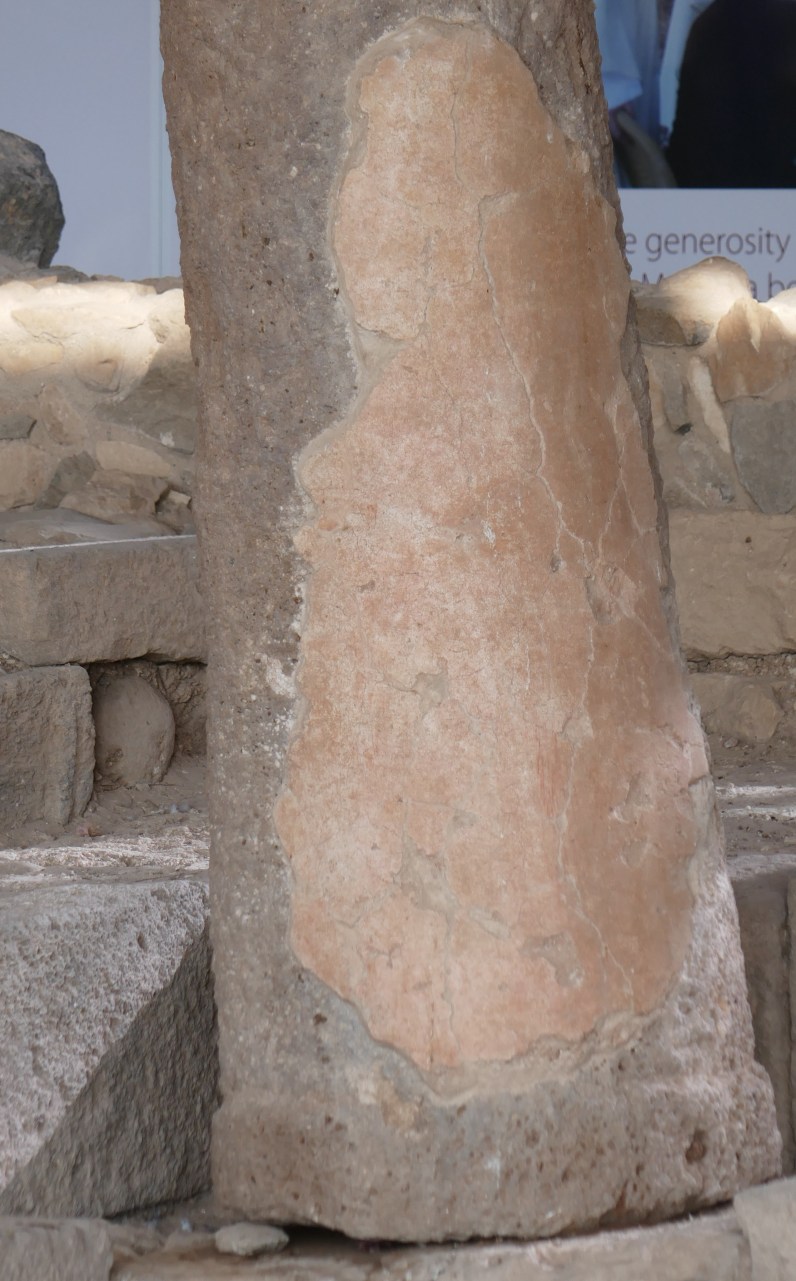
Plastering of a pillar from the 1st Century Synagogue in Magdala

P1040818

Mosaic from the floor of 1st Century Synagogue in Magdala


Read Full Post »

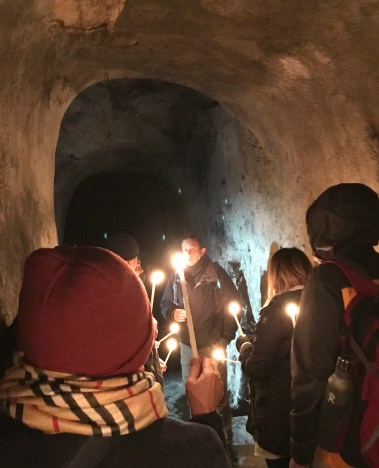
As with all things Jerusalem, debate exists over the place where the tomb of Jesus would be located. Everything has been rearranged and built over because of the destruction of the city and most holy sites by invading conquerors over the past centuries. One is left to rely on the geography, the customs of the time and the New Testament passages that describe where the trial, the crucifixion and the tomb were located.

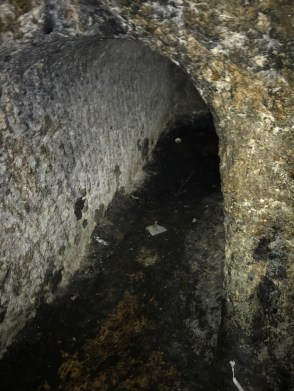
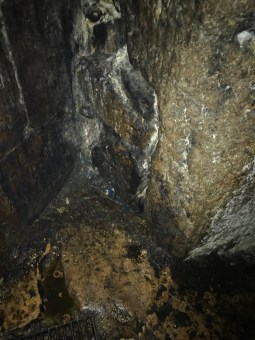
In the first century, the historians tell us that the graves in Jewish communities would have been located in caves and rock faces that were not close to centers of commerce or living areas given the prohibitions against touching the dead or things associated with the dead. The graves from the first century look like the graves in the pictures below.
IMG_0010

Circular tomb from 1st Century located in the Church of the Holy Sepulcher in Jerusalem.

IMG_0009

Circular tomb from 1st Century located in the Church of the Holy Sepulcher in Jerusalem. This view is looking directly into the tomb.
 

IMG_0012

Circular tomb from 1st Century located in the Church of the Holy Sepulcher in Jerusalem. This tomb is sealed, so you can’t see into it.

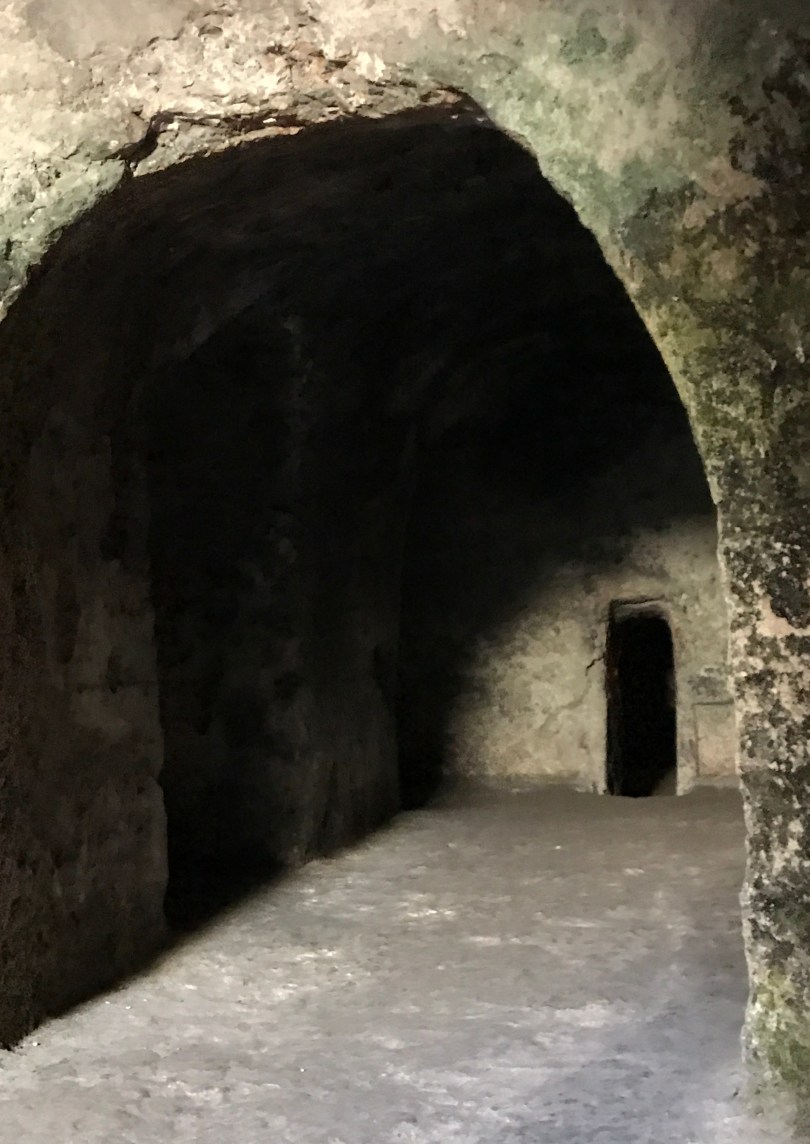
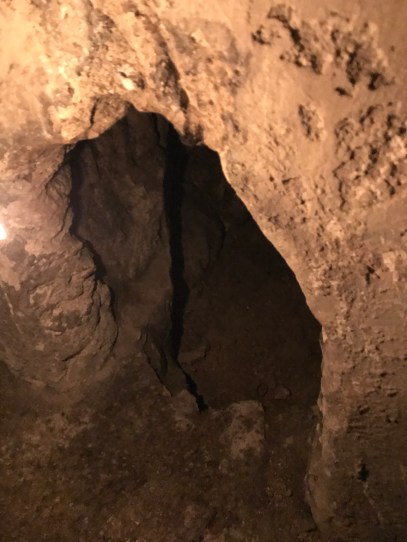
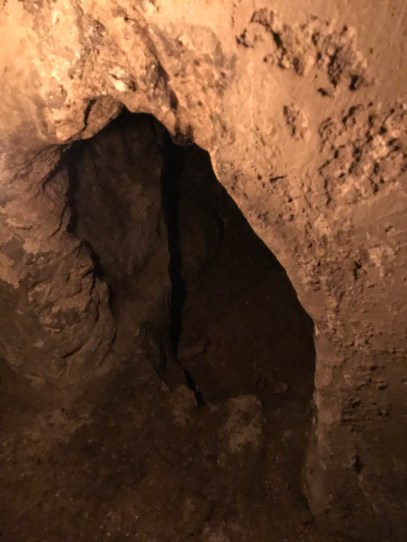
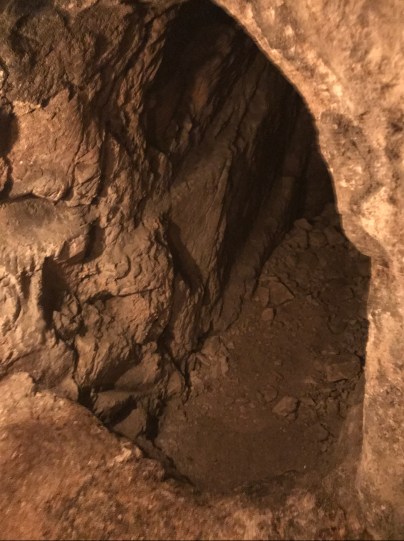
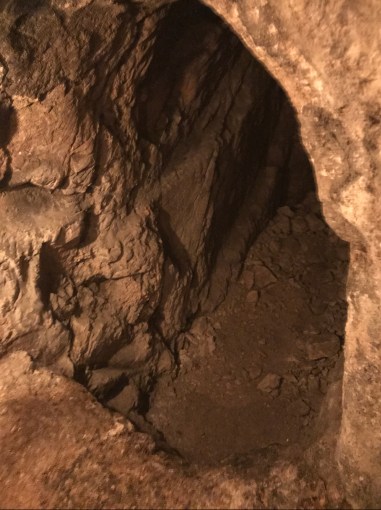
The following are photos of a complex of 1st Century graves in system of caves on the Mount of Olives called the Tombs of the Prophets. This is not a likely location of the grave of Jesus, but it is the type of tomb he was likely to have been buried in at the time. The photos are to help the reader understand what the graves looked like.
 

IMG_8582

Entry to the system of caves of the Tomb of the Prophets in Jerusalem.
IMG_8591

1st Century Tomb in the Tomb of the Prophets on the Mt of Olives, Jerusalem
IMG_8592

1st Century Tomb in the Tomb of the Prophets on the Mt of Olives, Jerusalem
IMG_8594

1st Century Tomb in the Tomb of the Prophets on the Mt of Olives, Jerusalem
IMG_8594

1st Century Tomb in the Tomb of the Prophets on the Mt of Olives, Jerusalem
IMG_8595

These photos help you to see that the graves were hewn into the rock face. They were cylindrical (circular/oval openings). They were on the level of the ground, so that one would have to stoop to look into them or bend down to enter or exit the tomb.

This is consistent with Luke 24:12 (NKJV) which providess, “But Peter arose and ran to the tomb; and stooping down, he saw the linen cloths lying by themselves; and he departed, marveling to himself at what had happened.”


Read Full Post »
Hebron

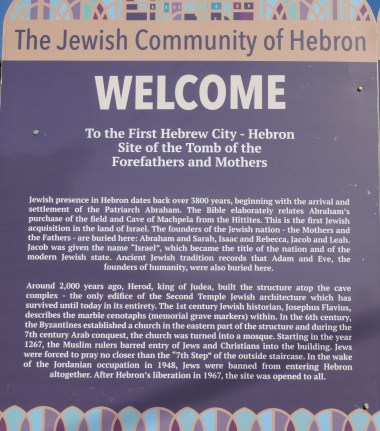
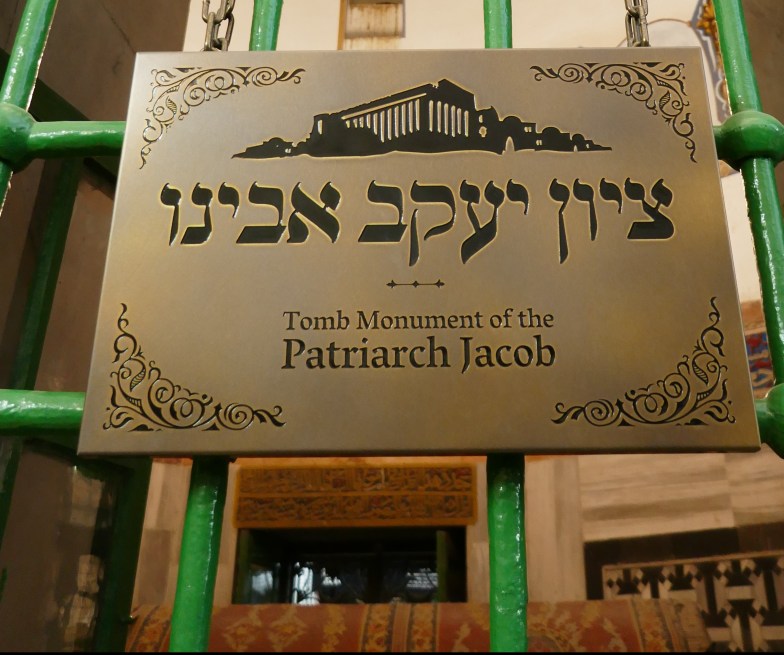
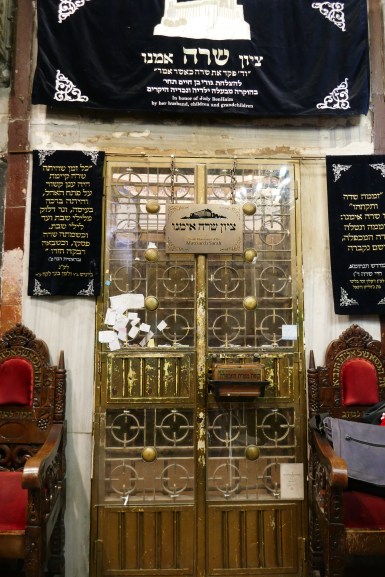
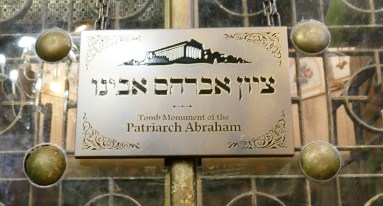
One of the places that I was able to visit on my recent trip to Israel was Hebron. Hebron, considered the first Hebrew City, is located in the Judean mountains south of Yerushalayim (Jerusalem). The location is important to the Jews because it is the burial place of the patriarchs, Abraham, Isaac, Jacob and their wives. (See Genesis 23)

P1040444P1040447

The building at Hebron was built by Herod the Great, one of his many building projects across the land. He also built a palace in Jerusalem, a palace in Jericho, a palace on Masada, an entire harbor at Caesarea Maritima and Herodium, where he was buried. However, the building at Hebron is the only structure built by Herod the Great that is still in tact.

P1040460P1040471P1040477P1040481

The graves of the patriarchs are believed to be in caves below the structure. Because the Jews must share the building with the Muslims, with each occupying one half of the building, it is difficult to do further exploration or excavation to find out what is below the building.

As we were leaving the building, an afternoon prayer service was beginning. The Jews living in Hebron are mostly Modern Orthodox, but Orthodox Jews from other parts of the country visit Hebron and spend time there in prayer and study.

Not unlike the Temple Mount and Western Wall, police are stationed at the entrance for security.

The tombs are a short distance from the actual Tel of the ancient city of Hebron. One of the upcoming posts will be dedicated to the Tel itself.

Read Full Post »
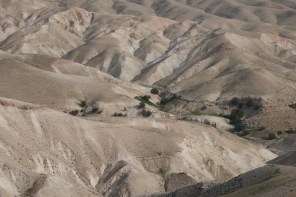
In the tall cliffs above the Salt Sea (aka the Dead Sea) there are openings in the cliffs barely visible from the road passing below. The openings lead to caves. In the caves, the members of an ancient Jewish community, hid scrolls on which were written portions of the Hebrew Bible as well as extensive writings about the life in the religious community.

The scrolls, the earliest copies of the Hebrew Bible, were discovered in the 1940’s right around the time Israel was being established and Jews were returning to Israel from all over the world. The discovery of the scrolls at this time was more than mere coincidence. The writings reinforce the claims of legitimacy of the Jewish people in the land. The writings further confirm the authenticity of scripture for Christians as well as Jews.

The photos above give you an idea of the geography of Qumran. These photos are taken in the wetter part of the year, and yet there is little greenery. The only fresh water in this area comes from the ravines which bring water from the north of Israel after the rains. The openings in the rocks evident in some of the photos are caves similar to and in which the scrolls were found.

The photos above are from the excavations of the Jewish community near the base of the cliffs where the Dead Sea scrolls were found. They appear to have been a religious group. This conclusion is based on the finding of several Mikva’ot (plural of Mikveh). The Mikva’ot are used for bathing, part of the Jewish practice of ritual purification. The occurrence of several in a community speaks of the important of ritual purity to the group. In addition to the Mikva’ot, remains of very large cisterns, used to collect and store water for the long periods without rain-water run off, have been excavated.

In the photos above, you can also see part of the water system which has been discovered which provides further support for the importance of water to their religious practices as well as their experience with collecting and storing water because of the geography and lack of nearby fresh water sources.

Read Full Post »

Lake Kinneret

Some things in Israel never change, but also continue to amaze and instruct. One such place is Lake Kinneret. You may know it as the Sea of Galilee or Lake Tiberias.

The lake is the lowest fresh water lake in the world. It is 13 miles long and 8 and ½ miles wide at the widest point. Though small when compared to many lakes around the world, Lake Kinneret is at no loss for visitors.

Lake Kinneret (Sea of Galilee) was the hub around which Jesus of Nazareth taught during his ministry. Many of the stories found in the Gospels of Matthew, Mark, Luke and John took place on or near the lake.

While I was originally drawn to the lake for the usual reasons pilgrims are, I am drawn back now by the beauty and mystery of the lake. It is a joy to photograph because the views are rarely the same. The lake changes with the rising and setting of the sun and with the fog and mist that lay across its surface through parts of the day as well.

I offer you, the lake . . .

Read Full Post »
« Newer Posts - Older Posts »