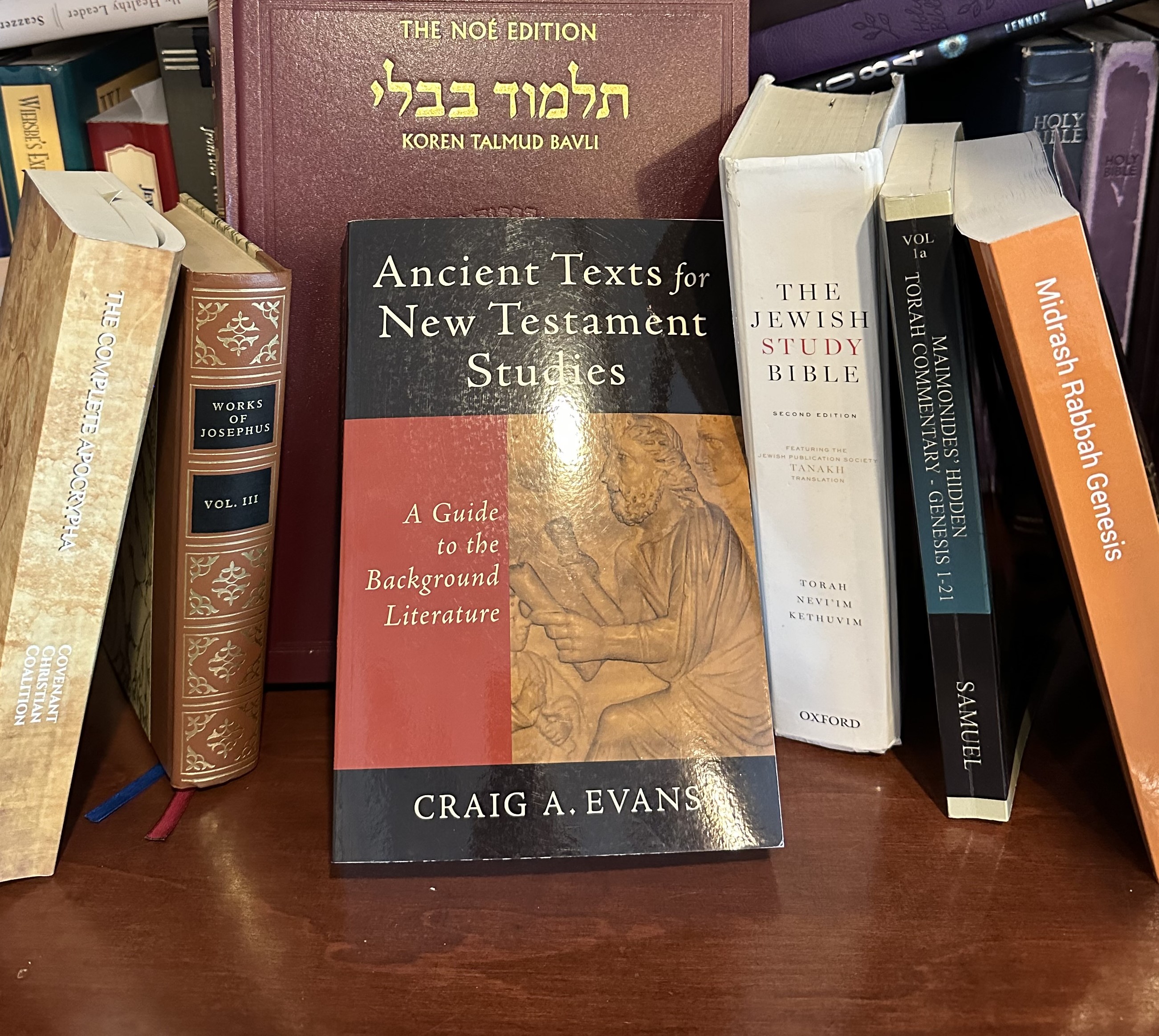
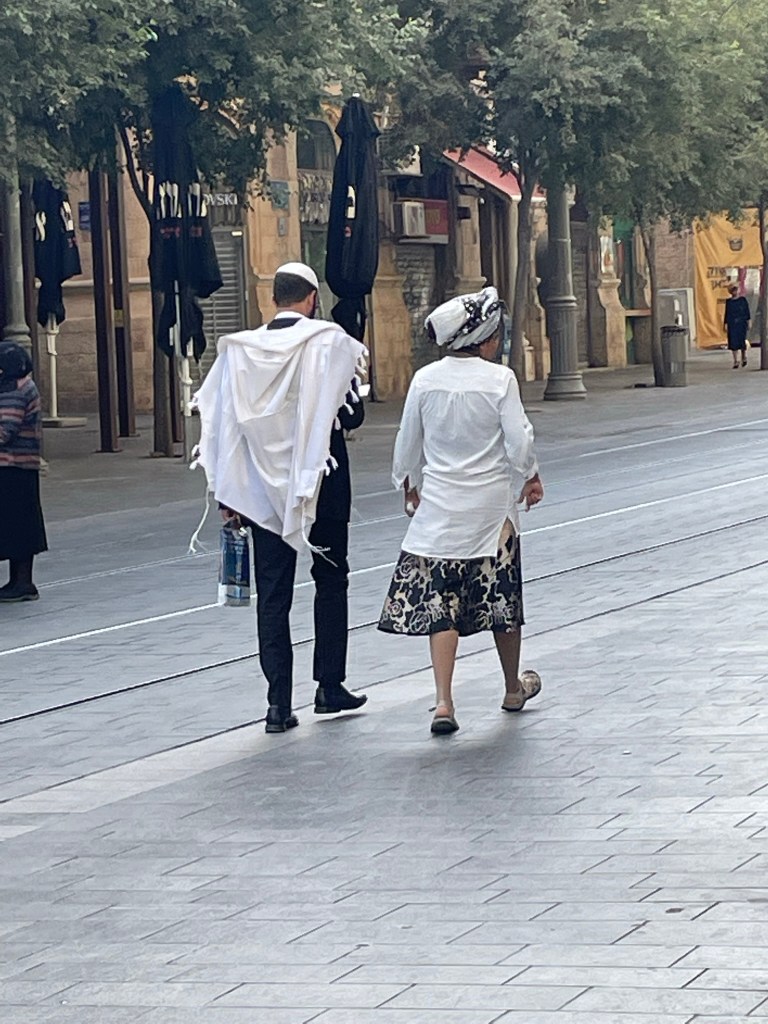
On occasion, I am asked about helpful tools in study of the scriptures. I like to recommend a combination of Jewish resources as well as traditional evangelical sources. When I receive push back on using Jewish resources, I remind students it is a mistake to be narrow in our thinking. To keep ourselves separate from the Jews in our thinking and interpretation of the scriptures is an error which fosters disunity and fracturing in the assembly of believers. To maintain an arbitrary separateness when we are discussing the same scriptures is to believe that our agenda or world view is more important than seeking the truth about God. Failing to consider thousands of years of Jewish scholarship by men who spent their lives steeped in the scriptures is tantamount to intentional ignorance. Moreover, it is a failure in the task of seeking unity as called for in scripture at a basic level. (See Psalm 133:1; Ephesians 1:4-16; 1 Peter 3:8)
One cannot come anywhere near a unity of understanding without consideration of a wide range of resources from various points of view. It is not necessary to accept every resource as “equal” in its usefulness, but it is necessary to consider that something of value to an overall understanding of God and His revelation can be found in many different places, even resources outside of our tradition.
Rejection of Jewish materials is also, it seems to me, a form of anti-Semitism that the church should not condone. Moreover, wholesale rejection of all things Jewish in terms of commentary on scripture creates an unnecessary barrier to observant Jews coming to believe in Yeshua.
The disassociation of Jewish thought and even the Hebrew scriptures themselves from the New Testament study is to unmoor the gospels and the New Testament letters from their Jewish roots and sources which creates a risk of misinterpretation and a furthering of the divide between Jews and Christians.
Without much financial commitment, one can find Jewish resources at her fingertips through https://www.sefaria.org/texts . This website is easy to use and filled with materials to aid in study and understanding of scripture.
It is our desire to help you grow in your knowledge of Adonai and His Word. If you are looking for additional information and/or materials, please visit our website at RootedinHisWord.org and our Facebook page.
Answer the following basic questions about Resurrection Sunday (Easter) and find out your Easter I.Q. :
1. What Jewish holiday was Jesus celebrating right before his trial and subsequent crucifixion?
2. What event did the Prophet Zechariah foretell in his statement “Rejoice greatly, O daughter of Zion! Shout, O daughter of Jerusalem! Behold, your King is lowly and riding on a donkey, a colt, the foal of a donkey.” (Zechariah 9:9)
3. What Easter-related event is predicted to the day in Daniel 9?
4. Where was Jesus taken first after his arrest?
5. Upon whose testimony was Jesus sentenced to death?
6. To what representative of the Roman government was Jesus taken for permission to carry out the death sentence?
7. What prisoner was released instead of Jesus at the request of the crowd? What crimes was he accused of?
8. How many men were crucified with Jesus?
9. Who are two of the people (there were more than 2) at the cross when Jesus died?
10. What is in the tomb where Jesus was laid after he died on the cross?
Be sure to write your answers down. The key to the quiz will be in tomorrow’s post.
It is our desire to help you grow in your knowledge of Adonai and His Word. If you are looking for additional information and/or materials, please visit our website at RootedinHisWord.org and our Facebook page.
It is our desire to help you grow in your knowledge of Adonai and His Word. If you are looking for additional information and/or materials, please visit our website at RootedinHisWord.org and our Facebook page.
Passover (Pesach) is one of three major feasts in the Jewish calendar. It was one of the “pilgrim feasts,” during which the Israelites were expected to make pilgrimage to Jerusalem to worship in the Temple during the feast. However, the first Passover occurred before any Tabernacle or Temple, while the Jews were still slaves in Egypt.
Beginning in Exodus 12:3 and following, God instructs the people on how to prepare for the first Passover, “on the tenth day of this month every man shall take for himself a lamb, according to the house of his father, a lamb for a household. . . . Your lamb shall be without blemish, a male of the first year. You may take it from the sheep or from the goats. Now you shall keep it until the fourteenth day of the same month.
Then the whole assembly of the congregation of Israel shall kill it at twilight. And they shall take some of the blood and put it on the two doorposts and on the lintel of the houses where they eat it. Then they shall eat the flesh on that night; roasted in fire, with unleavened bread and with bitter herbs they shall eat it. Do not eat it raw, nor boiled at all with water, but roasted in fire-its head with its legs and its entrails. You shall let none of it remain until morning, and what remains of it until morning you shall burn with fire. And thus you shall eat it: with a belt on your waist, your sandals on your feet, and your staff in your hand. So you shall eat it in haste. It is the LORD’S Passover.”
In Exodus 12:12 and following, God gives the reason for the Passover, “for I will pass through the land of Egypt on that night, and will strike all the firstborn in the land of Egypt, both man and beast; and against all the gods of Egypt I will execute judgment: I am the LORD. Now the blood shall be a sign for you on the houses where you are. And when I see the blood, I will pass over you; and the plague shall not be on you to destroy you when I strike the land of Egypt.”
Exodus, Leviticus, Numbers and Deuteronomy all mention Passover as do many books detailing the history of the Jews.
What does this have to do with Jesus?
Jesus was a Jew.
Jesus and his disciples had likely come to Jerusalem to celebrate Passover with his disciples when he was betrayed
By the blood of the lamb being smeared on the lintel and doorposts of the houses of the Jews, the judgment of God passed over them on that first Passover in Egypt. Similarly, by the blood of Jesus, the wrath of God passes over those who believe Jesus died for their sins.
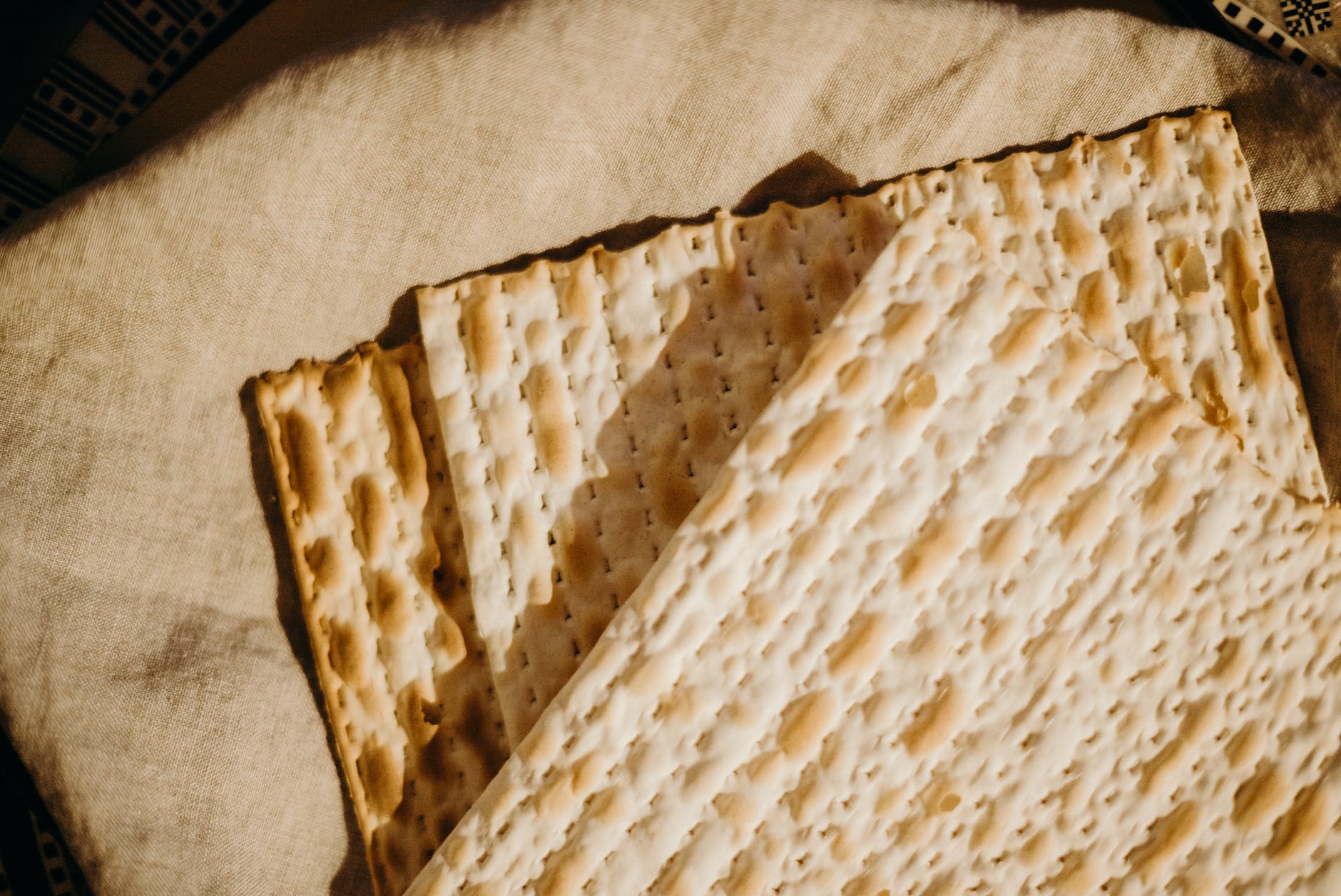
Jesus converted the symbols of Passover (cup of redemption) and the unleavened bread into symbols of the new covenant – what we know in the Christian tradition as communion.
Throughout Jewish history, the Passover celebration was pointing forward – to the Lamb of God who would take away the sins of the world and cause the wrath of God to pass over the children of God.
Who are these who have been passed over? Those who believe that Christ is the Son of God and that His death was a substitutionary death – Jesus because the substitute sacrifice – the lamb to be slain.
Read Matthew Chapter 26:47 to 75 1. To whom did they lead Jesus away to see according to Matthew 26:57?
2. Who was Caiaphas?
Going deeper: How did Caiaphas become the High Priest?
3. What was Peter doing according to Matthew 26:58? Why?
4. What were the chief priests, the elders and the council seeking with regard to Jesus according to Matthew 26:59?
5. What do you learn from Matthew 26:60-61?
6. What was the testimony of the witnesses? Why was it insufficient?
7. What is required under the Torah according to Deuteronomy 17:6 and 19:15?
8. What did the high priest say to Jesus in Matthew 26:62?
9. How did Jesus respond?
10. What did the high priest say to Jesus in Matthew 26:63?
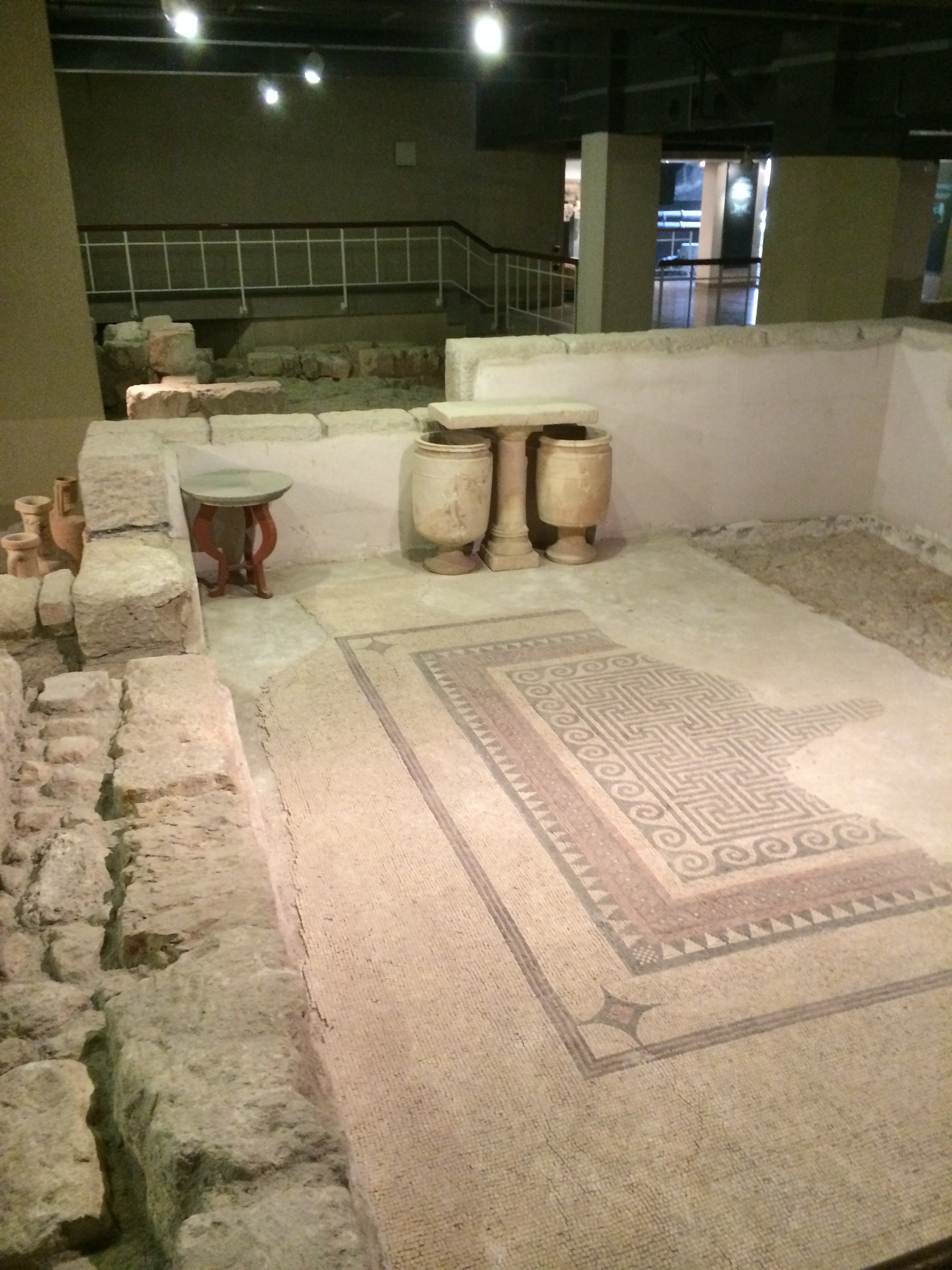
Beautiful mosaic in the floor of the priestly mansion in Jerusalem
It is our desire to help you grow in your knowledge of Adonai and His Word. If you are looking for additional information and/or materials, please visit our website at RootedinHisWord.org and our Facebook page.
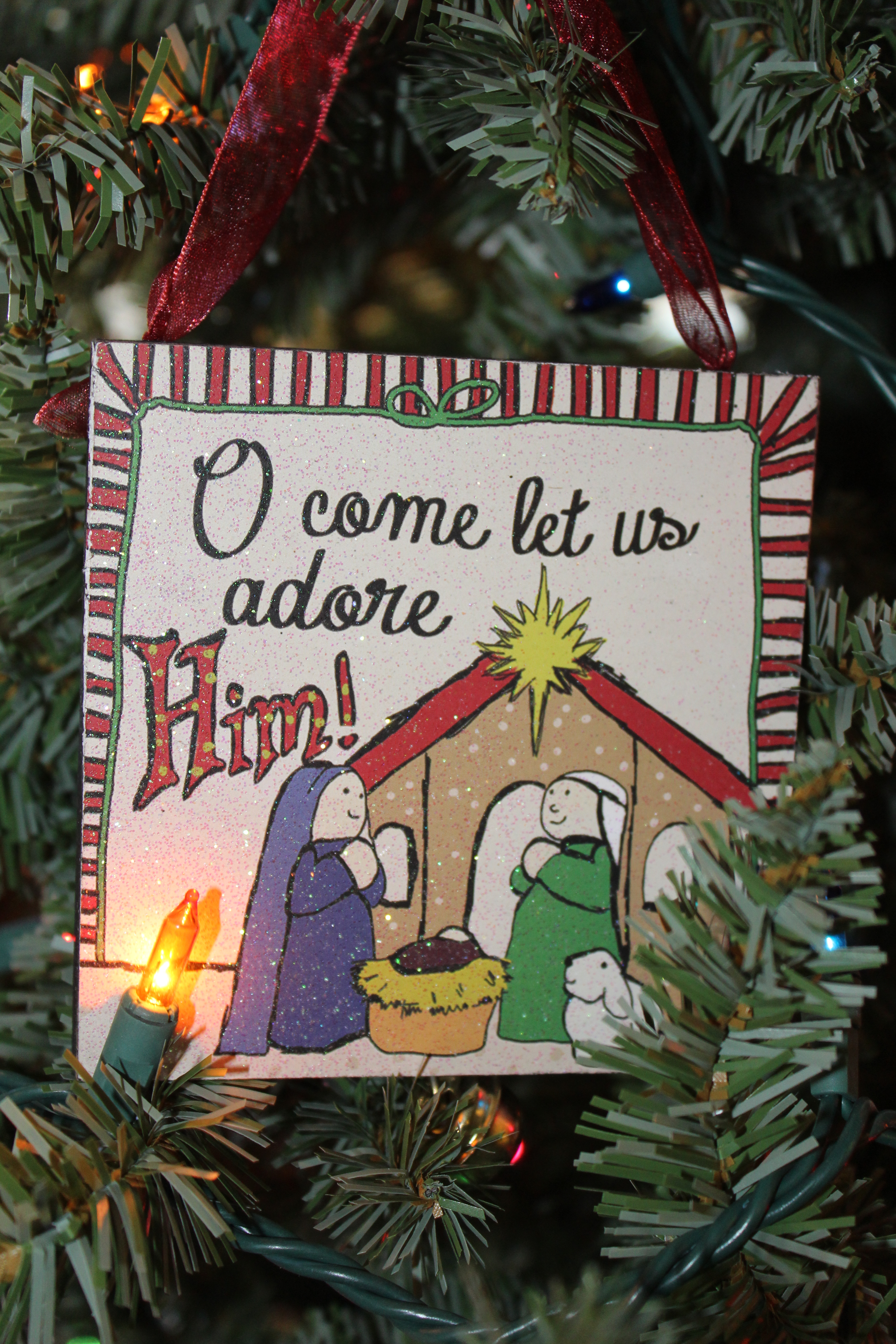
It was love, mere love; it was free love that brought the Lord Jesus Christ into our world. What, shall we not remember the birth of our Jesus? Shall we yearly celebrate the birth of our temporal king, and shall that of the King of Kings be quite forgotten? Shall that only, which ought to be had chiefly in remembrance, be quite forgotten? God forbid!
No, my dear brethren, let us celebrate and keep this festival of our church with joy in our hearts: let the birth of a Redeemer, which redeemed us from sin, from wrath, from death, from hell, be always remembered; may this Savior’s love never be forgotten! But may we sing forth all his love and glory as long as life shall last here, and through an endless eternity in the world above! May we chant forth the wonders of redeeming love and the riches of free grace, amidst angels and archangels, cherubim and seraphim, without intermission, forever and ever!
And as, my brethren, the time for keeping this festival is approaching, let us consider our duty in the true observation thereof, of the right way for the glory of God, and the good of immortal souls, to celebrate the birth of our Lord Jesus Christ; an event which ought to be had in eternal remembrance.
George Whitefield, Selected Sermons of George Whitefield
It is our desire to help you grow in your knowledge of Adonai and His Word. If you are looking for additional information and/or materials, please visit our website at RootedinHisWord.org and our Facebook page.




 Rooted and Grounded