 In Exodus, God gives Israel the Torah (instructions). Many have translated this “law,” but Torah is much more than law. It is the hedges God has given His people for the abundant life, the God-pleasing life. The Torah was a gift to man, to help him to realize his total inability to meet God’s standard and his obvious and ongoing need for a Savior . . . who bleeds. According to Paul, the “law was our tutor to bring us to Christ, that we might be justified by faith.” Galatians 3:24
The atonement provided for under the law was only intended as a temporary fix, to cover the sin in order that the worshiper might approach and fellowship with God. It was never intended to take sin away.
In Leviticus, an often overlooked book of the Bible, God lays out a means by which man may atone for sin in order to be able to have restored relationship with God. He sets up the place for fellowship (Mercy Seat) – where He will meet with man – through His representative (the High Priest). He carefully details every piece of wood, precious stone, curtain, garment, utensil of the worship.
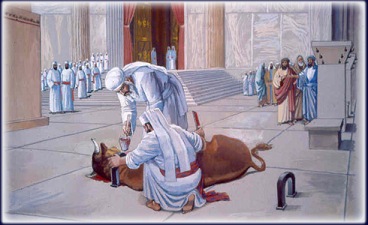
The starting point of the worship of God was the bronze altar where the sacrifices were made. It was a bloody place. At the time of the feasts, the valley behind the temple would have been flowing with blood from the many sacrifices being offered. Shed blood was a central part of the worship and approach to God. No one entered the presence of God without a blood covering, a sacrifice to atone for sin.
God told His people in Leviticus 17:11, “For the life of the flesh is in the blood, and I have given it to you upon the altar to make atonement for your souls, for it is the blood that makes atonement for the soul.”
All this was looking forward to the cross, the shed blood of the Lamb of God, the blood that would atone for the sin of the whole world.
Check out our next blog for more about The Resurrection.
It is our desire to help you grow in your knowledge of Adonai and His Word. If you are looking for additional information and/or materials, please visit our website at RootedinHisWord.org and our Facebook page.


 Rooted and Grounded