Feeds:
Posts
Comments

Posts Tagged ‘Jesus’

Why did Jesus need to be hung on a wooden cross?

Crucifixion was a Roman convention, not something provided for by Jewish law.  As a matter of fact, the Bible teaches “cursed is anyone who hangs on a tree.”  Deut. 21:23.  So why would the Jewish Messiah, the anointed one of God, be crucified on a wooden cross?
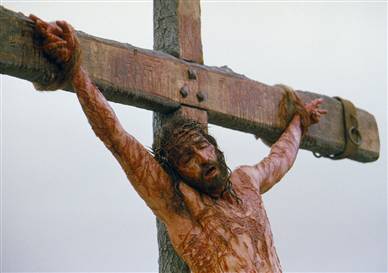
  • To Fulfill Prophecy – The Psalmist speaks of crucifixion in Psalm 22, a psalm which clearly speaks of Jesus, “for dogs have surrounded Me; The congregation of the wicked has enclosed Me. They pierced My hands and My feet.” Other scriptures in Psalm 34:20, Zechariah 12:10, and Isaiah 53 all foretell of the trial and crucifixion of Jesus.
  • To Illustrate the Suffering that Sin Brings – Jesus suffered on the cross.  We know this because in Matthew and Mark’s gospels, they record Jesus’ last words as “My God, My God, why have You forsaken Me?”  These words speak of great torment and suffering, of the soul searching in vain for God.  And so it will be with the sinner who fails to appropriate the blood shed at Calvary to his or her own sin.  If you fail to accept the sacrifice of Jesus as sufficient and apply it to your life through repentance and confession of Him as Lord and Savior, you have an ongoing sin problem.  How will you, in your sin, approach a Holy God?  No promise of heaven is given to those not covered by the blood of Jesus, only a promise of eternal separation from God.  Eternal life is a certainty.  The only uncertainty is where it will be spent.
  • Because Blood Alone Makes Atonement for the Soul – The most important reason for the crucifixion was the shedding of the blood.  According to Leviticus 17:11, “the life of the flesh is in the blood, and I have given it to you upon the altar to make atonement for your souls; for it is the blood that makes atonement for the soul.” Walk with me down the Romans road:  “All have sinned and fall short of the glory of God.” Rom. 3:23 “There is none righteous, no, not one.”  Rom. 3:10  “The wages of sin is death.” Rom. 6:23   Add to that the statement from Leviticus, “the blood . . . makes atonement for the soul.” There is only one conclusion to be reached;  there had to be a sacrifice, a blood sacrifice.  Someone had to die that I might live . . . that you might live.  Who would be the sacrificial offering (the propitiation) for my sin?  for your sin?  Who could meet the perfection standard outlined in God’s law?  Who would be without blemish, without sin?  Whose blood would be able to wash me . . . to wash you white as snow?  Only Jesus!  Crucifixion was necessary because our sin separated us from God, and God desired to be in fellowship with us.   God so loved the world . . .  God so loved me . . . God so loved you . . . blood had to be shed.  Unless you lived a sinless life and met the law of God in every point, you also need Jesus to have died on the cross, to have shed His precious blood.  Jesus was crucified, suffered, and bled because of me . . . because of you.

In this is love, not that we loved God, but that He loved us and sent His Son to be the propitiation for our sins.  1 John 4:10
Read Full Post »

Christmas is the celebration that always looks both to the past and to the future at God’s promises.

The Holy Father, recognizing the total inability of sinful man to be in relationship with a  Holy God, sent His only Son (Jesus – the God-man) to provide the perfect (complete) sacrifice, once and for all, to satisfy the righteousness requirements of a Holy God.

The Son came and showed us the character of the Father and how to obey God by the power of the Holy Spirit. He lived the perfect life having no sin.   When the time for the sacrifice came, the Son showed us how to obey the Father unto death.

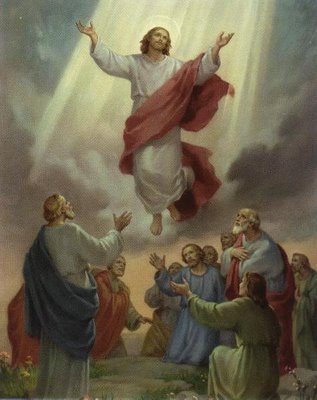
Having left the earth to return to the right hand of the Father, the Son left us the Holy Spirit to be our comforter, teacher, and the guarantee of our inheritance.  The Holy Spirit is given to those who belong to the Son – for whom the Son shed His sacrificial blood.

May your Christmas be filled with the power of the Holy Spirit.  May you know the goodness of the Lord in all things especially in your personal relationship with Him, as you walk and abide with Him.  Be encouraged, He is coming back soon for His church.  May you be found ready, with plenty of oil in your lamp.

Read Full Post »

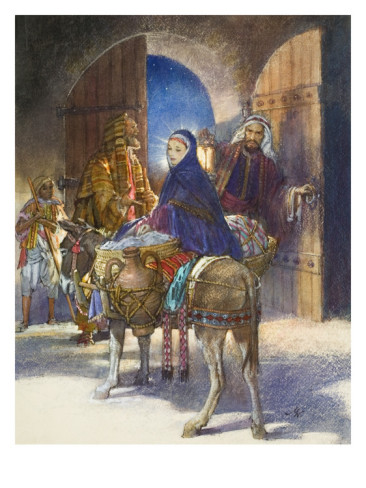
In the Christmas story, characters lurk in the shadows.  They are present, but their roles are minor.  It is among these characters that we find some who missed Christmas.  If we are to avoid this fate, for surely it is possible for any of us to “miss Christmas,” we must learn from their mistakes.

We could make a case that the innkeeper missed Christmas.  The young couple arrive at the innkeeper’s door with the Messiah almost ready to be delivered (oh how rich the irony).  What a blessing for any Jewish family to have the long-awaited Messiah be born in their home.  Sadly, such an opportunity was lost.  The innkeeper was focused on financial gain – not a bad goal in itself, but devastating if it keep you from meeting God, from welcoming Him into your home, from seeing things according to His plan.

Not having a God-centered view of events and circumstances, the innkeeper missed Christmas.  But we don’t have to be like the innkeeper.  We can focus on the eternal and away from the temporal.  We can take our eyes from our finances and consider our inheritance in heaven.  We can embrace Christmas with its reminder that God, Holy and just, took on flesh to accomplish His great plan of salvation for us.

Read Full Post »

Sometimes we are told to “Make a joyful shout to the LORD” (Psalm 100) and  “Praise Him with clashing cymbals! (Psalm 150)”  Other times, we can be quiet.

We can be quiet in His strength

In Matthew 11:28, Jesus says,  “Come to Me, all you who labor and are heavy laden, and I will give you rest.  29 “Take My yoke upon you and learn from Me, for I am gentle and lowly in heart, and you will find rest for your souls.  30 “For My yoke is easy and My burden is light.”

The picture here is of oxen pulling a plow or a wagon.  The two animals would be yoked together.   A yoke is “a device for joining together a pair of draft animals, especially oxen, usually consisting of a crosspiece with two bow-shaped pieces, each enclosing the head of an animal.”  In order to be yoked together, animals must be comparable in size, stamina and desire to work.   This provides an important spiritual lesson to the believer.

When we are yoked to Jesus, we go where He goes (by necessity).  Because of the yoke, we must look at what He looks at, see what He sees.  By being joined together like this, we benefit from His wisdom and His strength, and we can just be quiet.  Sometimes it is good to just walk alongside Jesus, yoked to Him, quietly learning from Him.

Read Full Post »

Will you be like Judas and serve Christ with a kiss of betrayal?

Do you come and “kiss the ring” on Sunday morning, serving God, worshiping with the people of God, nodding at the finer points of the  Pastor’s sermon and then live like a heathen the rest of the week?  Isn’t that exactly what Judas did?  Didn’t he walk daily with Jesus, watch the miracles, hang with the disciples and do the “spiritual” things like saying the previous oil in the alabaster box should be sold to generate money for the poor, and then didn’t he sell Jesus out to his enemies for 30 pieces of silver?  Is that you?  Pious with the church folks and down and dirty with the unsaved, passing off your church attendance as mere amusement, something you do for your parents, kids or spouse?  Be careful you don’t live like Judas, by the kiss.

Will you be like Peter and seek to serve the LORD by the flesh and the sword?

Maybe you are more like Peter.  God speaks to you and shows you His truth, but rather than wait on the LORD, you rush ahead in your flesh and cut off the ears of those who don’t yet know God.  Maybe you rely on your own wisdom to argue with the unsaved, driving them farther from Jesus.  Maybe when God draws you into the company of Godly men or women, all you can speak of is building a tent for them, forgetting about the close presence of God in your zeal to show partiality to men.  Be careful you don’t seek to serve Jesus by the flesh and the sword.  It will only leave you and those around you wounded.

Or will you be like Jesus, who when called to serve God, obeyed drinking the cup

The cup that Jesus drank from was no simple thing.  Three times He begged God to take it from Him always asking for God’s will first.  Will you be like Jesus?  Will you seek first God’s plan, God’s way, God’s purpose and despite the pain, discomfort or sheer terror you feel in the face of it, will you, like Jesus, drink the cup God offers you?  Will you be like Jesus, obedient to death, a death on the cross?  A death of torture and humiliation?  Will you then, in the midst of your torture and humiliation, count those for whom you suffer “joy”?  Serve God by drinking the cup.  Serve God by obeying Him with every fiber of your being, even your last breath.

Read Full Post »

Whiter than Snow

Whiter than snow, whiter than snow
My Savior washes me whiter than snow
Whiter than snow, whiter than the whitest snow,
My Savior washes me whiter than snow
 
I came like a lamb to the slaughter,
then He made me His daughter
My Savior washes me whiter than snow
 
Whiter than snow, whiter than snow
My Savior washes me whiter than snow
Whiter than snow, whiter than the whitest snow,
My Savior washes me whiter than snow
 
When I came, I was suffering
Now the world to me is nothing
Cause my Savior washes me whiter than snow
 
Whiter than snow, whiter than snow
My Savior washes me whiter than snow
Whiter than snow, whiter than the whitest snow,
My Savior washes me with blood spilled at Calvary
My Savior washes me whiter than snow
 
Copyright (c) 2000 M.E.Mullin

Read Full Post »

No Scar?

[from Toward Jerusalem by Amy Carmichael]

Hast thou no scar?
No hidden scar on foot, or side or hand?
I hear thee sung as might in the land;
I hear them hail thy bright, ascendant star.
Hast thou no scar?
 
Hast thou no wound?
Yet I was wounded by the archers; spent,
Leaned Me against a tree to die; and rent
By ravening beast that compassed Me, I swooned.
Hast thou no wound.
 
No wound?  No scar?
Yet, as the Master shall the servant be,
And pierced are the feet that follow Me.
But thine are whole; can he have followed far
Who has no wound nor scar?
 

Read Full Post »

He was in the beginning with God.

  • Why does God repeat Himself here? – For emphasis, to make sure we get it.  As a mother, I am prone to repeat the things that I fear may result in injury or trouble for my child if she forgets them.  So it is with God.  He knows that we have this propensity to want to deny Him, His role in creation, Him as the point of origin for our lives, our very breath.  To help us get it, He repeats Himself.
  • What does this verse tell us about the relationship between Jesus and God? – It tells us that they are co-equals.  Jesus was not created.  He pre-existed creation as God, the Father, did.
  • What did Jesus say about this? – “O Father, glorify Me together with Yourself, with the glory which I had with You before the world was.”  (John 17:5)
  • Why is this important? – Most cults include as part of their teaching that Jesus was not a co-equal with God, that He is something less than God.  This is a heresy.  Knowing what God has said in His word will allow us to answer those who lie about the deity of Christ.

Read Full Post »

In the beginning was the Word, and the Word was with God, and the Word was God.

  • When is the “beginning?” –  Was it creation?  Was it the “bang?”  Was it you in the goo?  It doesn’t matter where you place the time marker, God was there.  He was in the beginning.
  • Who is the Word? – JESUS!  We know this because of Rev. 19:11-13.  It would be entirely within the meaning of this verse to read it as follows:  “In the beginning was Jesus, and Jesus was with God, and Jesus was God.”   Jesus = God.    The ‘Word” or “logos” is a name given to God, to Jesus the 3rd person of the Godhead.
  • Why is this important? – As we discussed in the last post, one of the main purposes that John has in his gospel is to establish the deity of Christ.  If Jesus Christ was not God, then He has no power to save or redeem.  If, however, He was God, as He claimed with words and proclaimed through His actions, then every man and woman must choose whom they will serve, the gods/idols of this age or the one true and living God who came, suffered bearing the sin of the whole world, died, was buried in a tomb and on the third day, rose again (the tomb is still empty today).

I have set before you life and death,  blessing and cursing; therefore choose life, that both you and your descendants may live; that you may love the LORD your God, that you may obey His voice, and that you may cling to Him, for He is your life and the length of your days.

—- Moses (Deut. 30:19-20)

Read Full Post »

Loving your neighbor is not difficult when your neighbor is your friend and thinks like you and does nice things for you.  Loving that neighbor is easy.  As a matter of fact, loving the neighbor who is a friend is a joy, it is a “get to” not a “got to.”

That being said, loving the other neighbor, the one who has wronged you, the one who has lied about you, the one who has stolen from you, hurt your family, wounded your child or otherwise done you wrong, loving that neighbor is nearly impossible.  Without Christ, it would be wholly impossible and totally understandable.  The world understands when you hate those who persecute you and retaliate against those who hurt your family and wound your child.

BUT GOD . . . has another way, a more excellent way.  Instead of continuing on the path of anger, bitterness and unforgiveness, my Savior, the one I call Lord, asks me to respond differently.  He asks me to do the impossible and forgive.  He commands me to forgive. I want to resist.  I want to shout about the injustices that I have suffered, that my loved ones have suffered.

As I lift my head to shout, my eyes fall upon a cross.  Blood is pooled at the foot of that cross.  No longer does my Savior hang there, for He has risen, but I see the evidence of His suffering and I am reminded of the injustices that He suffered for me, and I know that all the wrongs against me have been paid for by that spilled blood.  The payment has been rendered for the hurts, the slights, the attacks, the lies, the abuse . . . and I bow my head.  “Forgive me, Father.”

“I will forgive you as you forgive those who wrong you.”

In that moment, knowing I need God’s forgiveness more than my own vindication, I release what I have been holding against those who have wronged me.  I cannot survive without the forgiveness and love of my God.  It is His great love that drew me, that healed me, that delivered me.  I must do this thing He commands.  There is no other way.  “Help me Father to forgive.”

“And so I shall, my child.”


In the upcoming posts, we will consider this issue of forgiveness, bitterness and anger, and the biblical response to it in the life of the believer.

Read Full Post »

« Newer Posts - Older Posts »