As we approach the celebration of Yeshua’s arrest, trial(s), passion, burial and resurrection, evaluate your Bible Literacy–take the Easter Quiz and then check your results against the Answer Key
It is our desire to help you grow in your knowledge of Adonai and His Word. If you are looking for additional information and/or materials, please visit our website at RootedinHisWord.org and our Facebook page.
Read Matthew Chapter 28 1. What happened the day after the Sabbath according to Matthew 28:1-4?
2. What did the angel say to the women according to Matthew 28:5-7?
3. Who appeared to the women as they went to tell the disciples what they learned at the tomb according to Matthew 28:9-10? What did He say?
4. What happened with regard to the chief priests and elders in Matthew 28:11-15?
5. Where did the disciples go according to Matthew 28:16? Why?
6. What was their reaction when they saw Jesus according to Matthew 28:17?
7. Review the resurrection in the other gospels and note things that Matthew does not record.
8. Copy Jesus’ statement to them from Matthew 28:18-20. Meditate on this. Record your thoughts and impressions.
It is our desire to help you grow in your knowledge of Adonai and His Word. If you are looking for additional information and/or materials, please visit our website at RootedinHisWord.org and our Facebook page.
Easter is easy to locate in Leviticus . . . just follow the blood. If you have read through the Bible, you may remember Leviticus as one of the more challenging books to get through.
In a chapter near the middle of the book, we find out the purpose of all the blood-letting and sacrifice outlined in Leviticus and other books of the law. Leviticus 17:11 says, ‘For the life of the flesh is in the blood, and I have given it to you upon the altar to make atonement for your souls; for it is the blood that makes atonement for the soul.’
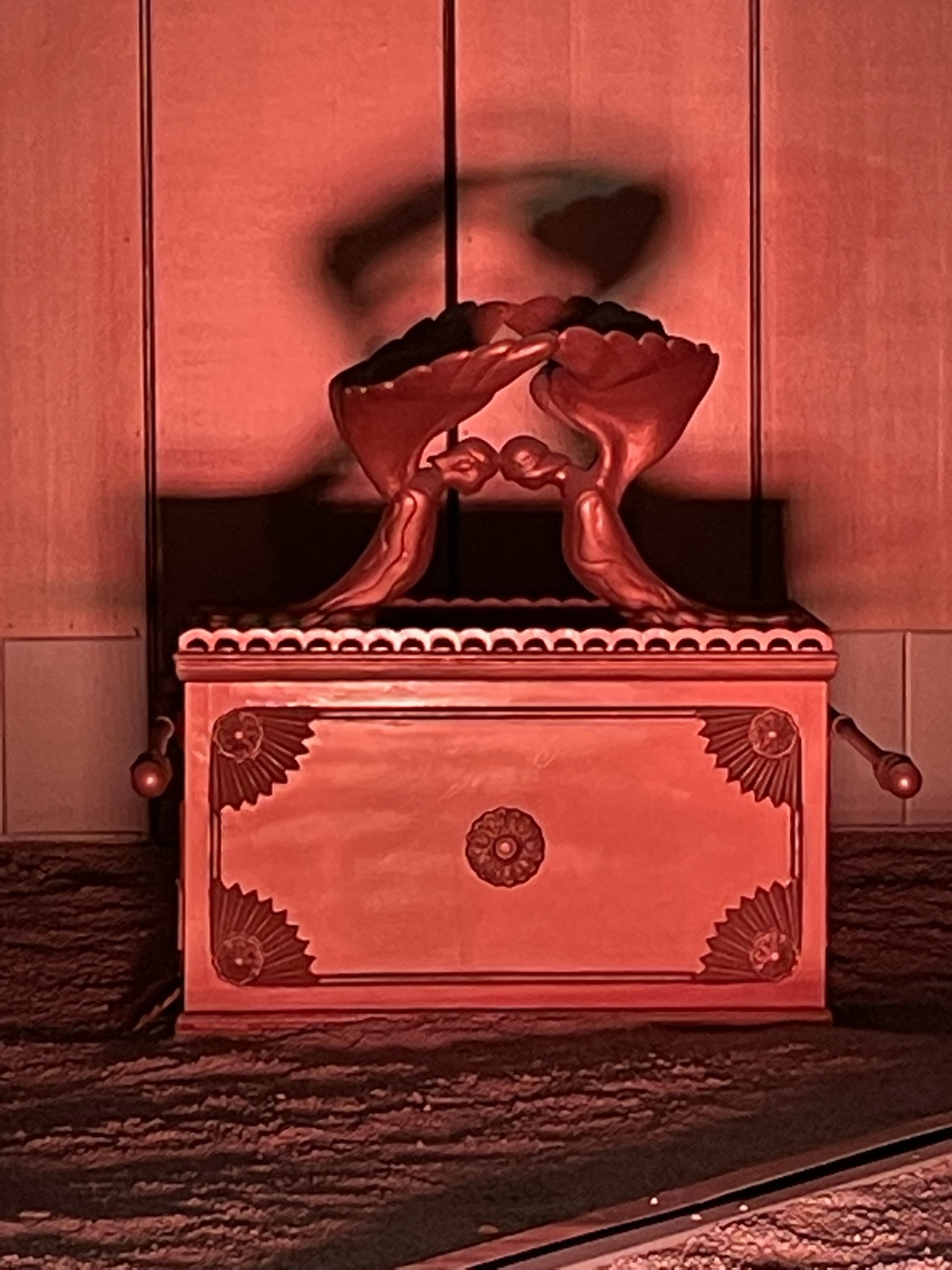
This statement is a foundational pillar of God’s plan for salvation. Atonement is defined by dictionary.com as “satisfaction or reparation for a wrong or injury; amends.” Had we been alive when sacrifices were being offered in the Tabernacle or the Temple, we would have seen blood flowing from the altar and out of the place of worship. Blood (the sacrifice of life that it represents) and worship are intertwined and inseparable in the Bible. The offerings (Korban) were a means to draw near to Adonai. For the worshiper to be able to meet God, it took a lot of spilled blood and the loss of at least one animal’s life.
Formula for approaching God in Leviticus: Prepare for worship = spill blood
The picture of the sacrifice with the blood spilling out to atone for the sin of the one seeking to approach God was a picture of what was required when God sent His only Son to be the perfect and final sacrifice.
It is our desire to help you grow in your knowledge of Adonai and His Word. If you are looking for additional information and/or materials, please visit our website at RootedinHisWord.org and our Facebook page.
Here are the questions and answers to the Easter I.Q. Test:
1. What Jewish holiday was Jesus celebrating right before his trial and subsequent crucifixion? PASSOVER
2. What event did the Prophet Zechariah foretell in his statement “Rejoice greatly, O daughter of Zion! Shout, O daughter of Jerusalem! Behold, your King is lowly and riding on a donkey, a colt, the foal of a donkey.” (Zechariah 9:9) JESUS’ TRIUMPHAL ENTRY INTO JERUSALEM
3. What Easter-related event is predicted to the day in Daniel 9? MESSIAH’S RIDING INTO JERUSALEM ON A DONKEY (REPRESENTING HIMSELF AS A KING OF PEACE)
4. Where was Jesus taken first after his arrest? HOUSE OF ANNAS
5. Upon whose testimony was Jesus sentenced to death? HIS OWN. THEY COULD NOT FIND TWO WITNESSES WHO AGREED AND JESUS FINALLY ANSWERED THE QUESTION, “ARE YOU THE CHRIST, THE SON OF GOD?” “IT IS AS YOU SAY.”
6. To what representative of the Roman government was Jesus taken for permission to carry out the death sentence? PONTIUS PILATE, ROMAN GOVERNOR
7. What prisoner was released instead of Jesus at the request of the crowd? What crimes was he accused of? BARABAS, REBELLION, ROBBERY, MURDER
8. How many men were crucified with Jesus? THREE
9. Who are two of the people (there were more than 2) at the cross when Jesus died? JOHN, MARY, THE MOTHER OF JESUS; MARY’S SISTER; MARY THE WIFE OF CLOPAS; AND MARY MAGDALENE.
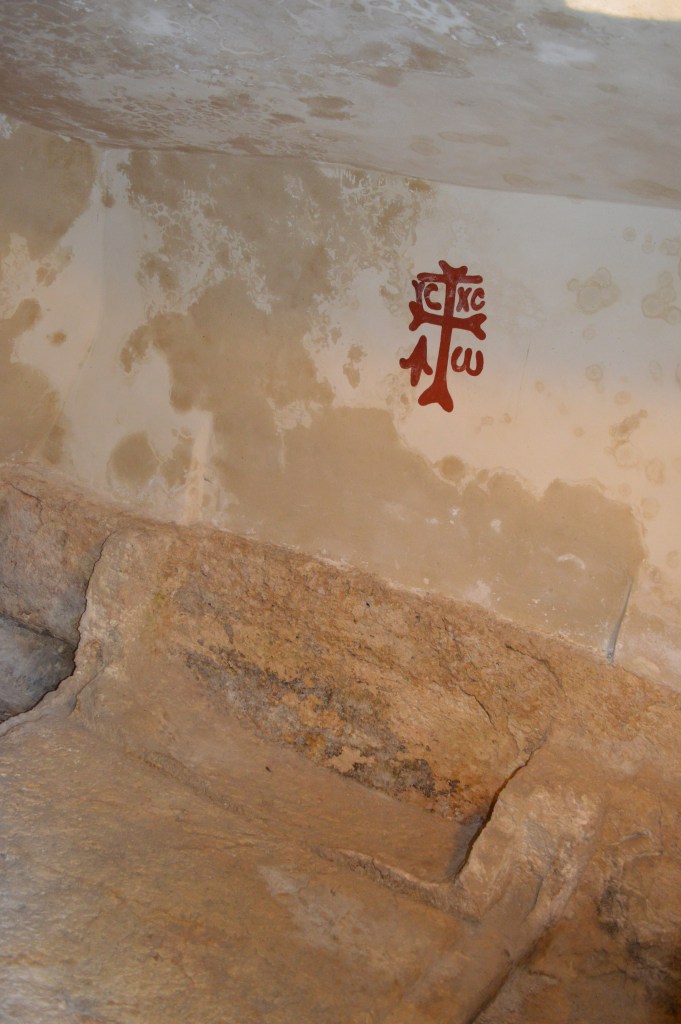
10. What is in the tomb where Jesus was laid after he died on the cross? NOTHING. THE TOMB IS EMPTY! HALLELUJAH! HE IS RISEN!
It is our desire to help you grow in your knowledge of Adonai and His Word. If you are looking for additional information and/or materials, please visit our website at RootedinHisWord.org and our Facebook page.
Answer the following basic questions about Resurrection Sunday (Easter) and find out your Easter I.Q. :
1. What Jewish holiday was Jesus celebrating right before his trial and subsequent crucifixion?
2. What event did the Prophet Zechariah foretell in his statement “Rejoice greatly, O daughter of Zion! Shout, O daughter of Jerusalem! Behold, your King is lowly and riding on a donkey, a colt, the foal of a donkey.” (Zechariah 9:9)
3. What Easter-related event is predicted to the day in Daniel 9?
4. Where was Jesus taken first after his arrest?
5. Upon whose testimony was Jesus sentenced to death?
6. To what representative of the Roman government was Jesus taken for permission to carry out the death sentence?
7. What prisoner was released instead of Jesus at the request of the crowd? What crimes was he accused of?
8. How many men were crucified with Jesus?
9. Who are two of the people (there were more than 2) at the cross when Jesus died?
10. What is in the tomb where Jesus was laid after he died on the cross?
Be sure to write your answers down. The key to the quiz will be in tomorrow’s post.
It is our desire to help you grow in your knowledge of Adonai and His Word. If you are looking for additional information and/or materials, please visit our website at RootedinHisWord.org and our Facebook page.
As we look forward to celebrating and remembering the passion, trial, burial and resurrection of Yeshuah, the Messiah, I will be giving you links to some of the helpful blog posts we did on related topics.
It is our desire to help you grow in your knowledge of Adonai and His Word. If you are looking for additional information and/or materials, please visit our website at RootedinHisWord.org and our Facebook page.
Who went to Pilate to ask for Jesus’ body? What do you learn about this man?
What was done to Jesus’ body? (See also John 19:38-42).
Who else was at the tomb before the stone was rolled against the door?
What additional safety measure is taken at the tomb? Why? (Matt. 27:64-66).
Read: Matthew 28:1-10; Mark 16:1-11; Luke 24:1-12; John 20:1-18
According to Matthew’s gospel, who comes to the tomb on Easter morning and what do they witness?
According to the Angel in Matthew 28:6, where is Jesus? What proof does he offer? What command does he give to the women?
What is the reaction of the women according to Matthew’s gospel to the news that Jesus is risen?
Who do the women meet on the way to tell the disciples? What is their reaction? His? (Matthew 28)
What cover up story is provided to the soldiers by the Jewish elders? Why?
What is the commission Jesus gives to the disciples in Matthew 28:18-20. Copy it here.
How does this apply to all of us? How do we know? Provide scripture references if you can.
According to Luke’s gospel, what was Peter’s response to being told the tomb was empty?
Read Luke 24. Luke 24 includes the story of Jesus revealing himself to two of the disciples traveling on the road to Emmaus. What does he discuss with them? When does he finally reveal himself?
How does this interaction with Jesus influence them? How do you know?
In Luke 24:36 and following, Jesus appears to the disciples. What is His greeting? What proof does He offer to verify it is Him? What proof does he offer that He is resurrected and not just a spirit?
What instruction does he give the disciples at the end of Chapter 24 of Luke?
As we turn our thoughts towards the cross in these final 30 days before Resurrection Sunday (Easter), I invite you to check out some of our posts from years past. Just click on the links below.
May God prepare your heart to celebrate the incredible truth of the passion and resurrection of Jesus Christ.
Do you ever struggle with waiting? Maybe God has promised you something–something amazing, and yet it does not happen as swiftly as you expected. Instead, God calls you to wait.
The Bible teaches this waiting. Psalm 27:14 exhorts us to “wait on the LORD; be of good courage, and He shall strengthen your heart; wait, I say, on the LORD!” Psalm 62:5 adds a prayer of the psalmist, “my soul, wait silently for God alone, for my expectation is from Him.”
But the waiting is hard. This passion weekend, I was reminded of the disciples waiting–they didn’t seem to believe that Jesus would rise from the dead from what we read in the gospels. They were, however, waiting–huddled together in the upper room, trying to make sense of the chaos and horror they witnessed–their teacher and beloved friend was tried, convicted and sentenced to death on the cross. They watched from afar off as He hung on the brutal torture rack of the Roman cross–dying a slow death of suffocation.
They had believed He was the Messiah–the one who would save them from the Roman oppression, and there He hung–a victim of that very oppression–innocen. What a horror it must have been for them! Their circumstances were over-whelming the promises they had been given. They couldn’t even hold them in focus. Fear ruled their hearts.
So it might be for you. God made a promise, but He is asking you to wait. The circumstances keep getting darker. But still He says, “wait.”
Fear not, Sunday’s coming and He will burst forth in glorious light from the darkness of the tomb–having conquered death and all that oppresses you. He is a risen Savior! He lives!
It is sometimes said that Resurrection Sunday (Easter) is the most important of all Christian holidays. Why might that be the case?
The celebration of the resurrection of Jesus is really a celebration of the events of several days, namely the last supper, the arrest of Jesus, the trials (3) of Jesus, the torture and crucifixion of Jesus, His death, His burial and finally and most gloriously, His resurrection from the death.
Before we consider the arrest, trial, crucifixion, and resurrection of Jesus, let us consider some of the vocabulary central to the discussion of Jesus’ death.
Look up the following words in a Bible dictionary or regular dictionary (or on http://www.dictionary.com) and record the meanin. After you record the dictionary definition, look up the key scriptures using the term to see what, if anything, new you learn.


 Rooted and Grounded