Feeds:
Posts
Comments

Angels and the Christ Child

As I was reading the Christmas story in Luke this year, I was struck by something that I had never really considered before. It was the angels. It is not that I never noticed them in the story before, but rather, I have never seriously considered what their conduct was really saying about what they were thinking and feeling. I believe that their actions confirm that they were filled with excitement and anticipation. They were like the person who buys the perfect gift for their child or friend and can’t wait for them to open it, the person who is counting down the days until Christmas morning because they can’t wait to see the expression on the recipient’s face when they open the wonderful gift. I think the angels were filled with that type of anticipation of the joy of others at the gift (Jesus) that was coming.

Can you imagine the excitement in heaven when the angels learned that Jesus, God incarnate, was going to be born a man and live among men? What anticipation they must have felt for what the Son of God could do for man. The light that surrounded Him in heaven would follow Him to earth. Oh what a great day when the darkness that hovered over man would be dispelled, banished from His presence! What great excitement the angels must have had for man.

The angels, while created being like man, share the creator’s hand. They are, in fact, “higher” beings than man according to Psalm 8:5. Man, however, has the distinction of being created in the image of God, a description never used of the angels. This trait we share with Jesus who is described as “the image of the invisible God.” The angels are with God in heaven. In their positions in heaven, in the presence of God, the angels have seen a lot. I don’t think they would be easily impressed. They would have witnessed the creation of man, the flood, the ark, the tower of Babel, the destruction of Sodom and Gomorrah, the turning of Lot’s wife to salt, the granting of permission for satan to torment Job, the

The Bible teaches that part of the job of the angels is to serve or minister to men. Paul says of them in Hebrews, “are they not all ministering spirits sent forth to minister for those who will inherit salvation?” The Psalmist tells us “[t]he angel of the LORD encamps all around those who fear Him.” In Psalm 91, we are told, God “shall give His angels charge over you, to keep you in all your ways.” Angels do what God likes.

When angels appear on the scene in the Bible, people are always moved. Manoah (Samson’s father) was so upset when he saw an angel that he told his wife he was going to die. When an angel came to Daniel, he trembled on his knees and palms. When Zachariah (John the Baptist’s father) was visited by an angel in the temple, “he was troubled, and fear fell upon him.” When Mary (the mother of Jesus) was visited by the angel Gabriel, she was troubled. When Peter, the apostle, was in prison and the angel came and “stood by him, and a light shone in the prison; and he struck Peter on the side and raised him up, saying, “Arise quickly!” And his chains fell off his hands.” Now that is the stuff of action movies.

So what does the conduct of the angels in Luke 2 tell us about the events that were unfolding at that time in Bethlehem and what the angels thought about those events, given who they were, what they did, and what they knew? Luke 2:8-18 tells us:

Now there were in the same country shepherds living out in the fields, keeping watch over their flock by night. And behold, an angel of the Lord stood before them, and the glory of the Lord shone around them, and they were greatly afraid. Then the angel said to them, “Do not be afraid, for behold, I bring you good tidings of great joy which will be to all people. “For there is born to you this day in the city of David a Savior, who is Christ the Lord. “And this will be the sign to you: You will find a Babe wrapped in swaddling cloths, lying in a manger.” And suddenly there was with the angel a multitude of the heavenly host praising God and saying: “Glory to God in the highest, And on earth peace, goodwill toward men!”

So it was, when the angels had gone away from them into heaven, that the shepherds said to one another, “Let us now go to Bethlehem and see this thing that has come to pass, which the Lord has made known to us.” And they came with haste and found Mary and Joseph, and the Babe lying in a manger. Now when they had seen Him, they made widely known the saying which was told them concerning this Child. And all those who heard it marveled at those things which were told them by the shepherds.

We notice that this scene occurs right after Mary has brought forth the Christ child and wrapped him in Swaddling cloths and laid Him in a manger. We also notice that these shepherds were no different from others who had seen angels in that they were “greatly afraid.” Also we notice that the angels are communicating with the shepherds, giving them information about the great event and where they could go to be firsthand witnesses of these amazing things (even the angels didn’t know exactly where God was going with this plan). What is really amazing is that out of nowhere, because their excitement was too much to contain, the heavenly host of angels just breaks through from beyond our space and time and begins praising God saying, “Glory to God in the highest, and on earth peace, goodwill toward men!” They make it clear that God’s purposes toward man are all good. Their message was clear, “this is a GOOD thing that is happening!”

The events that unfold next confirm that the shepherds received the message from the angels because they decided to go to where the baby was. We also know that they must have been moved greatly by what they saw because they told lots of folks. It should be pointed out here that part of the skill set for shepherding is not necessarily addressing crowds regarding miracles, but we see that “all those who heard . . . marveled at those things which were told them by the shepherds,” so the shepherds were not staying silent or isolated with the good news.

All that to say, I was struck by how excited the angels were. They know God, and they observe man. They knew that God coming to earth as a man (Jesus), was a good thing for man. They were so excited that they wanted to tell man (shepherds), so they wouldn’t miss it. Angels, who dwell in heaven, with God, where all the really cool stuff happens, were excited for us, mankind, that God was coming to live among us. They knew that His coming would mean that we would have hope, that we would not have to continue to dwell in darkness, separated from the God who was so holy, loving and majestic – King of Kings and Lord of Lords. They saw our future to be bright with Jesus. They knew what it meant to have Jesus living with you. That is what the angels’ conduct was saying that Christmas night over 2000 years ago.

Beloved Christian sisters and brothers, what is your conduct saying about the message of Christmas? Are you, like the angels, rejoicing because you know God and you know His plans for man are for good and not for evil, to give a future and a hope? Are you, like the shepherds, going to find Jesus daily in the pages of your Bible, and sharing his love in the pews of your church, in the streets of your city, and in the corridors of your work place? Are you telling people about Jesus because you know He alone has the words of eternal life? My prayer for you . . . for me . . . is that this Christmas season, we would be like the angels and like the shepherds. Each of them did what they did because they had an encounter with God.

Merry Christmas! May the joy of the promised hope penetrate your heart and gush out like streams of living water to bring life, eternal life, to those around you.
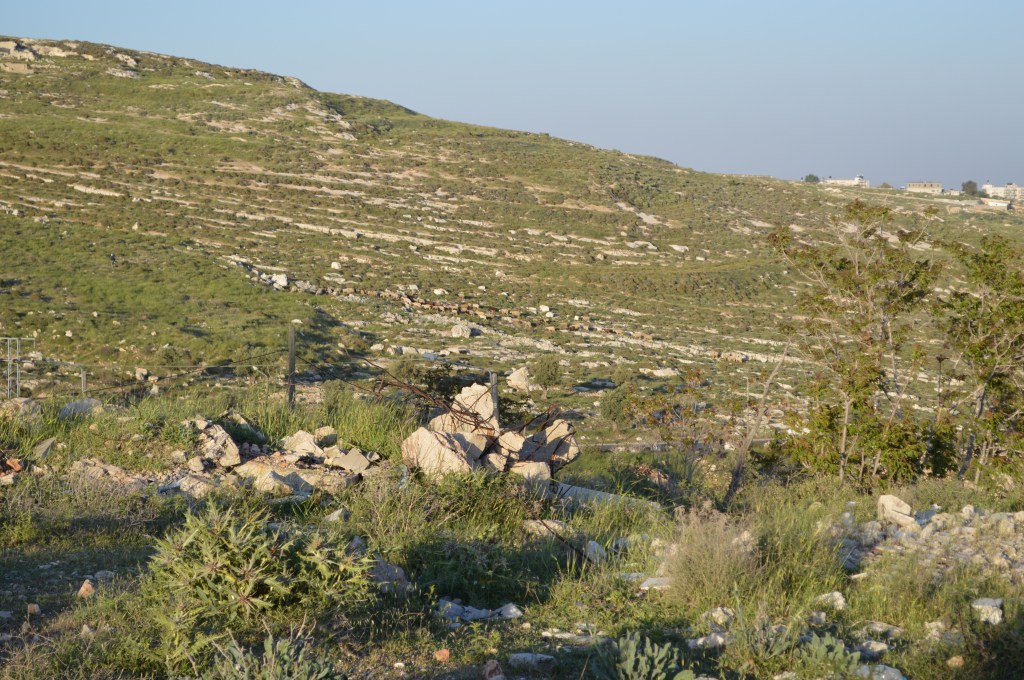

Modern Bethlehem region – sheep grazing on the hills

The world has struggled with this issue since Jesus came on the scene more than 2000 years ago. Was Jesus simply a man? Was he a great prophet or teacher? Or was He the Christ–the Messiah–the Promised One, fulfilling hundreds of prophecies of the Old Testament prophets?

  1. What does Isaiah 7:14 foretell about Jesus (the Messiah-the Promised One)?

2. What does Isaiah 9:6-7 tell us about the Messiah?

3. What additional information is given regarding the Messiah in Isaiah 11:1?

4. What do you learn from Isaiah 53:1-3

5. When did Isaiah live and give his prophecies?

6. What does the prophet Micah tell us about the birth place of Messiah in Micah 5:2?

7. When did the prophet Micah live and give his prophecies?

8. What does the prophet Zechariah tell us about the Promised One in Zechariah 9:9?

9. When did the prophet Zechariah live and give his prophecies?

10. When you read these prophecies, given hundreds of years before the person they describe was born, by three different men, and you learn that they came true in the person of Jesus, what does that make you think about the Bible? God? Jesus? Yourself?

In every Christmas celebration, there needs to be some consideration of Resurrection Sunday. Before there was Christmas, there was a need for Christmas. Before the birth of the Savior, there was a need for a Savior. Before crucifixion and resurrection, there was a need for atonement and victory over death.

11. What do you learn from the following verses?
□ Leviticus 17:11

□ Romans 6:23

□ Hebrews 9:27

□ Romans 3:10

□ Romans 5:8

□ Romans 10:9-10

The Scarlet Thread

In the flurry of activity surrounding Christmas, one can lose sight of the wonder and awe of the one true and living God, the one who calls Himself “I AM”, “EMANUEL”. It is also possible to overlook the exactness, the precise plan, the deliberately placed scarlet thread woven through the fabric of God’s revelation, connecting the books, written by various authors, from various walks of life, over many generations.

This Christmas, look for the scarlet thread, consider the Weaver, the love evidenced in the fabric woven before the foundations of time, God’s plan for salvation . . .

God prepared the perfect place for man to live in perfect fellowship with Him . . . the garden, in the east of Eden . . .

God allowed them to choose; they chose death, spiritual and physical.

BUT GOD had a plan to bring life . . .

I will put enmity between you and the woman, and between your seed and her Seed; He shall bruise your head, and you shall bruise His heel . . .

The plan is slowly revealed . .

God provided a sacrifice for Adam and Eve, a covering for each of them before they left the garden.

God saved Noah and his family . . .

God called Abraham out of a pagan land steeped in idolatry to walk by faith in an unseen God. God tested Abraham’s faith. Abraham’s faith was manifest in the willing sacrifice of a son by a father in obedience to the God he loved. God provided Himself a sacrifice, so Isaac was spared.

From Isaac, came Jacob and the 12 tribes. The Messiah was to be the Lion of the tribe of Judah.

The 12 tribes were held captive in Egypt and suffered under the bondage of Pharaoh. God sent a deliverer, Moses, a picture of the ultimate deliverer, Jesus, who God would one day send to deliver the world, from sin. God gave His people the law through Moses, laying out how sinful man might approach a holy God. But the Law was merely a school master showing the people their inability to measure up, their ultimate need for a Savior, a Redeemer.

In the wilderness, God gave signs of the Coming One, bringing living water from the Rock . . .

Raining down the bread of life from heaven . . .

A pillar of fire by night and a cloud of protection by day.

God drew the plans for a temporary dwelling place for Him in the wilderness, the Tabernacle. It was a picture of Jesus, the Way to fellowship with the Father. At the entrance of the Tabernacle was the altar, where the blood would be spilled, the sin offering, the atoning sacrifice for sin. Next was the Laver, a place for cleansing, for reflection like the water of His Word, which washes us clean and shows us who we are. 

Then, the Holy Place, to be entered only by the Priests where there were many pictures of Jesus, the lampstand (the light of the world), the show bread (the bread of life), and the altar of incense (the intercessor).

Finally, the Holy of Holies where only the High Priest could enter and then only once a year. It was a clear picture of our separation from God, our need for a mediator. Jesus Christ, our High Priest, would tear the veil and forever remove the barrier separating us from God, allowing us to run boldly to the throne of grace.

God’s plan was to all-inclusive. Jews and Gentiles were both going to be saved. Consider Rehab, a pagan temple prostitute in the messianic line. 

Or consider Ruth, the Moabitess, also in the line of the Messiah. We see the love of Boaz, the Kinsman Redeemer, for the foreigner, Ruth. Boaz is a foreshadowing of our Kinsman Redeemer, Jesus. Boaz lived in Bethlehem, growing barley in fields near where one day our Kinsman Redeemer would lay in a manger.

Consider David, the King God chose, a lowly shepherd boy, watching his sheep in those same fields outside of Bethlehem. 

Over time, the people fell away; they left God to seek after idols. They played the harlot, and God forsook them. They were again taken into captivity, this time in Babylon. God, in His great mercy, preserved a remnant.

Consider Esther, a Queen in a place of influence to save her people from total destruction. 

Through the remnant, God restores Jerusalem and rebuilds the temple. However, the people again find themselves in captivity. This time, they are under the domination of the Roman Empire, and God has been silent for some 400 years.

But God has not forgotten His promise to Abraham. He has not abandoned His plan for salvation.

In Bethlehem, as foretold by the Prophets of Old, God sent His only begotten son to be the Savior of the world. All the Old Testament signs and foreshadows come into focus in the life, death and resurrection of Jesus.

It was God’s plan to save man. It was God’s mercy to provide Himself a sacrifice for the sins of man. He sent Jesus to be the mediator between a Holy God and sinful man. It was God’s intention that
the Word would become flesh and dwell among us that we might know God’s love.

No one is righteous; all fall short of God’s law.
The just punishment for violation of God’s law is death.
We’re all dead men walking.
We can’t save ourselves.
We are at the mercy of God.

Jesus, the son of God, the Lion of the tribe of Judah, the Root of Jesse, the Promised One, the Messiah . . . He provides the covering for our sins. On the cross at Calvary, He laid down His life, an atoning sacrifice for the sin of mankind. He died and was placed in tomb. On the 3rd day, as He promised, He rose again, conquering death once and for all. He who knew no sin became sin for us that we might become the righteousness of God in Him.

He is the Way . . . the only Way.

May your Christmas be spent worshiping the true and living God who died that you might live . . . forever. Merry Christmas

Read Luke 1:39-80
1. Who does Mary go to visit? What happens when she gets there?

2. What prophetic statement does Elizabeth make about the baby Mary is carrying?

3. Verses 46 to 55 of Luke 1 are often referred to as the Magnificat (also known as Song of Mary or Canticle of Mary) What strikes you in this section of scripture?

4. How does Zechariah come to speak again? What is the first thing he says?

5. What does Zechariah say in his prophecy about the Coming One (Messiah)?

6. Imagine that you were Mary, a young woman somewhere between the ages of 14 and 18 living in a small town with your parents. You are visited by an angel and told that you will have a child who sit on the throne of David, fulfilling all the prophecies of Messiah. What would you be thinking? Feeling? Consider the favor shown to Mary. The favor shown to you, a child of God, is much greater than even that shown to Mary. How does that impact you as you prepare for Christmas?

7. Read Luke 1:39-56. Verses 46-55 are known as The Magnificat, and they represent some of what Mary was feeling spoken out in praise to her God. Write out your pray of praise to God for all that He has done for you in and through Christmas.

What will you do with Jesus?
Will you set up your fine nativity,
place the baby Jesus in
sit back and watch His angelic face
vaguely staring back at you?

What will you do with Jesus this year,
will you put Him in a box
gently wrapped in tissue paper
on the highest shelf atop?

Take Jesus out of storage.
Praise Him as the King of Kings!
Pay homage at the manager
and with the angels sing
“Hallelujah! Hallelujah!
He is Emanuel!
God who dwelt among us
Your worship He compels.

For who else can offer eternal life?
Who can break the seven seals?
Who can pay the sin offering for all mankind
with blood shed sacrificially?

We’ve all a debt for sin we owe.
The wages for sin is death.
Jesus is the way, the truth, the life.
There is no other way.

What will you do with Jesus
the babe who in the manager lay?
His salvation is with in your grasp
the ransom has been paid.

Just believe on Him,
that He is the Son of God
and that He died upon the cross
the lamb unblemished by one sin

For you He paid the price.
He bought our wretched, sinful souls
in exchange His righteousness.

Baby Jesus is not an ornament,
an accessory to your manger scene.
He is the promised Messiah.
The Prophets told of Him.
Isaiah said, “Unto us a Child is born,”
seven hundred years before
His name would be “Emmanuel”
His kingdom without end.

God has had this plan for you
a life He wants to give
not the fading, temporal kind
that rots with death and sin
but life with Him eternal
reigning with Him in His realm.

What will you do with Jesus this year?
Will you take the life He gives
or will you settle for dear Santa
and his busy little elves?

May the love of Christ be poured out on your family this Christmas. May the God of all Creation reveal His glory to you that you might enjoy the comfort and security of knowing how much He loves and cares about every detail of your life. Merry Christmas!

Baby Jesus Born to Die

Baby Jesus, small and soft
born that star-filled night
for ages prophets had foretold
Light to pierce the night

Your heavenly home You left behind
put eternal things aside
to enter human time and space
a temporary home.

why would You,
Almighty King
Lord of all the Lords
come down to earth to be with us
so far below Your throne

the cross it is the centerpiece
instrument of pain
see where blood was flowing down
the lamb on it was slain

O Jesus, help me see the truth
Your life was not in vain
Your coming was to meet my need
Yours a blood sacrifice

the living, it was needful
without blemish You were found
yet dying was the pinnacle
my sin stain it removed

in dying You gave your life for me
propitiatory substitute
in rising You opened eternity
rendered the accuser mute

a baby born to humble means
lain in a manger bare
is only part the story told
look further if you dare

the only true and living God
the one they call “I AM”
He kept His promise in the child
He sent His Son, the Lamb

Christmas is about Love

Christmas is about love. Ultimately, God so LOVED the world that He sent His only Son that whosoever believed in Him would be saved. In order to really understand Christmas as God intended it, we need to consider the love of God.

1. What do the following verses teach you about the love of God?
□ Jeremiah 31:3

□ Proverbs 8:17

□ Zephaniah 3:17

□ John 14:21

□ Romans 5:5

□ Romans 8:38-39

□ Titus 3:3-7

□ 1 John 4:9

2. As you meditate and read over the above verses, how do they speak to your celebration of Christmas?

IMG_0234.JPG

A,B,C’s of Thanksgiving

For each letter of the alphabet below, list one thing you are grateful for that begins with each letter. Some examples are already filled in to get you started.

A

B

C

D

E – Eternal life

F

G

H

I

J

K

L

M

N

O

P

Q

R

S – Salvation

T

U

V

W

X

Y

Z

May God bless you this year with a heart of thanksgiving to Him. I encourage you to start each day giving thanks to God for all that He has done, is doing and will do on your behalf. God will supply all your needs and fulfill all your desires. He alone is worthy of all praise! Surely, that will keep your heart full.

Thanksgiving (Part 5)

1. How did people give thanks to God according to these verses?
□ 1 Chronicles 25:3

□ 2 Chronicles 31:2

□ Ezra 3:11

□ Daniel 6:10
2. What do you learn from the following verses that makes you want to give thanks?
□ Psalm 32:7

□ Isaiah 40:28-31

□ Isaiah 41:10

□ Isaiah 55:13

□ Isaiah 60:1-3

□ Lamentations 3:22-24

□ 2 Corinthians 4:16-17

□ 2 Corinthians 9:8


3. What does the Bible teach about giving thanks to God?
□ Ephesians 5:20
□ 1 Thessalonians 5:18


img_0642.jpg

Read Isaiah 66 (the last chapter of Isaiah!)
1. What does Isaiah 66:1 teach us about where God dwells?

2. What do you learn from the following verses?
□ 2 Chronicles 6:18

□ Matthew 5:34-35

□ Acts 7:48-49

□ Acts 17:24

3. Who does God say He will look upon in Isaiah 66:2?

4. What does God promise in Isaiah 66:3-4? To whom?

5. What does God say about Jerusalem in Isaiah 66:5-13?

6. What does God promise to the servants of God in Isaiah 66:24? To his enemies?

7. What prophecy is given in Isaiah 66:15-17?

8. What promise does God make to those who are scattered in Isaiah 66:18- 21?

9. What promise to the faithful do you find in Isaiah 66:22-23?

10. What does God promise to those who have transgressed against Him in Isaiah 66:24?

11. What are some of the things that struck you as you studied the book of Isaiah?

12. What have you learned from Isaiah that you can apply to your life today?

13. How have you been changed by your study of the book of the prophet Isaiah?