Feeds:
Posts
Comments

There is a God

There is a God. He’s not dead.

He has revealed his plan, His rules, His character and His heart.

His message and plan is revealed in and through the lives of ordinary men and women who are almost all clearly flawed. Along the way, using these ordinary people, God reveals history, geography, and science. He describes cultures, economics, military strategy, and human nature.

He also predicts events that will take place in the future. Some have occurred already, and some are left to yet occur at some time in the future. He has a 100% accuracy rate.

As time has unfolded, the truths of the Bible in history, geography and science have been increasingly proven to be true.

In the same period of time, as this history of man has unfolded, the heart of mankind has not grown closer to God, but rather harder and more rebellious towards God.

The plan of God speaks to this rebellion. It doesn’t pretend it doesn’t exist. It doesn’t try to threaten it away. It provides a cure.

Belief is the cure. Belief in Jeshua (Jesus), the Promised One. The belief is simple, but it is not flimsy. You must believe that Jeshua is who He said He was (God) and that He did what He said He would (died a sacrificial death for the sins of all mankind – including you) and He rose from the dead to prove that He had power over death, the power only God has.

So believe and be cured.

If you reject the cure, then the consequence is certain:

It is appointed a man once to die; then the judgment.

Everyone has sinned and fallen short of the glory of God.

The consequences of sin is death.
 Set your mind on things above, not on things on the earth. Colossians 3:2 (NKJV)

To set your mind on something speaks of mental discipline. It means to keep one’s thoughts habitually focused on the subject matter or to say it another way, to think about the subject matter it all the time. When your thoughts drift, they should drift back to that subject matter.

According to Colossians 3:2, the subject matter that we, as believers, should be focused on is “things above” or in other words, heavenly things–things of God, things of eternity.

  What might some of those things be?

  • Eternal Life with God We should be thinking now about what life with God in eternity will be like, e.g. that He’ll dry every tear. There’ll be no more sorrow. In eternity, we will have perfect knowledge of God–nothing will be hidden. Sin will no longer be a problem. We’ll have our glorified bodies. Life will be as it was intended by God. His Kingdom will have come and His will be done. Thinking on these things will help us to be sustained when challenges and difficulties, illnesses and failed relationships plague us here, in the realm of now.
  • The throne room of God (Revelation 4-5). We should be thinking about what we know about the heavenly realm, namely what we have been told in scriptures. For example, we’ll be there in the throne room, witnessing the things described in John’s prophetic vision in the Book of Revelation. The angels will be around the throne of God. Worship of the Almighty will never end.

So take heart, this world is passing away. We are just pilgrims here. One day, we shall be in heaven. Let’s set our minds on that.

IMG_9335

Read 2 Kings 6:8-17
1. What does servant of Elisha see when he looks at the city according to 2 Kings 6:15?

2. How does he feel about what he sees? How do you know?

3. Copy 2 Kings 6:16 here. Meditate on this. Record your thoughts and impressions.

4. What does Elisha do to help his servant according to 2 Kings 6:17?

5. What does the servant see when the LORD opens his eyes?

6. How does this story of Elisha and his servant help you with your spiritual warfare? Explain.

Read Joshua Chapter 6
1. How is Jericho described in Joshua 6:1?

2. What does the LORD tell Joshua in Joshua 6:2?

3. What is the battle strategy the LORD lays out in Joshua 6:3-5? What is your impression of this strategy?

4. Describe what happens on the seventh day according to Joshua 6:15-21?

5. What application can you make from this passage of scripture to your own spiritual battles?

Hebron

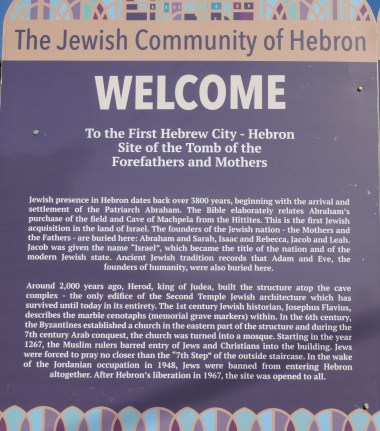
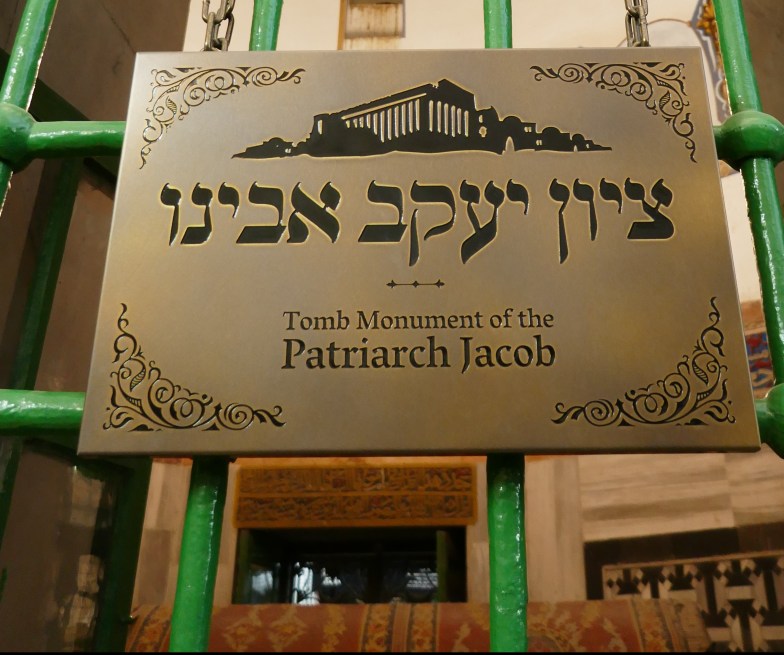
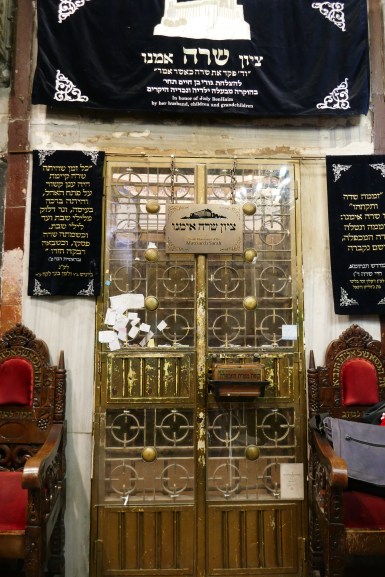
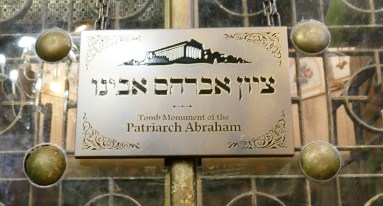
One of the places that I was able to visit on my recent trip to Israel was Hebron. Hebron, considered the first Hebrew City, is located in the Judean mountains south of Yerushalayim (Jerusalem). The location is important to the Jews because it is the burial place of the patriarchs, Abraham, Isaac, Jacob and their wives. (See Genesis 23)

P1040444P1040447

The building at Hebron was built by Herod the Great, one of his many building projects across the land. He also built a palace in Jerusalem, a palace in Jericho, a palace on Masada, an entire harbor at Caesarea Maritima and Herodium, where he was buried. However, the building at Hebron is the only structure built by Herod the Great that is still in tact.

P1040460P1040471P1040477P1040481

The graves of the patriarchs are believed to be in caves below the structure. Because the Jews must share the building with the Muslims, with each occupying one half of the building, it is difficult to do further exploration or excavation to find out what is below the building.

As we were leaving the building, an afternoon prayer service was beginning. The Jews living in Hebron are mostly Modern Orthodox, but Orthodox Jews from other parts of the country visit Hebron and spend time there in prayer and study.

Not unlike the Temple Mount and Western Wall, police are stationed at the entrance for security.

The tombs are a short distance from the actual Tel of the ancient city of Hebron. One of the upcoming posts will be dedicated to the Tel itself.

Read Joshua Chapter 5
1. What did God do for the children of Israel according to Joshua 5:1?

2. Before battling the enemies in Jericho, what does God have the children of Israel do in Joshua 5:2-9? How might this have caused them anxiety?

3. What else does God have them do according to Joshua 5:10-11? What might have been the purpose of this?

4. Who does Joshua meet according to Joshua 5:13-15?

5. What does Joshua ask him in Joshua 5:13? What is the response?

6. What is Joshua’s response in Joshua 5:14?

7. What does the Commander of the LORD’s army tell him in Joshua 5:15? What does this tell you about the identity of the speaker?

In the tall cliffs above the Salt Sea (aka the Dead Sea) there are openings in the cliffs barely visible from the road passing below. The openings lead to caves. In the caves, the members of an ancient Jewish community, hid scrolls on which were written portions of the Hebrew Bible as well as extensive writings about the life in the religious community.

The scrolls, the earliest copies of the Hebrew Bible, were discovered in the 1940’s right around the time Israel was being established and Jews were returning to Israel from all over the world. The discovery of the scrolls at this time was more than mere coincidence. The writings reinforce the claims of legitimacy of the Jewish people in the land. The writings further confirm the authenticity of scripture for Christians as well as Jews.

The photos above give you an idea of the geography of Qumran. These photos are taken in the wetter part of the year, and yet there is little greenery. The only fresh water in this area comes from the ravines which bring water from the north of Israel after the rains. The openings in the rocks evident in some of the photos are caves similar to and in which the scrolls were found.

The photos above are from the excavations of the Jewish community near the base of the cliffs where the Dead Sea scrolls were found. They appear to have been a religious group. This conclusion is based on the finding of several Mikva’ot (plural of Mikveh). The Mikva’ot are used for bathing, part of the Jewish practice of ritual purification. The occurrence of several in a community speaks of the important of ritual purity to the group. In addition to the Mikva’ot, remains of very large cisterns, used to collect and store water for the long periods without rain-water run off, have been excavated.

In the photos above, you can also see part of the water system which has been discovered which provides further support for the importance of water to their religious practices as well as their experience with collecting and storing water because of the geography and lack of nearby fresh water sources.

Read Exodus 17:8-13
1. What instructions does Moses give Joshua about the battle in Exodus 17:9?

2. What are you told about the battle in Exodus 17:11? Exodus 17:12?

3. Copy Exodus 17:13 here. Meditate on this in light of the battle strategy of Moses, Aaron and Hur. Record your thoughts and impressions.

4. What does Moses do according to Exodus 17:15?

5. Summarize the battle strategy used in Exodus 17 against Amalek.

6. What do you learn from the following verses?
Psalm 133

Ecclesiastes 4:9-12

Philippians 2:1-4

7. What application can you make from the battle strategy used against Amalek to the spiritual battles you face in your life?

P1040499

Lake Kinneret

Some things in Israel never change, but also continue to amaze and instruct. One such place is Lake Kinneret. You may know it as the Sea of Galilee or Lake Tiberias.

The lake is the lowest fresh water lake in the world. It is 13 miles long and 8 and ½ miles wide at the widest point. Though small when compared to many lakes around the world, Lake Kinneret is at no loss for visitors.

Lake Kinneret (Sea of Galilee) was the hub around which Jesus of Nazareth taught during his ministry. Many of the stories found in the Gospels of Matthew, Mark, Luke and John took place on or near the lake.

While I was originally drawn to the lake for the usual reasons pilgrims are, I am drawn back now by the beauty and mystery of the lake. It is a joy to photograph because the views are rarely the same. The lake changes with the rising and setting of the sun and with the fog and mist that lay across its surface through parts of the day as well.

I offer you, the lake . . .

This slideshow requires JavaScript.

As I head home from Yerushalayim (Jerusalem), I amazed that once again, it could speak to me and tell me so much of my God and my heritage as a God-lover.  It seems I can never exhaust the secrets this city holds for those who will come and open their hearts to the God who set His name on this hill.

Here are a few random moments from this year’s trip. Look for future posts discussing sites visited on our trip.