Answer the following basic questions about Resurrection Sunday (Easter) and find out your Easter I.Q. :
1. What Jewish holiday was Jesus celebrating right before his trial and subsequent crucifixion?
2. What event did the Prophet Zechariah foretell in his statement “Rejoice greatly, O daughter of Zion! Shout, O daughter of Jerusalem! Behold, your King is lowly and riding on a donkey, a colt, the foal of a donkey.” (Zechariah 9:9)
3. What Easter-related event is predicted to the day in Daniel 9?
4. Where was Jesus taken first after his arrest?
5. Upon whose testimony was Jesus sentenced to death?
6. To what representative of the Roman government was Jesus taken for permission to carry out the death sentence?
7. What prisoner was released instead of Jesus at the request of the crowd? What crimes was he accused of?
8. How many men were crucified with Jesus?
9. Who are two of the people (there were more than 2) at the cross when Jesus died?
10. What is in the tomb where Jesus was laid after he died on the cross?
Be sure to write your answers down. The key to the quiz will be in tomorrow’s post.
It is our desire to help you grow in your knowledge of Adonai and His Word. If you are looking for additional information and/or materials, please visit our website at RootedinHisWord.org and our Facebook page.
It is our desire to help you grow in your knowledge of Adonai and His Word. If you are looking for additional information and/or materials, please visit our website at RootedinHisWord.org and our Facebook page.
Passover (Pesach) is one of three major feasts in the Jewish calendar. It was one of the “pilgrim feasts,” during which the Israelites were expected to make pilgrimage to Jerusalem to worship in the Temple during the feast. However, the first Passover occurred before any Tabernacle or Temple, while the Jews were still slaves in Egypt.
Beginning in Exodus 12:3 and following, God instructs the people on how to prepare for the first Passover, “on the tenth day of this month every man shall take for himself a lamb, according to the house of his father, a lamb for a household. . . . Your lamb shall be without blemish, a male of the first year. You may take it from the sheep or from the goats. Now you shall keep it until the fourteenth day of the same month.
Then the whole assembly of the congregation of Israel shall kill it at twilight. And they shall take some of the blood and put it on the two doorposts and on the lintel of the houses where they eat it. Then they shall eat the flesh on that night; roasted in fire, with unleavened bread and with bitter herbs they shall eat it. Do not eat it raw, nor boiled at all with water, but roasted in fire-its head with its legs and its entrails. You shall let none of it remain until morning, and what remains of it until morning you shall burn with fire. And thus you shall eat it: with a belt on your waist, your sandals on your feet, and your staff in your hand. So you shall eat it in haste. It is the LORD’S Passover.”
In Exodus 12:12 and following, God gives the reason for the Passover, “for I will pass through the land of Egypt on that night, and will strike all the firstborn in the land of Egypt, both man and beast; and against all the gods of Egypt I will execute judgment: I am the LORD. Now the blood shall be a sign for you on the houses where you are. And when I see the blood, I will pass over you; and the plague shall not be on you to destroy you when I strike the land of Egypt.”
Exodus, Leviticus, Numbers and Deuteronomy all mention Passover as do many books detailing the history of the Jews.
What does this have to do with Jesus?
Jesus was a Jew.
Jesus and his disciples had likely come to Jerusalem to celebrate Passover with his disciples when he was betrayed
By the blood of the lamb being smeared on the lintel and doorposts of the houses of the Jews, the judgment of God passed over them on that first Passover in Egypt. Similarly, by the blood of Jesus, the wrath of God passes over those who believe Jesus died for their sins.
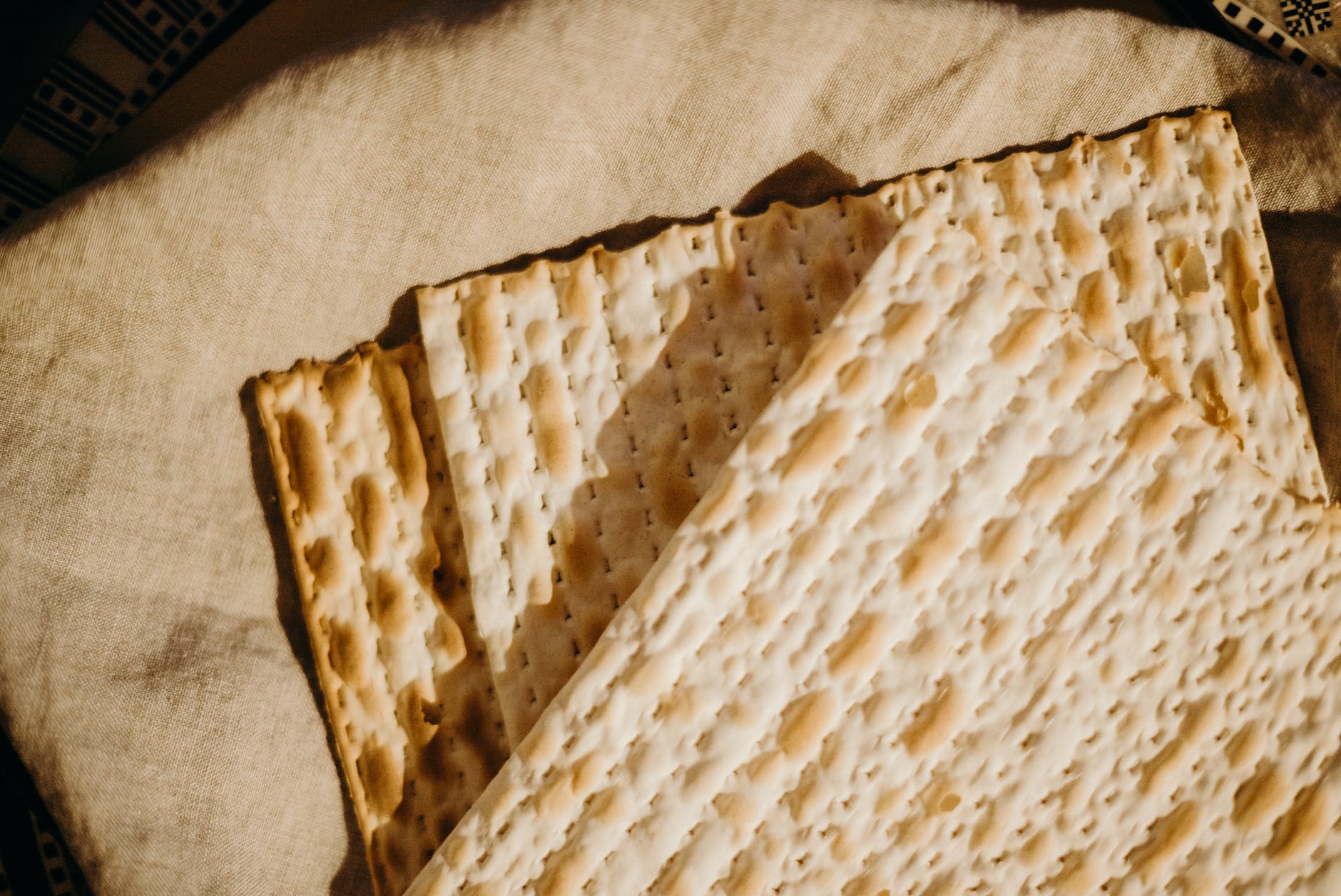
Jesus converted the symbols of Passover (cup of redemption) and the unleavened bread into symbols of the new covenant – what we know in the Christian tradition as communion.
Throughout Jewish history, the Passover celebration was pointing forward – to the Lamb of God who would take away the sins of the world and cause the wrath of God to pass over the children of God.
Who are these who have been passed over? Those who believe that Christ is the Son of God and that His death was a substitutionary death – Jesus because the substitute sacrifice – the lamb to be slain.
Read Matthew Chapter 27
1. What is the time frame of Matthew 27:1?
2. What did the chief priests and elders do according to Matthew 27:1? Why?
3. What do they do to Jesus according to Matthew 27:2?
4. Who is Pilate? Record what you learn about his rule, his reputation and his demise?
Going deeper: Why was it necessary for the Jewish leaders to take Jesus to Pilate?
5. What happens to Judas according to Matthew 27:3?
6. What does Judas tell the chief priests and elders in Matthew 27:4? How do they respond?
7. What does Judas do with the coins according to Matthew 27:5? Where does he go?
8. What is the response of the chief priests according to Matthew 27:6-8?
Going deeper: Where is the traditional site of the potter’s field (field of blood) located in Israel?
9. What do you learn from the following scriptures:
Jeremiah 18:1-19
Jeremiah 32:9-15
Zechariah 11:12-13
10. What do you learn from Matthew 27:9-10?
11. Where is Jesus in Matthew 27:11? Who is the governor?
12. What does the governor ask Jesus according to Matthew 27:11? What is Jesus’ response?
13. What does Pilate say to Jesus in Matthew 27:13-14? What is Jesus’ response? What is Pilate’s reaction?
14. What do you learn from the following verses?
Matthew 27:15
Matthew 27:16
Matthew 27:17
Matthew 27:18
Matthew 27:19
Matthew 27:20
It is our desire to help you grow in your knowledge of Adonai and His Word. If you are looking for additional information and/or materials, please visit our website at RootedinHisWord.org and our Facebook page.
Passover will begin this year on April 5 at sundown. It is always good to review the passages that discuss this very important holiday. Passover and the attendant week-long feast of unleavened bread were one of three times Israelites were called to make the pilgrimage to Jerusalem each year. Passover and the feast of Unleavened bread are a feast to remember God’s deliverance of Israel out of slavery in Egypt.
Read Exodus 12 1. In Chapter 12, God establishes a new calendar. What instructions does Moses give about what is to be done on the 10th day of the month?
2. What requirements are stated for the lamb?
3. What is to be done at twilight on the 14th day? What is to be done with the blood?
4. What specific instructions are given about the cooking and eating of the meat?
5. Copy Exodus 12:23.
6. What do you learn about the Feast of Unleavened Bread from this chapter?
7. What is Pharaoh’s response to this plague in Exodus 12:29-32? Egyptians?
8. How many Israelites left Egypt? What was their first stop when they left Egypt?
9. What additional information do you learn about the Passover from Exodus 12:42-49?
10. What do you learn from the following verses? □ 1 Corinthians 5:7
□ 1 Peter 1:19
□ Revelation 5:6
Note: The feasts of Passover and Unleavened Bread commemorate God’s deliverance of Israel out of Egypt. In addition to looking back, all of the Jewish feasts, of which Passover and Unleavened Bread are just two, look ahead to Jesus, the Messiah (the Promised and Expected One).
As we move through the books of the Law, we have already seen and will continue to see signs, pictures and foretellings of the coming Messiah, the one who will deliver the people of God, both Jew and Gentile, from the bondage of sin.
1. What was different about this questioning from the earlier questioning? How do you think that affected Jesus’ decision to answer?
2. What was Jesus response in Matthew 26:64?
3. What was the High Priest’s response in Matthew 26:65? What was the meaning of this response?
4. What do you learn from Leviticus 21:10?
5. What does the High Priest call for from the council in Matthew 26:66? What is the response?
6. What did the council do according to Matthew 26:67-68?
7. Where was Peter according to Matthew 26:69? Who approaches him? What does she ask according to Matthew 26:69?
8. How does He respond in Matthew 26:70?
9. Where does Peter go according to Matthew 26:71? Who approaches him? What does she say about him in Matthew 26:71?
10. What is Peter’s response in Matthew 26:72?
11. What do you learn from Matthew 26:73-74?
12. Copy Matthew 26:75. Meditate on this. Record your thoughts and impressions. Reflect on a time or times when you denied Christ by your words or conduct.
It is our desire to help you grow in your knowledge of Adonai and His Word. If you are looking for additional information and/or materials, please visit our website at RootedinHisWord.org and our Facebook page.
Have you ever wondered why Adonai gave us the law, the commands, the rules? Why is the law even necessary?
One of the purposes of the law was to correct for the partiality of humans. The righteous man may have the righteousness of Adonai (Torah) substantially written on His heart. He desires justice most of the time, but his weakness is his family, his friends–his prejudices. Those “like” or “with” him.
The law of Adonai (not to be confused with the law of men) is without partiality. When applied as given by Adonai, the law achieves its purpose–it brings truth, fairness, and impartiality to the affairs of men. Nevertheless, man battles and harangues to insert his prejudices. This is at the heart of much of organized religion–it seeks to define lines for which a person is kept in or kept out. These lines are often drawn to keep out those who are “different” from the dominant group. However, in its pure state, the law of Adonai is sweet, pure and impartial. It invites the greatest of sinners to become as pure as the driven snow. It knows no unredeemable human.
Church of the Holy Sepulchre – Jerusalem
It is our desire to help you grow in your knowledge of Adonai and His Word. If you are looking for additional information and/or materials, please visit our website at RootedinHisWord.org and our Facebook page.
Read Matthew Chapter 26:47 to 75 1. To whom did they lead Jesus away to see according to Matthew 26:57?
2. Who was Caiaphas?
Going deeper: How did Caiaphas become the High Priest?
3. What was Peter doing according to Matthew 26:58? Why?
4. What were the chief priests, the elders and the council seeking with regard to Jesus according to Matthew 26:59?
5. What do you learn from Matthew 26:60-61?
6. What was the testimony of the witnesses? Why was it insufficient?
7. What is required under the Torah according to Deuteronomy 17:6 and 19:15?
8. What did the high priest say to Jesus in Matthew 26:62?
9. How did Jesus respond?
10. What did the high priest say to Jesus in Matthew 26:63?
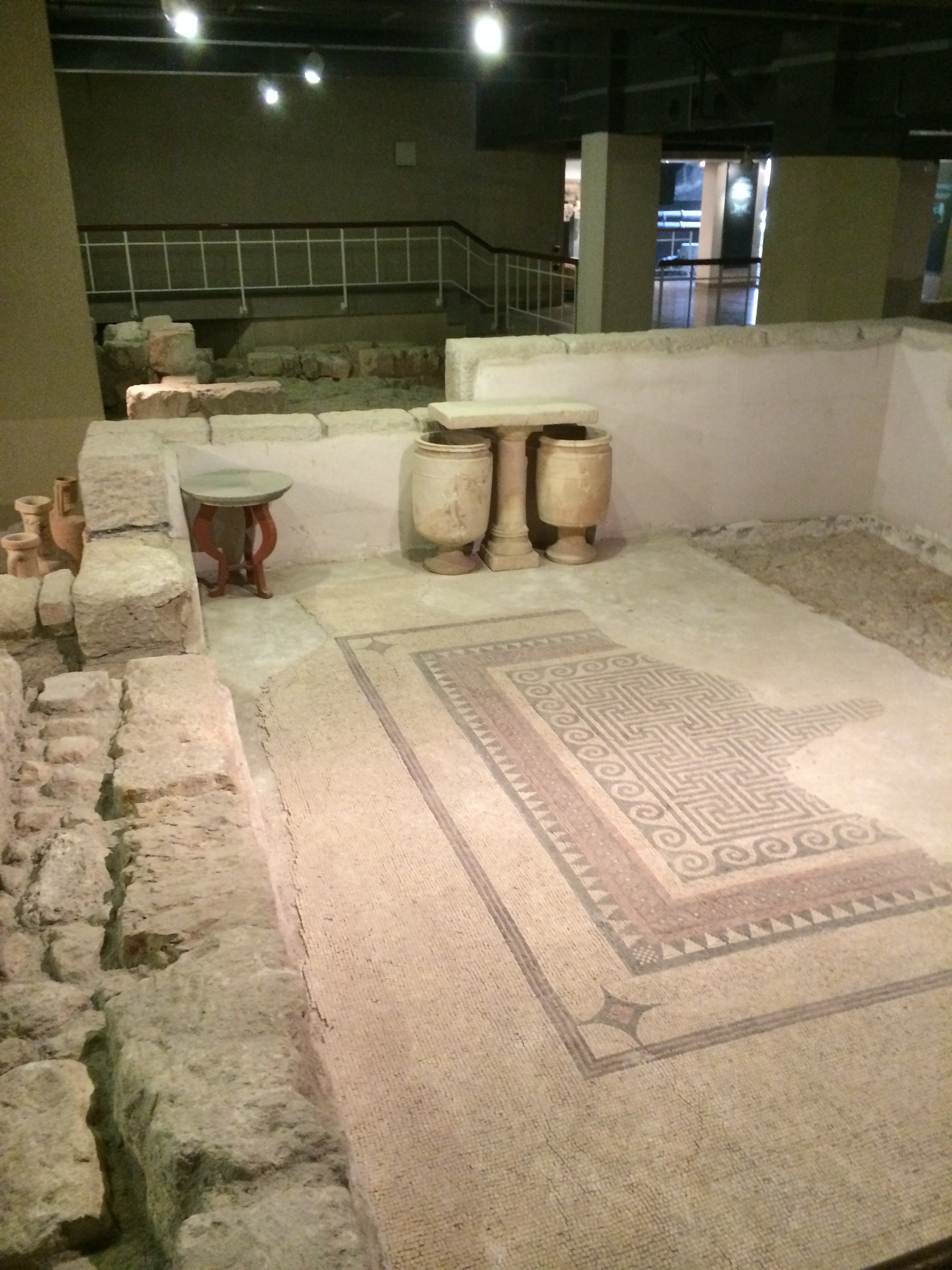
Beautiful mosaic in the floor of the priestly mansion in Jerusalem
It is our desire to help you grow in your knowledge of Adonai and His Word. If you are looking for additional information and/or materials, please visit our website at RootedinHisWord.org and our Facebook page.
I think the mistake people often make in thinking about God is to think of Him as linear, boxed in or predictable. No, He is not contained by the ordinary, the clear route, the short cut or the safe choice. The longer I walk with Adonai, the more I see He loves creativity, the path less traveled. He loves the winding country road lined with untrimmed trees guarding the edges of endless corn fields, stalks waving in the gentle summer breeze. He loves the walk by the surf listening to the waves crash against the sand, the wind and the spray. Mostly He treasures a day spent in thought of Him, a time like the Sabbath when He can speak into our rest–speak of His great love, provision and plans for us. Abba is never rushed with us. His limits, which he lovingly installs, keep us from harm and evil. Great is His concern for His children. He lovingly disciplines us when we require it. Coming to Abba is like eating from a bag of mixed jelly beans, different flavors continue to delight the palate–no way to know what flavor is coming next. I think this is part of His vision for our relationship with Him. Some parts worship, some parts petition, contrition, confession, rejoicing, abiding, adoration, but always open, honest, intimate fellowship. We see a picture of this varied tapestry of prayer and worship–life with Adonai in the offerings described in the book of Leviticus. Some offerings are for unintentional sins, some for marking a new season of life, a healing from illness. Some mark an ending of a season or moed (appointed time). Some are just to sit with God and enjoy being with Him–to receive His shalom (peace). The offerings remind us that God intends our relationship with Him to involve all the aspects of our life, e.g. beginnings and endings, successes and failures, as well as regular times of being in relationship with the Lover of our souls. The God who sees us.
It is our desire to help you grow in your knowledge of Adonai and His Word. If you are looking for additional information and/or materials, please visit our website at RootedinHisWord.org and our Facebook page.
1. Where did Jesus and the disciples go after the meal according to Matthew 26:31?
2. Where is the Gethsemane located in relationship to the Temple?
Going deeper: What does “Gethsemane” mean?
3. What does Jesus tell the disciples to do in Matthew 26:36? Why?
4. Who did Jesus take with Him according to Matthew 26:37?
5. What happens to Jesus according to Matthew 26:37?
6. What did Jesus say to them in Matthew 26:38?
7. What did Jesus pray in Matthew 26:39?
8. What did Jesus say to the disciples in Matthew 26:40-41 when He found them sleeping?
9. What does Jesus pray in Matthew 26:42?
10. What does Jesus find in Matthew 26:43?
11. After Jesus prays the third time, what does He say to them when he returns in Matthew 26:45-46?
12. Who comes with the betrayer Judas in Matthew 26:47?
13. What does Jesus do according to Matthew 26:48-49? Why?
14. What does Jesus ask him in Matthew 26:50?
15.What happens in Matthew 26:51?
16. What does Jesus say in Matthew 26:52-54?
17. What does Jesus say to the multitudes in Matthew 26:55-56?
18 What did the disciples do according to Matthew 26:56b?
It is our desire to help you grow in your knowledge of Adonai and His Word. If you are looking for additional information and/or materials, please visit our website at RootedinHisWord.org and our Facebook page.



 Rooted and Grounded