Feeds:
Posts
Comments

If you wonder how to know God better or to just get an understanding of Him, the answer is in Proverbs 2:1-5:

1 My son, if you receive my words, and treasure my commands within you, 2 So that you incline your ear to wisdom, And apply your heart to understanding;
3 Yes, if you cry out for discernment, And lift up your voice for understanding,
4 If you seek her as silver, and search for her as for hidden treasures;
5 Then you will understand the fear of the Lord, and find the knowledge of God.

It is not as hard as it sounds. First, we must understand who is speaking in this verse. Wisdom is speaking. Chapter 2 is a continuation of chapter 1 beginning in Proverbs 1:20 and continuing through to chapter 2.

With that in mind, the commands are as follows:

Receive words of wisdom
Treasure commands of wisdom
Incline your ear to wisdom
Apply your heart to wisdom
Seek wisdom like you would search for silver and hidden treasure

Receive speaks of openness. We must have an openness to wisdom. Receive also speaks of an action on our part, e.g. allowing entry. In other words, we must allow wisdom to enter our thinking, we must not block it or reject it. We must accept it. It doesn’t sound like much, but many in our day and throughout human history have rejected wisdom because of the little it required of them–acceptance. The heart of mankind is wicked. It seeks its own–it seeks to be first, but it doesn’t always seek to earn that position.

To accept the wisdom of God, I must let go of my own wisdom, my own thinking, my own self-reliance. To receive, I must have, in the modern vernacular, available storage space for the new information.

Once I receive the wisdom of God, I must learn to treasure it. I must not put it aside like so much well-intentioned fruitcake received at Christmas from a beloved relative only to be tossed out several months later uneaten. To treasure means to value, to consider of great worth. It is the answer to the question, “What do you take with you when your home is burning and you only have a few minutes to get out? To treasure is to carry near to your heart, like a newborn child. In treasuring the wisdom of God, I must value what God says. I must consider of great worth that which God says is of great worth. I must not accept cheap substitutes for the treasures of God’s kingdom.

Incline your ear suggests being attentive. I must choose to put aside distractions, things or people that beckon me to listen–instead I must listen for the voice of God, for what He is saying to me, the wisdom He is imparting to me.

Apply your heart suggests diligence. I must be intentional in my desire to learn the wisdom of God. It’s not a passive activity. I will not absorb the wisdom of God by osmosis or pew sitting or outreach attendance or even by Bible reading alone. I must choose and pursue. I must study to show myself approved. I must be a Berean, receiving the wisdom of God with readiness and searching the scriptures to see if things are true. I must lay aside every weight and snare that may slow me down.

Seeking wisdom like one would seek for silver or hidden treasure paints a vivid picture. If I knew silver or hidden treasure lay ahead on the path, would I amble by casually looking around? No! I would be searching, pushing back bushes, looking under rocks, digging in loose ground, evaluating clues and signs. I would be motivated. That is how I should seek after the wisdom of God.

This discussion is not intended to add any burden, but to remind you. After all, God has promised that those who seek Him diligently, will find Him.
 

Read Habakkuk Chapter 2 (the last study covered verses 1-4 of Chapter 2)
1. Who is the prophet speaking to in Habakkuk 2:5? What does he say of him?

2. What is the sin that God is addressing in Habakkuk 2:6-7?

3. What do you learn from the following verses?
Proverbs 6:1-3

Proverbs 22:7

4. What does God condemn in Habakkuk 2:8?

5. What does God condemn in Habakkuk 2:9-11?

6. What do you learn from the following verses?
Exodus 20:17

1 Kings 21

Mark 7:20-23

Luke 12:15

7. What is God condemning in Habakkuk 2:12?

8. What do you learn from the following verses?
Psalm 5:5-7

Psalm 37:35-36

Psalm 140:11-12

Proverbs 16:29

Proverbs 29:10

9. Copy Habakkuk 2:14 here. Meditate on this. Record your thoughts and impressions.

10. What is God condemning in Habakkuk 2:15-17?

11. What do you learn from the following verses?
Joel 1:5-6

Proverbs 23:29-35

Galatians 5:19-21

Ephesians 5:18

12. What does God condemn in Habakkuk 2:18-19?

13. What do you learn from the following verses?
Leviticus 19:4

Psalm 96:5

Psalm 97:7

Psalm 135:15-18

14. Copy Habakkuk 2:20 here. Meditate on this. Record your thoughts and impressions.

15. What do you learn from the following verses?
Psalm 2

Psalm 18:3

Psalm 22:7

Psalm 46

Psalm 77:13

Revelation 4:11

Revelation 5:12

16. What application can you make from Habakkuk Chapter 2?

If you are looking for additional information and/or materials, please visit our website at RootedinHisWord.org and our Facebook page. 

34857624_201435477340473_855160484356161536_n

Rescued

What is this darkness that descended?
I barely discern its grasp
so wrapped in hypocrisy and self-righteousness
dark forces slither in unnoticed

my heart was glad
my sorrow banished
my thoughts on the future
my life re-engaged

I saw You, a blur on the side of the road
a speed limit sign I was going too fast to register

I ignored the initial pricks of Your correction
and later the thud of Your body thrown under my tires
to slow me down

You sent counselors
they spoke truth
but I could not hear
I would not hear
I refused to heed

Rebellion is as the sin of witchcraft
Rebellion a power so great it blinds
my rebellion, cloaked in justification
and false purity blinded me to Your truth

the corrective measures,
designed to redirect me
provided only my temporary awareness of being off the path
the rough terrain, the lack of smooth pavement
only provided a twinge of consciousness of my sin
as my focus sharpened on the sin of others,
of my adversary and of my friend,
the log blinded me to my own wickedness

But in Your mercy
You persisted

Your promises were uttered
You would not relent
You would keep me
You would hedge me in
you would deliver me
from my strong enemy
the enemy within

You know my frame
You know my ways
You know the plans
You know my future
so you woke me from the dullness
You re-sensitized my conscience

My eyes flew opened
I saw the great precipice on which I tottered
the great fall I was about to make
I was suddenly aware of the danger
I was confronted with the evil
I had been nursing and enjoying in my heart
all the trappings and disguises peeled away
the black darkness of my sin
threatening to pull me in became clear

I had almost stumbled
I had almost caused another to stumble
O God!

My heart is crushed by my betrayal of You
You coax me back from the edge
My tears flood my shoes
I grieve but You are close
You never let go
I step behind the protective fence of Your law
safe once again

Teach me anew, O God
Keep me from evil,
from enemies, within and without
Protect me
Forgive my trespasses
Be my God
I need You
Every hour I need You

Copyright

Last Lines

By Emily Bronte (1818-1848)

No coward soul is mine,
No trembler in the world’s storm-troubled sphere:
I see Heaven’s glories shine,
And faith shines equal, arming me from fear.

O God within my breast,
Almighty, ever-present Deity!
Life – that in me has rest,
As I – undying life –have power in thee!

Vain are the thousand creeds
That move men’s hearts: unutterably vain;
Worthless as withered weeds,
Or idlest froth amid the boundless main,

To waken doubt in one
Holding so fast by thine infinity;
So surely anchored on
the steadfast rock of immortality.

With wide-embracing love
Thy spirit animates eternal years,
Pervades and broods above,
Changes, sustains, dissolves, creates, and rears.

Though earth and man were gone,
And suns and universes ceased to be,
And thou wert left alone,
Every existence would exist in thee.

There is not room for Death
Nor atom that his might could render void:
Thou – THOU art Being and Breath,
And what THOU art may never be destroyed.

The Bike Rider

Sometimes, Lord, I imagine that you might let go and leave me alone…

     To see what is in my heart.

     To see if I will believe.

How well I remember the days when I taught my little girl how to ride a bike.  I close my eyes and it all comes back to me – I’m holding the bike front and back, balancing her, encouraging her to pedal.  At first I’m doing ninety percent of the work.

Then, she begins to pedal on her own, but I’m still holding the bike.  She’s still not as steady as she needs to be, and she turns to look at me.  Her expression tells me she’s still very much unsure of herself.

But I know it’s time for the next step.

Suddenly I’m only holding the back of the bike – and letting her do the rest.  I’m running behind her, shouting, “Good job!” – providing the slightest help with balance but nothing more.

“Don’t let go, Mom…I’m gonna fall!”  Her voice is insistent.  Fearful.

Oh, how I know that feeling – not just from learning to ride a bike, of course, but from learning to trust Him.

To trust what He’s taught me.

To trust what I’m still in the process of discovering.

In learning to ride a bike there is stress and uncertainty.  That’s because there’s a big step in the process that simply can’t be skipped – that inevitable moment of truth.

Every good teacher knows that a test must come eventually – an assessment of the student’s acquisition of her knowledge and skills, a real-world application.

And it’s in times like these that I cry out, “Abba, Abba!”  I can’t see Him and my pain threatens to overtake me.  And I’m unable to remember what He said.  How am I to make it through?

When darkness envelopes me I wonder where He is.  I start to lose my balance.  Then I start falling!

“Don’t let go! Abba, don’t let go!”

This is my cry of desperation, and hearing my own fear, I tremble.

But He who is both wise and good keeps me in the place of testing long enough to assess whether I’m getting the lesson, and He always makes sure I’m never in this place any longer than I need to be.

Looking back on these moments, I see that I have learned to trust Him and abide in Him (albeit falteringly).  But more importantly, I see that He is the one who has done everything else.

Hallelujah, what a Savior!

copyright MaryBethMullin

bike

Young girl learning to ride a bike.


Read Habakkuk Chapter 2:1-4
1. What does Habakkuk say he will do in Habakkuk 2:1?

2. What does the prophet say God said in response in Habakkuk 2:2-3?

3. Copy Habakkuk 2:4 here. Meditate on this. Record your thoughts and impressions.

4. What do you learn from the following verses?
Romans 1:17

Galatians 3:11

Hebrews 10:38

5. Look up faith in the dictionary. Try checking more than one dictionary including a Bible Dictionary if possible. Record what you find.

6. Copy Hebrews 11:1-2 here. Meditate on this. Try to restate this in your own words. It might help to consult another translation.

7. Explain what it means to “live by faith” in terms that a person who doesn’t know anything about God could understand.

8. What do you learn about faith from the following verses?
Romans 3:22

Galatians 2:16

Galatians 3:22

Ephesians 2:8-9

Philippians 3:9

9. What application can you make to your own life from these verses and study about faith and the just living by faith?

If you are looking for additional information and/or materials, please visit our website at RootedinHisWord.org and our Facebook page. 

34857624_201435477340473_855160484356161536_n

Solitary

Solitary
I sat
baking in the sun
strong winds force shards of sand into my flesh

sunburned
I waited to die
abandoned
unloved
unkept
tossed aside like garbage

I hurt
every cell ached with sorrow

But Jesus found me
with cool water
He washed my face

He poured cool water on my parched tongue
He gently laid a blanket over me
He held me
He promised to stay
He called me beloved
my sobs met no resistance
I curled into His chest–hidden

my eyes are red and swollen
sorrow is my close companion
waves of sadness roll over me,
threatening violence

The storm will end
Peace will prevail
But til then
as circumstances and emotions buffet me,
Jesus holds me close.

Copyright MaryBeth Mullin

IMG_3337


by William Blake (1757-1827)

Mock on, Mock on, Voltaire, Rousseau,
Mock on, Mock on! tis all in vain!
You throw the sand against the wind
And the wind blows it back again

And every sand becomes a Gem
Reflected in the beams divine
Blown back they blind the mocking Eye
But still in Israel’s paths they shine

The Atoms of Democritus
And Newton’s Particles of light
Are sands upon the Red Sea shore
Where Israel’s tents do shine so bright

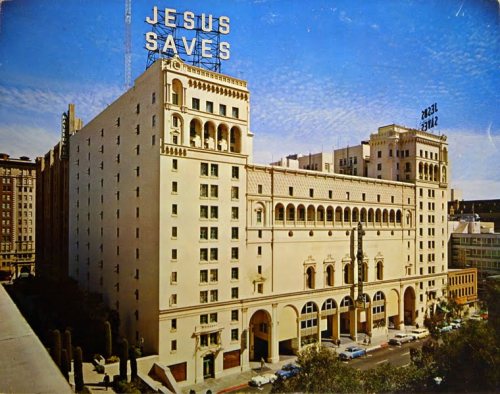
Jesus Saves!

As part of the Christian walk, life with God as a child adopted into His kingdom, and a bond servant to Christ, I am called to walk by faith, not by sight. If I could see t he road ahead, my destination, the culmination of God’s plan, I would not be walking by faith, but rather by sight.

But God has not left me without road signs, reminders. He has given me His Word, songs, hymns, creeds and personal testimonies, such are the billboards which placard my journey with God. One such billboard message comes to mind as I sit with God today. JESUS SAVES! This two-word saying, which some might call “a tired cliche” or “meaningless Christianese” has multiple messages of encouragement for me.

If “Jesus saves,” it follows that Jesus is a Savior. He must, therefore, have all the job qualifications a Savior should have. He must have much more power than the powers from which I need saving. As a Savior, He must have more authority than the authorities that hold me or threaten me. As a Savior, He must have superior wisdom and understanding than that which I possess to see the way through trouble or out of trouble or know when to wait for trouble to flee. He must have power over death–my most heinous foe. In short, a Savior must be a God among gods, able to save me from other gods and idols as well as men and demons. He must be the One true and almighty God, maker of heaven and earth, of all that is seen and unseen–LORD of lords. And so He is, my King, Jesus. He alone is my Savior.

“Jesus saves” also speaks of His willingness to save. This is good news because it means I can offer to those needing saving, asking for salvation–the willing one, Jesus. He saves because He is in the business of saving. It is His offer to me, to us. For God so loved the world that He gave His only Son that we might be saved.
“Jesus saves” necessarily implies a need to be saved. If the need wasn’t real, why would it even be important to say or billboard, “Jesus saves?” But it is necessary. It is urgently necessary to be saved, for it is appointed a man once to die and then the judgment. Jesus saves me from that–Judgment–the wrath of a holy God against a sinful humanity.

“Jesus saves” is also a reminder to me that I am no one’s savior. Jesus saves–not me. He alone has the words of eternal life. His blood alone atones for my sun. His sacrifice alone satisfies the requirements of the law, provides the price of redemption. For by grace I have been saved through faith and that not of myself–it is the gift of God. There is no other name given under heaven by which we may be saved.

“Jesus saves” gives hope. I may be lost or a dear friend or loved one may be lost, but Jesus saves. He will seek out the lost. He sought me out. He chased after me when I had nothing of worth to offer and had spent His inheritance in ungodly living, treading His commands underfoot like so much straw and dirt. But “Jesus saves” brings me hope. I look to Jesus author and finisher of faith in me and in others. If a good work was done in someone’s life, no matter how early or what has transpired since, Jesus will save. He will finish the work that He has begun. I can hope, have a certain expectation of good, in that.
Don’t disregard those road signs, those placards in your life. God is near. Look up. Your redemption is near.

biola sign


Read Habakkuk Chapter 1
1. What is the prophet’s first question in Habakkuk 1:2-3?

2. What is the prophet’s conclusion from what he sees according to Habakkuk 1:4?

3. How does the LORD reply to the prophet in Habakkuk 1:5-11?

4. What do you learn from the following verses?
Psalm 18:6

Psalm 40:1

Psalm 77:1

Proverbs 2:3-9

5. Is the prophet’s observation about God in Habakkuk 1:12?

6. What is his question of God in Habakkuk 1:13-17?

7. Can you think of a time in your own life where God used a wicked person or evil circumstance to chastise, rebuke or correct you? Explain.

If you are looking for additional information and/or materials, please visit our website at RootedinHisWord.org and our Facebook page. 

34857624_201435477340473_855160484356161536_n