Feeds:
Posts
Comments

Posts Tagged ‘Bible’

My son, be attentive to my words; incline your ear to my sayings. Let them not escape from your sight; keep them within your heart. For they are life to those who find them, and healing to all their flesh. (Proverbs 4:20-27 ESV)

Pay Attention
In Proverbs 4:20, we are first called to “be attentive” which is also translated “listen” or “pay attention.” This exhortation suggests that choice, diligence and even self-control are being called for by the teacher. We must choose to listen or pay attention, and we must apply ourselves or employ diligence to continue to be attentive, and we must use self-control to not allow distractions or other desires to pull our attention from what is being taught.

Be Teachable
In the second part of the couplet, we are told “incline your ear” which could be emphasizing or repeating the idea in the first part of the verse, which is not uncommon in Hebrew poetic or wisdom literature. It is also possible, that this phrase is offering a slightly different nuance. One could argue that it might be speaking to teachability. We need to both pay attention to receive information (physically), but also we need to receive information into our thinking, to allow it to change our ideas and behaviors. This speaks of maintaining a teachable heart.

What might interfere with teachability? I generated a short list of some of the attributes often associated with the fool, who is, at best, unteachable.

Unrighteous
Self-reliant
Divided heart
Arrogant
Lazy

Any one or more of these characteristics or patterns of behavior can render us unteachable. Let us examine ourselves to see where we fall short and how we may have allowed such patterns to become ours.

In Proverbs 4:21, we are exhorted not to let the sayings of the teacher escape from our sight–to “keep them within your heart.” The word “heart” here is also translated “mind.” In the ancient world, the heart was seen as the seat of the emotions and thoughts. The idea is that we should keep the scriptures–the words of the Creator before our eyes at all times. This would suggest, daily study, meditation (and memorization), and reminders of scripture throughout the day. This is similar to the teaching in Deuteronomy 6:6-9, “these words that I command you today shall be on your heart. You shall teach them diligently to your children, and shall talk of them when you sit in your house, and when you walk by the way, and when you lie down, and when you rise. You shall bind them as a sign on your hand, and they shall be as frontlets between your eyes. You shall write them on the doorposts of your house and on your gates.” This requires strategy, diligence and effort. It is the “working out” of one’s salvation spoken of by Paul in Philippians 2:12.

But the rewards will outweigh the effort required as we are told in Proverbs 4:22. “For they are life to those who find them, and healing to all their flesh.” In these sayings (the Torah) is life and physical healing. What more could we desire?
 

It is our desire to help you grow in your knowledge of Adonai and His Word. If you are looking for additional information and/or materials, please visit our website at RootedinHisWord.org and our Facebook page. 
34857624_201435477340473_855160484356161536_n

Read Full Post »

One of the best short books of the Bible is the book of Ruth.  It can be easily read in one sitting.  The story begins with Naomi and her husband leaving Bethlehem, their hometown, during a time of famine to go to Moab, a land occupied by the enemies of God.

While in Moab, Naomi’s husband and both of her sons die, leaving her with her two daughters-in-law.  One of her daughters-in-law chooses to stay in Moab, but Ruth, her other daughter-in-law, returns with Naomi to Bethlehem.

With nothing to show for her travel abroad, Naomi returns to her hometown with the clothes on her back.

DSC_1000

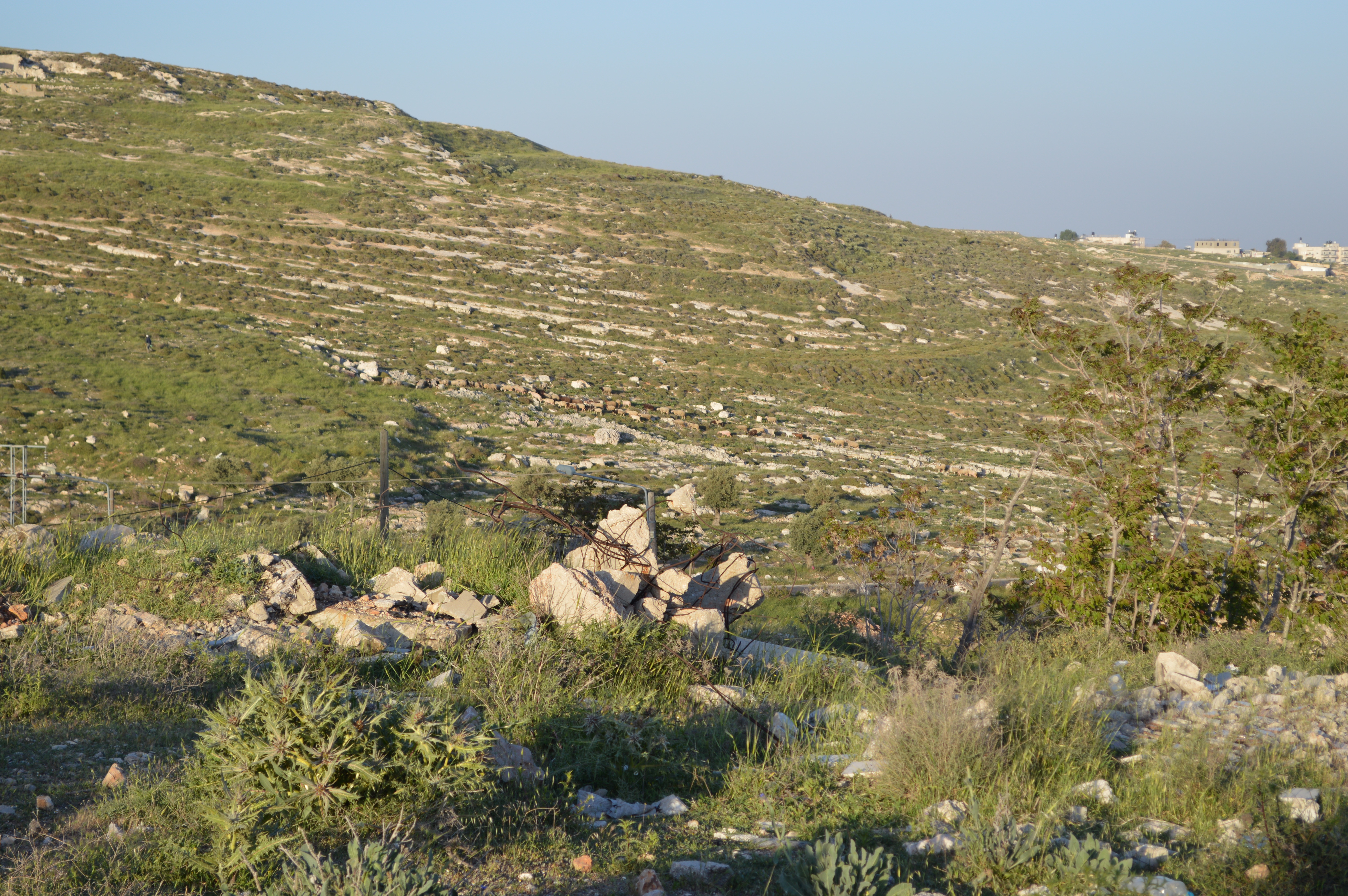
Shepherd’s fields of the Bethlehem region

In the day in which Naomi lived, the fate of a widow was a difficult one.

After her husband and sons die, Naomi is left without a means of support in Moab. Without hope,  Naomi returns to the land of her forefathers.

In doing so, she avails herself of the promises and protections of God’s people. God takes care of His children’s every need, physical, emotional and spiritual.

If you are struggling with your situation and are seeking the land of God’s promise, open His word. Study it systematically and with a heart to know Him better, and He can lead you home, to the land of promise.

Consider using one of our verse-by-verse Bible studies in the Words of His Mouth Series to help you on your way–maybe even the study through the Book of Ruth.

If you are looking for additional information and/or materials, please visit our website at RootedinHisWord.org and our Facebook page. 
34857624_201435477340473_855160484356161536_n

Read Full Post »

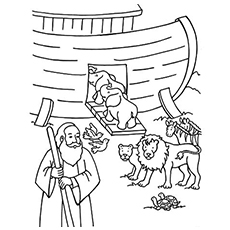
Read Genesis 8
1. Copy Genesis 8:1 here.

2. Where did the ark come to rest? How long did it rest there before the tops of the mountains were seen?

3. When did Noah remove the covering from the ark?

4. What did Noah do before removing the covering to make sure it was safe?

5. When did God tell Noah they could leave the ark?

6. What was the first thing Noah did after leaving the ark?

7. What promise does God make in Genesis 8:21-22?

DSC_1344.JPG

Read Full Post »

Read Genesis chapter 6

1. What does God observe about mankind in Genesis 6:5? What is His reaction to this observation in Genesis 6:6-7?

2. In contrast to the rest of man, how does God describe Noah in Genesis 6:8?

3. Read Hebrews 11:7. What do you learn about Noah from this verse?

Starting in Genesis 6:14, God begins to give very specific instructions for the building of the ark. Fill in the missing information from verses 14-22.

4. The ark was to be made of _____________________________.

5. It was to be covered inside and out with ____________________.

6. What were the dimensions of the ark? _____________________.

7. The ark had __________ decks.

8. Noah was to take ______ of every living thing into the ark.

9. What reason did God give Noah why he needed two of every living thing?

10. Who did God say would be the source of the flood?

Going Deeper: How big is a cubit?

noah

Read Full Post »

CREATION (Chapter 1)

Read Genesis Chapter 1 and answer the following questions.

Day 1

What did God create?

How did God create it?

Day 2

What did God create?

How did God create it?

Day 3

What did God create?

How did God create it?


Day 4

What did God create?

How did God create it?

Day 5

What did God create?

How did God create it?

Day 6

What did God create?

How did God create it?

engines_of_creation_by_freelancah-d1prqho

Read Full Post »

WHY STUDY THE BIBLE?

9cRgxypKi
As with anything, consider the benefits of becoming more Bible literate in 2016.

For each of the following scriptures, either copy the verse or summarize the benefit discussed in the verse in your own words.

1. Joshua 1:8

2. Psalm 119:9

3. Psalm 119:11

4. Psalm 119:24

5. Psalm 119:25

6. Psalm 119:28

7. Psalm 119:42

8. Psalm 119:49

9. Psalm 119:50

10. Psalm 119:105

11. John 15:7

From these verses, choose one which speaks to a need in your life. Perhaps you need hope–Psalm 119:49 promises hope.

Perhaps you need to know how to answer those who reproach you–Psalm 119:42 provides that.

Perhaps you need to be cleansed–Psalm 119:9 provides instruction on that.

Mediate on your selected passage. Allow God to reveal how He will keep His promise to work in you  and your life through His word.

Read Full Post »

Going to be counted
1. Why did Mary and Joseph have to go to Bethlehem?

2. Where was Jesus born? Why?

3. What did Mary do with Jesus after He was born?

4. What happened out on the plains outside of Bethlehem that night?

5. To whom was the first recorded announcement of the birth of the Christ Child made according to Luke 2:8-14?

6. What does Luke 2:15-16 tell us was the shepherd’s response?

7. What was the response of the shepherds to seeing Jesus in the manager? (Hint: Luke 2:17-20)

Read Full Post »

According to Dr. Henry M. Morris, in his book The Genesis Record, the following are some of the origins that are given in the book of Genesis:

  • Origin of the Universe
  • Origin of order and complexity
  • Origin of the solar system
  • Origin of the atmosphere and hydrosphere
  • Origin of life
  • Origin of man
  • Origin of marriage
  • Origin of evil
  • Origin of language
  • Origin of government
  • Origin of culture
  • Origin of nations
  • Origin of religion
  • Origin of the chosen people

As you are reading through Genesis, consider what God says about these various subjects.

Read Full Post »

Matthew recounts the story in Matthew 22:17-21 where Jesus is speaking with the Pharisees and the Herodians.  They are trying to trick Him, but He is still calling them to the Father despite their contempt for him.  The following is the short exchange:

“Tell us, therefore, what do You think? Is it lawful to pay taxes to Caesar, or not?”

But Jesus perceived their wickedness, and said, “Why do you test Me, you hypocrites? Show Me the tax money.” So they brought Him a denarius.  And He said to them, “Whose image and inscription is this?”

They said to Him, “Caesar’s.”

And He said to them, “Render therefore to Caesar the things that are Caesar’s, and to God the things that are God’s.”

“God created man in His own image; in the image of God He created him.”  Genesis 1:27   It is the image of God that each man and each woman bears not unlike the coin bearing the image of Caesar.

And as with the coin, which must be returned to the one whose image it bears, so the man or woman, who bears the image of God, must be returned to God.  This is the heart of God, to draw back to Himself all those bearing His image.

It is not enough to admire the LORD, we need to render our lives to Him.

Render unto God what is God’s.

Read Full Post »

Ever wonder why the image of the cross figures so predominantly in the New Testament.  It’s more than the obvious – Jesus died on a cross.

Mark 5:34 records Jesus speaking, “Whoever desires to come after me, let him deny himself and take up his cross and follow me.”  When Jesus made this statement, he hadn’t gone to the cross yet.

John Stott says “becoming a Christian involves a change so radical that no imagery can do it justice except death and resurrection – dying to the old life of self-centeredness and rising to new life of holiness and love.”

In Galatians 5:24, Paul writes “those who are Christ’s have crucified the flesh of its passions and desires.”

In Romans 6:6, he says,  “our old man was crucified with Him.”  He repeats the imagery of the cross and death on the cross to speak of living a life of self-denial – death to self.

Often people think that their “cross” is the trial or persecution they are undergoing.  The trials are not the cross.  The trials function to strengthen one to carry his or her cross.  The cross is the life of self-denial, the laying down of one’s own life for the furtherance of the gospel.

As a Christian, I am best described as “dead man walking” since I must carry the instrument of my own execution, the cross.  I must die, so He might live through me.  By this great miracle, others will see Him and His glory and be drawn to Him.  Thus, the gospel is spread.

Father, make me to be dead to self and alive to Your Spirit.  May Easter remind me of how that fully-surrendered life appears.

Read Full Post »

Older Posts »