Feeds:
Posts
Comments

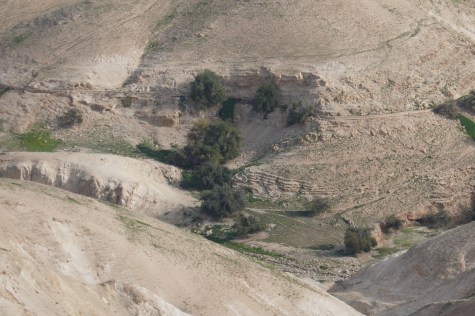
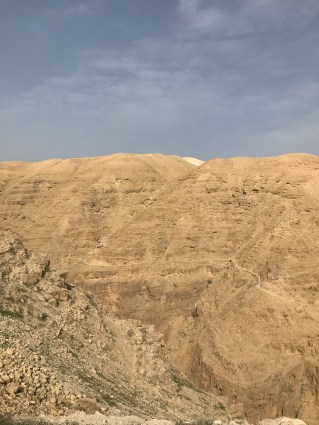
On the road from Jerusalem eastward to Jericho is a great expanse of Judean desert or what is often called the Judean wilderness. It is to such a place as this that Jesus may have gone when he fasted for 40 days before being tempted by Satan. See Luke 4:1-13 for a reminder of the story.

P1010354

It may also be the place of which David spoke in the Psalms 63:1, O God, You are my God; with deepest longing I will seek You;  my soul [my life, my very self] thirsts for You, my flesh longs and sighs for You, in a dry and weary land where there is no water.
IMG_4020

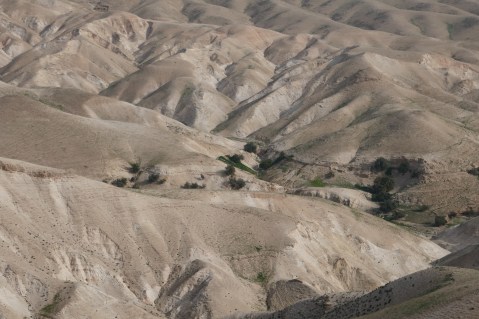
It is a place which, at first glance, appears to be devoid of life, with no obvious plant or animal life and no observable source of water. But when one peers over the edge of the cliff and looks below, one sees green in the valley. Small trees, bushes and grasses grow  in the valley, fed by the water that gathers.
P1010361P1010355

Like our circumstances which can loom like a great desert or wilderness before us – overwhelming us with their apparent impregnability – there are valleys which can only be seen as we near the edge of the cliff and peer over into the crevices below. Life exists in the valleys – verdant, prospering life.

So when faced with a wilderness or desert of impregnable, unnavigable circumstances, go to the edge, look down and see the truth that life is continuing, even prospering in the valley of those circumstances. Know the truth that God would never leave you nor forsake you. God is in the valley.

P1010383

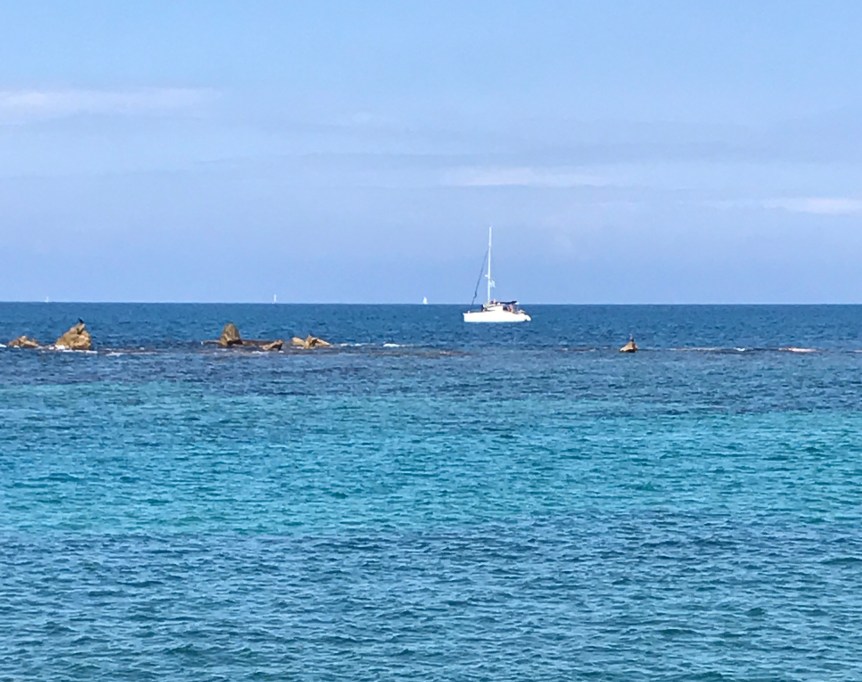
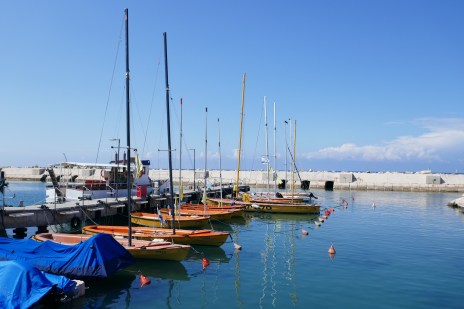
Jaffa aka Joppa

In Israel, there is Bible-relevant history everywhere you look. The ancient city of Joppa dates back to 2000 B.C. suggesting it was established after the flood by one of Noah’s sons – probably Japheth.


Joppa is one of the oldest ports in the world making it very important to Ancient Israel. Solomon had the supplies to build the temple, sent by Hiram, King of Tyre, brought in through Joppa.

P1010313

Old Jaffa

Later when Ezra was rebuilding the temple, supplies were sent to Joppa from Lebanon.

img_3967.jpg


Joppa also is famous as the port from which the prophet Jonah caught a boat to Tarshish to flee the command of the LORD to go to Ninevah to tell them of the coming judgment of God for their sin.

You may remember that Jonah ended up being thrown overboard and was subsequently swallowed by a large fish where he stayed for 3 days and 3 nights before being vomited out on dry land.


Read Isaiah Chapter 19 – The Burden Against Egypt
1. What human disasters are foretold for Egypt?

2. What natural disasters are foretold?

3. Who will Egypt be afraid of? Why?

4. What is foretold in Isaiah 19:18-25 about the future for Egypt?

5. What three nations will worship the Lord together in the future?

This prophecy was probably fulfilled in 670 B.C. when Egypt was conquered by Esar-haddon, king of Assyria. The Assyrian conquest proved that the many gods of Egypt were powerless to help (19:1) and that the mediums and wizards were unable to give counsel (v.3). . .

But that is not all. The forty-two provinces of Egypt, called “nomes,” would be thrown into disarray and start fighting each other (Isaiah 19:2). The Nile River, the source of Egypt’s economy, and the streams and canals of the land would all dry up; and this would put farmers, fishermen, and cloth manufacturers out of business (vv.5-10). For centuries, the Egyptians were respected for their wisdom; but now the princes and counselors would not know what to do (vv.11-13). Instead of walking a straight path, the nation was led astray by leaders who were ad dizzy as a drunken man staggering around in his vomit (vv.14-15).
-–W.W. Weirsbe, Be Comforted: Isaiah

Read Isaiah Chapter 20
6. What does God tell Isaiah to do in this chapter? Why?


Read Isaiah chapter 18
The Ethiopians had sent ambassadors to the Jews asking them to join an alliance against the Assyrians. The Lord, however, said, “Refuse their invitation. I’ll take care of the Assyrians in my own time.”

That’s the point the Lord makes over and over again. “When will the nations look to Me, wait on Me, trust in Me?” He asks. “How long will they try to succeed in their own abilities only to fail miserable?”

Not only is this a word for nations–but for each of us in our own situations.
–Jon Courson’s Application Commentary: Old Testament, Volume 2

1. On whom is this “Woe” being spoken according to Isaiah 18:1-2?

2. What is to happen to them according to Isaiah 18:5-6?

3. What will they do according to Isaiah 18:7?

4. What additional information do you find in Zephaniah 3:10? Psalm 68:31?


Jesus is my Valentine

cross-of-hearts

JESUS IS MY VALENTINE

Jesus is my Valentine.
The lover of my soul.
He gave the perfect gift of love.
His life laid down for mine.

He’s written His words of love,
Laid out His plan to save
Pages bound with scarlet thread
A message in His blood.

He did not only pay for me;
He paid the world to save.
Each broken heart made well again
To eternal life, the key.

I’m betrothed to Him, His bride to be.
He’s coming back and soon;
My bridegroom longs to be with me,
So He’ll not tarry long.

Jesus is the righteous judge,
Wicked souls will meet their doom.
But as for me, I’m washed in blood,
His robe of white I donned.

Is Jesus your Valentine?
Does His blood your sins blot out?
There’s only one whose love can save,
One special Valentine.
Copyright MaryBeth Mullin

Read Isaiah Chapter 17 – Burden against Damascus
1. What information can you find about Damascus?

2. What judgments are spoken against Damascus in Isaiah 17:1-3?

3. Who is being judged in Isaiah 17:4-11? What things will happen to them?

4. What reason does God give for the judgment in Isaiah 17:10?

5. Who is being judged in Isaiah 17:12-14? What will happen to them?


Read Isaiah Chapter 15 – Burden against Moab
1. Who are the Moabites? Review Genesis 19.

2. What do you learn about Moab from Numbers 25?

3. What types of things are promised in the judgment against Moab in this chapter?

Read Isaiah Chapter 16 – Burden against Moab (continued)

4. Record examples of the judgments against Moab from this chapter.

5. What is the time frame given at the end of the chapter for the fall of Moab?

Leviticus is one of the books of the Bible many people confess they “can’t get through.” But I’m convinced that in giving us 66 books, God intended us to read and study each of them with diligence. I expect to receive insight from the book of Leviticus. I have not been disappointed.

For I am the Lord your God; so consecrate yourselves and be holy, for I am holy. . . 5 For I am the Lord who brought you up from the land of Egypt to be your God; therefore you shall be holy, for I am holy.
Leviticus 11:44a, 45 (Amplified)

At first glance, these verses can be daunting–how can I be holy like God? One only need read the five books of the law to see the holiness of God and how unreachable that standard is for any human.

But then I consider the character of God and remember that God wouldn’t command me to be what was impossible for me to be.

God is holy–only God can make me holy.

Only God can set me–my life–aside for holy work. This is not something I can do for myself. I could never make myself holy–nor could any water or oil or ritual of man make me holy.

Holiness–the work of sanctification (being set apart for God)–is something only God can do.

So what is my part?

I must prepare. I must be available. I must obey.

See also Leviticus 19:2, 20:7; 1 Peter 1:15

img_0589.jpg

Read Isaiah Chapter 14
1. What prophecy is given in Isaiah 14:1-2?

2. What prophecy is given against Babylon in Isaiah 14:3-8?

3. What is the conversation in hell recorded in Isaiah 14:9-11?

4. Who is being spoken of in Isaiah 14:12-17? How do you know?

5. What names are given to him in Isaiah 14:12?

6. What caused him to fall according to Isaiah 14:13-14?

7. What is his future according to Isaiah 14:15?

8. How will he be seen in the future according to Isaiah 14:16-17

9. Isaiah continues with the prophecy against Babylon in Isaiah 14:18-23. What do you notice?

10. He continues with a prophecy against Assyria in Isaiah 14:24-26. What do you notice?

11. What do you learn of God from Isaiah 14:26-27

12. What is the timing of the prophecy which came to Isaiah 14:28-32 according to Isaiah 28:14?

img_4015.jpg

Read Isaiah Chapter 13
1. What does Isaiah say about the judgment against Babylon?

2. What is Babylon? Where is it located?

3. How does Isaiah describe the reaction to the day of the LORD in Isaiah 13:6-8?

4. What additional information about the day of the LORD do you find in Isaiah 13:9-10?

5. What things does God promise in Isaiah 13:11-22?

IMG_1460