Feeds:
Posts
Comments

1 I will love You, O Lord, my strength.
2 The Lord is my rock and my fortress and my deliverer; My God, my strength, in whom I will trust; my shield and the horn of my salvation, my stronghold.
3 I will call upon the Lord, who is worthy to be praised; so shall I be saved from my enemies. Psalm 18:1-3 (NKJV)

The Lord is my strength is the theme of this psalm. Each line tells us something about how this is true. For example, in verse 2, we are told “The Lord is my rock and my fortress and my deliverer.” Separating out the ideas within the verse, we find that three separate descriptive images:
1. Rock
2. Fortress
3. Deliverer

Each of these taken alone would be a great promise–a great character trait for God. But we see the three-fold majesty of Adonai in these verses. God is my Rock–that is to say, the foundation under me–that on which I am built. He is not shifting sand underneath me, but pure bedrock–immovable, unshakable, and unbreakable. He is eternal and unchanging.

Then I read that God is my Fortress–I understand that Adonai is my castle, the thick walls of protection around me. He is not merely in front as my shield (See Psalm 18:2b, 2 Samuel 22:3, Psalm 3:3) or behind as my rear guard (See Isaiah 52:12 and 58:5)–for He is both, but He is also all around me–a protection that encircles me.

Deliverer speaks of my escape. Fortresses can be taken or overrun, but God will be there to be my way of escape, my hiding place. (See Psalm 32:7)

These verses not only give this great insight into the character of God, but they also suggest the appropriate responses for us:
1. Love
2. Trust
2. Call

I will love You, O Lord, my strength. For God love is an action word. 1 Corinthians 13:4-8 reminds us that love suffers long, rejoices in truth, bears all things, believes all things, and so on. This is the love that instructs our love. As He gives us strength, we respond in love. In the economy of God, love is manifest through obedience. (See Deuteronomy 7:9, John 14:15)

The Lord is my rock and my fortress and my deliverer; My God, my strength, in whom I will trust; my shield and the horn of my salvation, my stronghold. A castle is only as good as the confidence its inhabitants have in it. If I don’t believe the fortress will hold, I will run out of it, into the open field and be destroyed. If I don’t believe the deliverer will come, I will try to save myself.

Shield suggests that one might be a way from the fortress–in the throws of battle. In battle, the shield is the miniature fortress–it may be all that separates me from the blows of the enemy, blows intended to kill or maim me.

Horn speaks of strength. It is used in the Hebrew Bible many times as a metaphoric expression of physical and spiritual power.

Stronghold is a synonym for fortress or castle. It speaks as those words do of defense, protection, and safety.

I will call upon the Lord, who is worthy to be praised; so shall I be saved from my enemies. In this verse, I am reminded that because of all that God is to me and does/has done for me, I will call upon God (who is worthy) and through Him I will be saved from my enemies. Again, God is the answer to the dilemma–His is the One who will save. He is faithful and He will be there to answer when I call.

Hallelujah! What a Savior!

Good Morning, Abba

I rise to greet You
I rub the sleep from my eyes
dew still soaks the spring flowers
the lush forest of Your presence awaits me
in the book of remembrance

I approach
arms open wide
anticipating Your embrace
Abba!
Abba!
Good Morning!

Copyright MaryBeth 2021

Esther (Chapter 3)

Read Esther Chapter 3
1. Who is Haman? What is his lineage?

2. What favor is Haman shown by the King?

3. What was Mordecai’s reaction to Haman? Why?

4. How did Haman react to Mordecai?

5. What does Haman plan to do to retaliate against Mordecai? Why? How as it to be accomplished?

6. What other enemies of the Jews (those who sought to destroy them completely? Have there been over their 4000 year history? Name as many as you can.

7. What does God promise regarding the enemies of His people in the following verses?
□ Deuteronomy 28:7

□ 1 Samuel 17:47

□ Psalm 18:3; 47-48

□ Psalm 41:2, 11

□ Psalm 61:3

□ Psalm 119:98

□ Proverbs 16:7

□ Isaiah 59:19

8. What does the New Testament teach about how to deal with our enemies? The enemies of God?
□ Matthew 5:44

□ Romans 12:14

□ Ephesians 6:10-18


It is our desire to help you grow in your knowledge of God and His Word. If you are looking for additional information and/or materials, please visit our website at RootedinHisWord.org and our Facebook page. 

34857624_201435477340473_855160484356161536_n

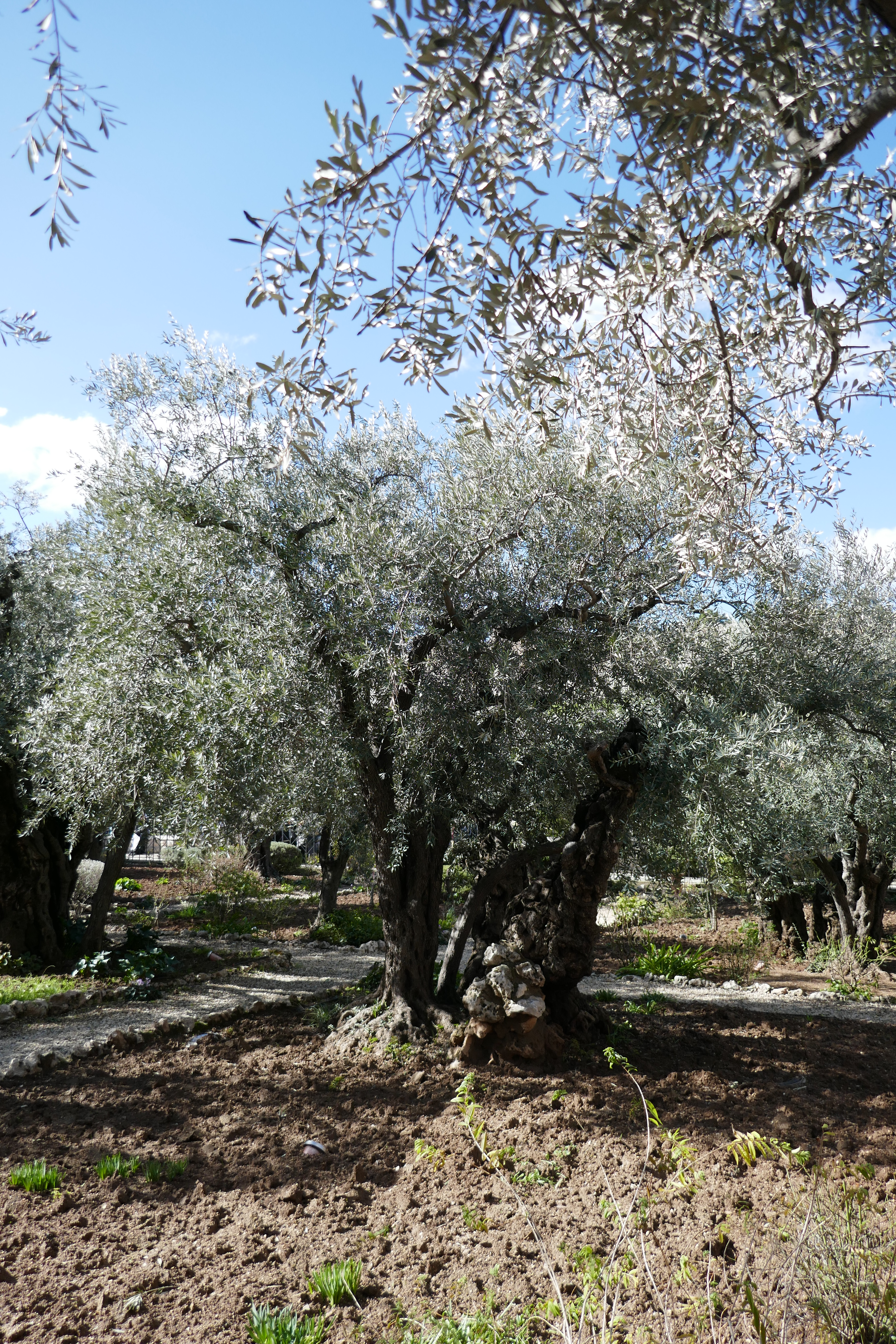
You have arrived to the Mount of Olives, overlooking the Holy City, Jerusalem, after a long journey from your home in Capernaum or maybe Migdol or even from as far away as Cyrene, in Northern Africa. You are mesmerized by the mid-day sun reflecting off of the top of the Sanctuary. You wonder if the gleaming white you see could possibly be snow on the Temple, but you know it cannot be. Your heart swells with the knowledge that HaShem, blessed be He, is near. 

You feel the tug of your lamb on the rope you’re holding. Will it be acceptable? It is without blemish as the law requires, but you have heard of even the most perfect lamb not being accepted by the Temple Priests and Levites. Like the day before you brought home your bride from her father’s house to consummate your marriage, you feel worry creeping into your belly. Your budget is small–you can’t afford another lamb.

Before you know it, you are being pulled forward with the crowd down the side of the Mount of Olives. Olive trees are swaying in the light wind. You begin to sing along with the other pilgrims  making their way in a serpentine formation down the steep path into the Valley Kidron and then back up again to the Sanctuary. “Hoshiana! Hoshiana! The worry slowly dissolves into joy. Adonai has delivered you once again. You will remember Him at the appointed time. You will never forget the love of your God–your Redeemer.

Olives Trees (Mt of Olives, Jerusalem)

The Lamb

At the cross, I was bought and sold,
And there my redemption paid.

The currency was blood
the debt was sin
a debt I couldn’t pay.

He gave His body, lifted up
His blood the altar soaked
He’s the lamb t’was slain
is being slain today

and “Why,” you ask, “Would God
who made the universe agree
to shed one drop of royal blood
to save a lost child like me?

He saw not what I was
awash in sin and death
the mud caked in my coat
the stench of death, my breath

No, my Savior came
God’s plan to fill
He saw me as I’d be
once justified
and sanctified
without blame before my King

The gifts He give, both great and small
the blood is still the best
for my Savior’s blood my soul redeemed
from Satan’s bony grasp

You may wonder why choose me
the beauty of God’s plan
is not just this lost sheep t’was saved
but all that come–each man

The door’s wide open, my sweet friend
eternity to gain
He’s the One who bears the marks
He’s the lamb t’was slain

Christ Arose

by Robert Lowry (1826-1899)

Low in the grave He lay,
Jesus my Savior!
Waiting the coming day,
Jesus my Lord!

Up from the gave He arose,
With a mighty triumph o’er His fores;
He arose a Victor from the dark domain,
And He lives forever with His saints to reign,
He arose! He arose!
Hallelujah! Christ arose!

Vainly they watch His bed,
Jesus my Savior!
Vainly they seal the dead,
Jesus my Lord!

Death cannot keep his prey,
Jesus my Savior!
He tore the bars away,
Jesus my Lord!

Esther (Chapter 2)

Read Esther Chapter 2

  1. When King Ahasuerus became lonely for his queen, what solution was proposed?
  2. Who is Mordecai? Of what tribe is he? What other famous person in Jewish history is from that same tribe?
  3. Who is Hadassah? Esther? Why is she in Shushan? Where is her family? Where is she from?
  4. What happens to Esther in Chapter 2?
  5. Describe Esther’s beauty treatments. How long did they last?
  6. What was the king’s reaction to Esther?
  7. What did Mordecai discover while sitting in the King’s gate? What happened as a result?
  8. What references to dates and/or time is given in this chapter? Note all that you find.
  9. What does God say about a woman’s beauty?
    □ Proverbs 31:30 □ 1 Peter 3:3-6

It is our desire to help you grow in your knowledge of God and His Word. If you are looking for additional information and/or materials, please visit our website at RootedinHisWord.org and our Facebook page. 

34857624_201435477340473_855160484356161536_n

Esther (Chapter 1)

Read Esther Chapter 1

  1. Who is Ahasuerus?
  2. Where do the events of Chapter 1 of Esther take place? What country is this today?
  3. Describe the scene in your own words.
  4. Who is Queen Vashti?
  5. What happened between Queen Vashti and King Ahasuerus in the opening chapter? Why?
  6. From whom does the King seek advice? Who are they? What is their advice? Why?
  7. What do the following verses teach about counselors?
    ▸ Psalm 1:1 ▸ Proverbs 1:5
  8. What happens to Queen Vashti?
  9. What references to dates and/or time is given in this chapter? Note all that you find.
  10. What do you observe about the marriage between the King and Queen Vashti? Contrast that to the Bible’s teachings on marriage.
  11. What do the following verses teach?□ Proverbs 14:12 □ Proverbs 14:17 □ Proverbs 14:29 □ Proverbs 16:32

It is our desire to help you grow in your knowledge of God and His Word. If you are looking for additional information and/or materials, please visit our website at RootedinHisWord.org and our Facebook page. 

34857624_201435477340473_855160484356161536_n

A wonderful picture of God’s amazing love is seen in the life of Queen Esther.  She, a Jewish girl orphaned at a young age, is raised by her uncle in Shushan, the capital city of the Medo-Persian empire.  She ends up in a nationwide beauty contest for which the first prize is to become queen.  She becomes the queen of the country.

But the evidence of God’s love in the story of Esther is not about her becoming Queen.  This is no Cinderella story.  Rather, this is the story of a God who sees everything, the beginning from the end.  He knows what lies ahead for His people, and He makes provision for them, even provision in the form of a young, scared Jewish girl.  He keeps all the promises to them no matter how long ago He made them.

When the wicked Haman, an important man in the King’s court, came on the scene and convinced the King of Medo-Persia to pass a law whereby the Jews would be slaughtered and their possessions taken by their neighbors, God had a plan already in place.  That plan was carried forward by Queen Esther.  God had hidden Esther in the pavilions of the palace of the King of Medo-Persia.  She would, in due time, be the vehicle by which God saved His people, the people from which the Messiah would come forth in the fulfillment of time.

You know the story . . . Esther convinces the King through a series of meals and events to pass another law which allows the Jews to survive, thereby preserving the Messianic line for the time hundreds of years later when a baby would be born to a descendant of David, of the tribe of Judah, in the town of Bethlehem as it was promised.

This is God’s love for us.  He makes a promise and never allows it to be broken, so that in the fullness of time, He can keep His promise.   God cannot lie.   Study to know what God has promised for you.

Crucified with Christ?

I have been crucified with Christ [that is, in Him I have shared His crucifixion]; it is no longer I who live, but Christ lives in me. The life I now live in the body I live by faith [by adhering to, relying on, and completely trusting] in the Son of God, who loved me and gave Himself up for me. Galatians 2:20 Amplified

Why is it important to be crucified with Christ? What does it mean? This verse is familiar to many and often quoted as a means to remind ourselves of our true identity as believers in Yeshua.

If I am crucified with Christ, I share my identity with Christ. I am saying, “What Christ is–I am too.” By identifying with Christ in this way, I am saying to the world that I want to be treated as Christ was–not given any special treatment or benefits not given to Him. It means that I must share in Christ’s suffering including His rejection by His society, His peers. I must not seek to be approved by the world or its religious systems–rather I must seek only the approval of Adonai as Yeshua was approved by Him. (See Matthew 3:17, Matthew 17:5)

Without entering into His sacrificial death, I have no way to approach God. By entering into His crucifixion, I join myself to Christ–accepting His sacrifice for me–essentially making it my sacrificial offering to God for my sin–past, present and future. As a result, I can enter into the presence of the Holy One, Adonai, blessed be His name.

In 2 Corinthians 5:21, we are told, He made Christ who knew no sin to [judicially] be sin on our behalf, so that in Him we would become the righteousness of God [that is, we would be made acceptable to Him and placed in a right relationship with Him by His gracious loving kindness]. (Amplified)

This verse presents the real reason to enter into His crucifixion–either He died to deliver you and me, or He didn’t. Once I have identified with Christ–it is no longer I who live, but Christ lives in me. (Galatians 5:20)

The reality is that when I am crucified with Christ, identifying with His crucifixion and sacrificial death, I am acknowledging certain truths about God and about myself (as part of the human race):

1. Adonai (the God of the Hebrew Bible, of Abraham, Isaac and Jacob) exists;

2. Adonai is holy and unapproachable by sinful man, or said another way, sinful man apart from shed blood cannot approach a holy God).

3. The Christ (Jesus of Nazareth), is also God. While he lived as a man, He provided a perfect (complete) sacrifice, acceptable to God for the payment for the sin of mankind–past, present and future.

4. I acknowledge that I am a sinner by Adonai’s holy and reasonable (just) standard;

5. I need and want this sacrifice of Yeshua, made on a Roman cross on a hill in a rock quarry outside the walls of the Jerusalem 2000+ years ago, to be applied to my life, my sins;

6. I accept the lordship of Adonai over my life now and for eternity. (Pictured here is the piercing of the ear of the slave who agrees to stay with his master by choice–I am the bond servant of Christ.)

That is how I die and Christ lives in me.

I live by faith [by adhering to, relying on, and completely trusting] in the Son of God, who loved me and gave Himself up for me. Galatians 2:20 (Amplified)

How will I know I have made this commitment–allowed these truths to bind me to Adonai? It think it will be the distinctive of love that marks my life. Yeshua said this, By this everyone will know that you are My disciples, if you have love and unselfish concern for one another. John 13:35 (Amplified)

Beloved, as we enter this season of preparation for our remembrance of Resurrection Sunday, let us consider what it means for each of us to be crucified with Christ, and let us live as witnesses of the truth of the risen Christ, with clean hands and pure hearts, awaiting Christ’s soon return.

It is our desire to help you grow in your knowledge of God and His Word. If you are looking for additional information and/or materials, please visit our website at RootedinHisWord.org and our Facebook page. 

34857624_201435477340473_855160484356161536_n